
Newfoundland and Labrador is facing an unusual situation: visitors and cruise‑ship traffic are at record highs this year and yet unemployment in the tourism sector remains around 15 per cent, one of the highest in the country.
The disconnect stems from the tension between Canada’s permanent immigration system and its temporary foreign worker programs. Tourism in the province is highly seasonal — typically May through September — which makes it difficult for employers to take advantage of provincial (full-time) nominee programs and instead rely on a higher proportion of temporary workers to fill low-wage jobs.
The province is in the middle of a record tourism season. Provincial parks logged their busiest booking day ever this spring, with reservations up 19 per cent over last year, and the province is on pace for another record cruise season after welcoming more than 100,000 cruise passengers in 2025.
But behind those numbers sits a structural problem the province is trying to manage largely through immigration: much of the workforce that tourism depends on is seasonal, and Newfoundland and Labrador’s population is shrinking.
Deaths outnumber births in the province, and its own data showed a slight population decline in the first quarter of 2026. Against that backdrop, keeping tourism towns staffed through their short operating season has become a test of whether immigration can hold rural communities together even as the province tries to capitalize on its busiest years on record.
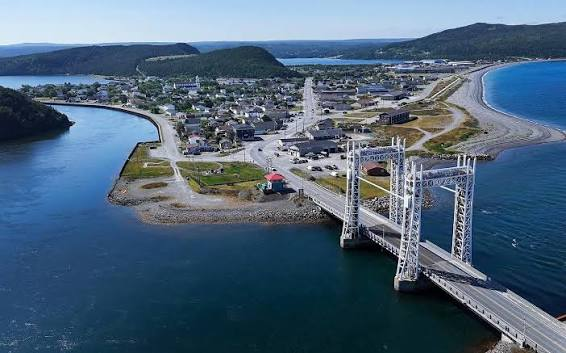
In Placentia, on the Avalon Peninsula, Mayor Jamie Neville, for example, says the workforce strategy is working. “Thanks in large part to an influx of foreign workers and newcomers to the area, businesses have been able to maintain staffing levels and remain open throughout the tourism season,” Neville said in an emailed statement. He said the town is not seeing widespread closures, reduced hours, or businesses unable to operate because of staffing, and that newcomers have given positive feedback about the area’s culture, employment opportunities and quality of life.
That account lines up with what the province says is happening on paper. In a statement, the Department of Jobs, Growth and Rural Development said the Newfoundland and Labrador Provincial Nominee Program (NLPNP) and the Atlantic Immigration Program (AIP) have approved 2,901 and 1,818 applications since 2022, respectively, in occupations tied to tourism, hospitality, accommodation and food services. Of everything the province approved in 2025 and 2026, 40 per cent went to employers outside the St. John’s metro area, the department said, pointing to a deliberate rural focus.
The structural issue
But there is a structural catch built into those same programs. Both NLPNP and AIP are designed for permanent, year-round employment. NLPNP generally requires jobs to offer at least 30 hours a week and last at least a year. AIP requires a similar full-time, non-seasonal job offer.
Tourism work in much of the province runs on a short operating season, often May through September. By the department’s own description, these two pathways are “appropriate for year-round tourism and hospitality positions,” which leaves a gap for the seasonal roles that make up much of the sector.
That gap is where the federal Temporary Foreign Worker (TFW) Program comes in. The province said employers in seasonal industries rely on the TFW program to fill urgent labour needs in rural areas, and Newfoundland and Labrador has opted into a temporary federal measure, running until March 31, 2027, that lets rural employers raise the share of low-wage positions filled by temporary foreign workers from 10 per cent to 15 per cent. The province said it opted in with rural tourism businesses specifically in mind.
However, Tourism HR Canada data shows the province’s tourism sector unemployment rate running at 15.2 per cent this March, the highest of any province in the country, ahead of Prince Edward Island’s 11.7 per cent and well above Alberta and Manitoba, where tourism unemployment sat below five per cent. The gap points to something more specific than a national trend: in most provinces, tourism unemployment tracks below the overall economy’s unemployment rate, but in Newfoundland and Labrador, it runs higher than the province’s economy as a whole, even as some operators report trouble hiring.
The department pushed back on the idea that a shortage can be read off a single statistic. The department said labour shortages “cannot be assessed solely by comparing sector unemployment rates with employer reports of vacancies,” pointing instead to the mismatch between a short operating season and a workforce that needs steady, year-round income.
None of this means the picture is uniform across the province. Placentia sits about 90 minutes from St. John’s and is connected to the Argentia ferry terminal, which is in for an upgrade and more frequent sailings. That kind of accessibility may make it easier to attract and retain workers, immigrant or otherwise, compared with more remote outports further from the capital region.
The province says its immigration approach is still evolving. It is developing a Population Growth Strategy addressing workforce development, immigration and the return of Newfoundlanders and Labradorians who left the province, and it is reviewing feedback from a public consultation on foreign worker protections that closed in June 2026. Both are expected to shape how the province tries to keep rural tourism towns staffed as the population itself continues to shrink.
For now, the evidence suggests immigration is doing real, measurable work in at least some corners of the province’s tourism economy. Whether it is doing enough, and reaching every community that needs it, remains an open question.

Shilpashree Jagannathan is a Hamilton-based freelance journalist and editor whose work has appeared in CBC News, New Canadian Media, The Margin, Business Insider, TRT World and Mint, and has been republished by The Walrus. She reports on immigration, labour, affordability, housing, elections, climate impacts and social justice, focusing on how policy and power shape the lives of households, workers, newcomers and local communities. Drawing on more than a decade in business journalism in India and a strong background in investigations, research and editorial work, she brings rigour and empathy to stories that trace the gap between policy and lived experience. She has also appeared on podcasts and radio programs to discuss her reporting and its broader public-policy implications.