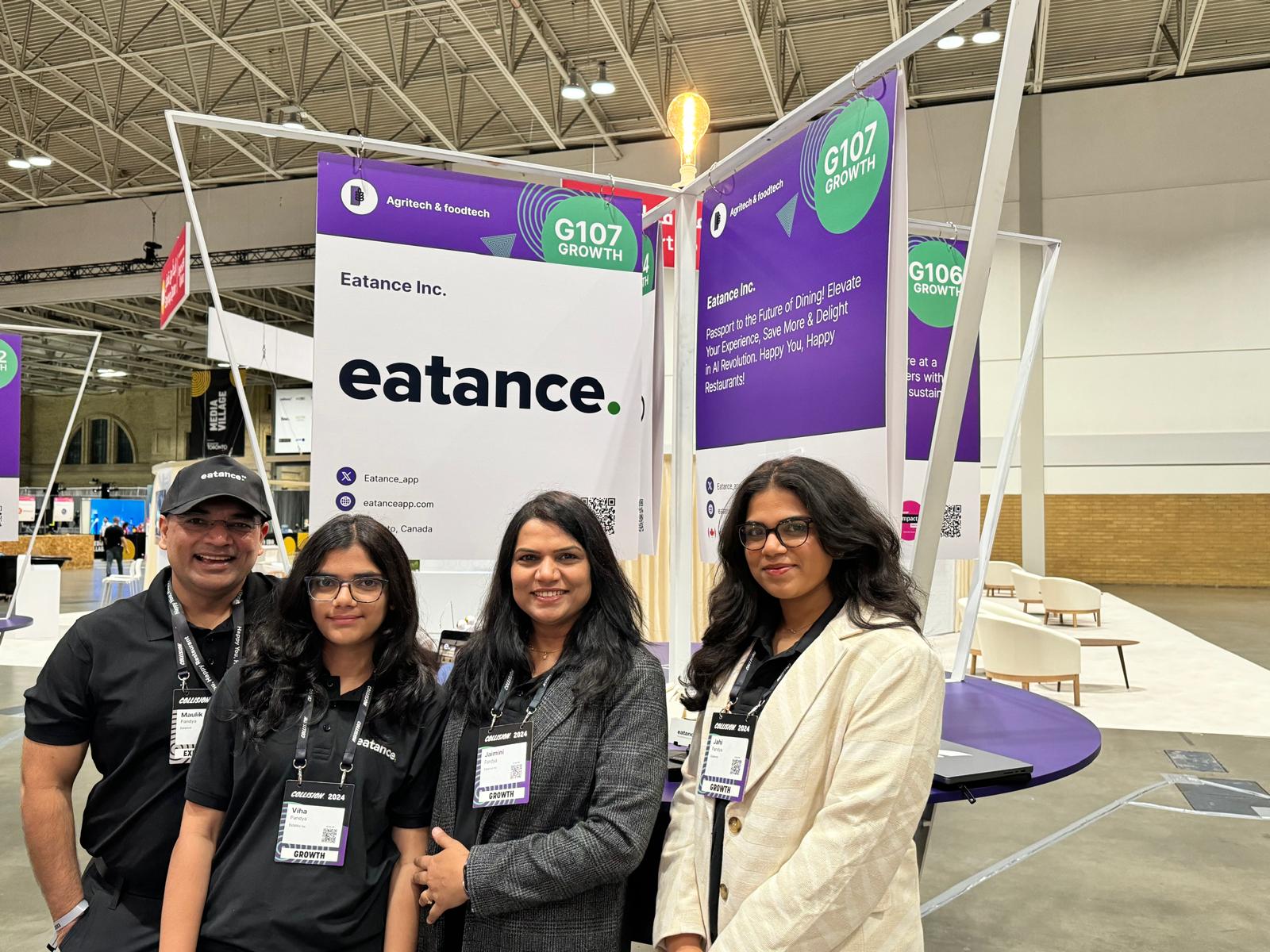

Maulik Pandya applied to be a permanent resident of Canada in 2021. Three years later, his status on the Immigration, Refugees and Citizenship Canada website still reads, “Application in progress.”
Pandya has kept his company running and his family settled in Oakville, Ontario, but uncertainty dominates daily life and he is considering a move back to India.
“We’ve built a life here, but it feels like we’re living on borrowed time,” Pandya said.
The Gujarat-born entrepreneur launched Eatance in Canada in 2022, an artificial intelligence-powered food-tech and marketing platform he created in India the year before. Pandya said the business has an annual global revenue of $1 million and his own investment was $1.7 million.
Last month, Pandya’s daughter’s study permit was finally approved after months of delay — a moment of relief in the family’s long waiting game. His daughter had to delay her admission to McMaster University because Pandya, who remains in Canada on temporary status, could not afford the international student fees.
“We came here to see if we can expand (the business) to the entire North America,” he said, “but it’s hard to plan a future when even next year feels conditional.”
According to figures from IRCC, applications under the federal Start-Up Visa program have surged. As of October 2025, IRCC’s online tracker indicated that more than 43,000 people were still awaiting decisions in this category, with roughly 2,500 applicants ahead of Pandya in the queue. New applicants now face a projected wait time of a decade or longer, compared with the 12 to 18-month turnaround many 2021 candidates were initially promised.
IRCC has linked the growing backlog to limits set under Canada’s Immigration Levels Plan, which determines how many people can be admitted through business and other economic streams each year. For potential new Canadians, this backlog means years of stalled businesses, deferred family plans and uncertainty over the future they are trying to build in the country.
In Brampton, Nigerian entrepreneur Edeme Kelikume is dealing with a similar wait. He runs Tempho, a social-impact housing platform that connects landlords and tenants, helping newcomers find affordable accommodation without relying on credit history or hidden fees.
Kelikume applied for permanent residency in December 2023 when the average processing time was roughly 18 months. Since filing his application, he has received no updates from IRCC.

Without permanent resident status, Kelikume cannot access business credit or government grants — resources his company helps others obtain. Tempho partners with financial institutions to expand housing access, yet its founder remains excluded from the same financial systems.
The uncertainty extends beyond Kelikume’s business. His wife had been living in the UK and was on track for Indefinite Leave to Remain — a step away from a British passport. But Kelikume chose to bring his family to Canada. The couple’s son has missed two years of college because the family cannot afford the tuition for international students.
“It was me who got her from certainty to uncertainty,” he said. “If people here are treated well, immigrants will come naturally. But those of us already here feel forgotten.”
In a written response, IRCC said Start-Up Visa files are processed “alongside other federal business-class applications” and that no single cohort or group of applicants is treated differently.
It stated that overall wait times reflect how admissions are distributed across all immigration categories, not specific changes within the Start-Up Visa program itself. It also cited lingering effects of pandemic-era disruptions, which slowed the digitization of paper-based files and delayed uploads into its system.
The IRCC response said that each application is “assessed on a case-by-case basis by trained officers,” and that clients are notified when their file status changes. Applicants living in Canada can legally remain under what’s known as “maintained status” if they extend their temporary permits before expiry.
The Start-Up Visa was initiated in 2013 to attract global entrepreneurs and fast-track their integration into Canada’s innovation economy. But for leaders like Pandya and Kelikume, it is a long waiting game.

Shilpashree Jagannathan is a Hamilton-based freelance journalist and editor whose work has appeared in CBC News, New Canadian Media, The Margin, Business Insider, TRT World and Mint, and has been republished by The Walrus. She reports on immigration, labour, affordability, housing, elections, climate impacts and social justice, focusing on how policy and power shape the lives of households, workers, newcomers and local communities. Drawing on more than a decade in business journalism in India and a strong background in investigations, research and editorial work, she brings rigour and empathy to stories that trace the gap between policy and lived experience. She has also appeared on podcasts and radio programs to discuss her reporting and its broader public-policy implications.