They are thousands of kilometres from their home country, but the Colombian diaspora in Canada remains connected to their roots and has coordinated efforts to help, sending money to local organizations in Colombia rather than sending supplies directly from Canada to speed the process.
Montreal resident María José Contento’s family lives in Cali, one of the cities in western Colombia affected by the 7.4 magnitude earthquake on Aug. 10. Contento says some of her relatives had to evacuate the building where they lived after structural damage was detected following the earthquake.
“I wanted to donate as soon as I could because I felt helpless being so far away,” Contento said. “I saw how so many people were helping in my country while I was sitting behind a screen, unable to do anything.
“So I decided to donate to the Colombian Red Cross, and even then I still felt that what I was doing wasn’t enough.”
Contento decided to go to a local supermarket to buy supplies and send them to Colombia. But sending supplies from Canada to Colombia turned out to be expensive and time-consuming, which discourages people who want to help.
“Unfortunately, the cost of shipping the supplies is very high so we decided to keep them and donate money to the Red Cross instead,” she said.
Days after the earthquake, the Colombian Consulate in Montreal published a protocol that people who want to donate supplies must follow in order to send donations through Colombia’s Presidential Agency for International Cooperation (APC-Colombia).
Donors must first email APC-Colombia describing the type of donation they want to give, its approximate value and their personal information. Once the request is approved, they have to write a letter explaining their intention to send the donations, and include a certificate confirming payment of duties. Finally, they must pay the export fees for the goods leaving Canada and the import fees for the goods entering Colombia.
Because of the complexity and high cost involved in sending donations to Colombia, many Colombians in Canada have instead decided to organize fundraising events, from artisan markets to benefits to Cumbia dance parties.
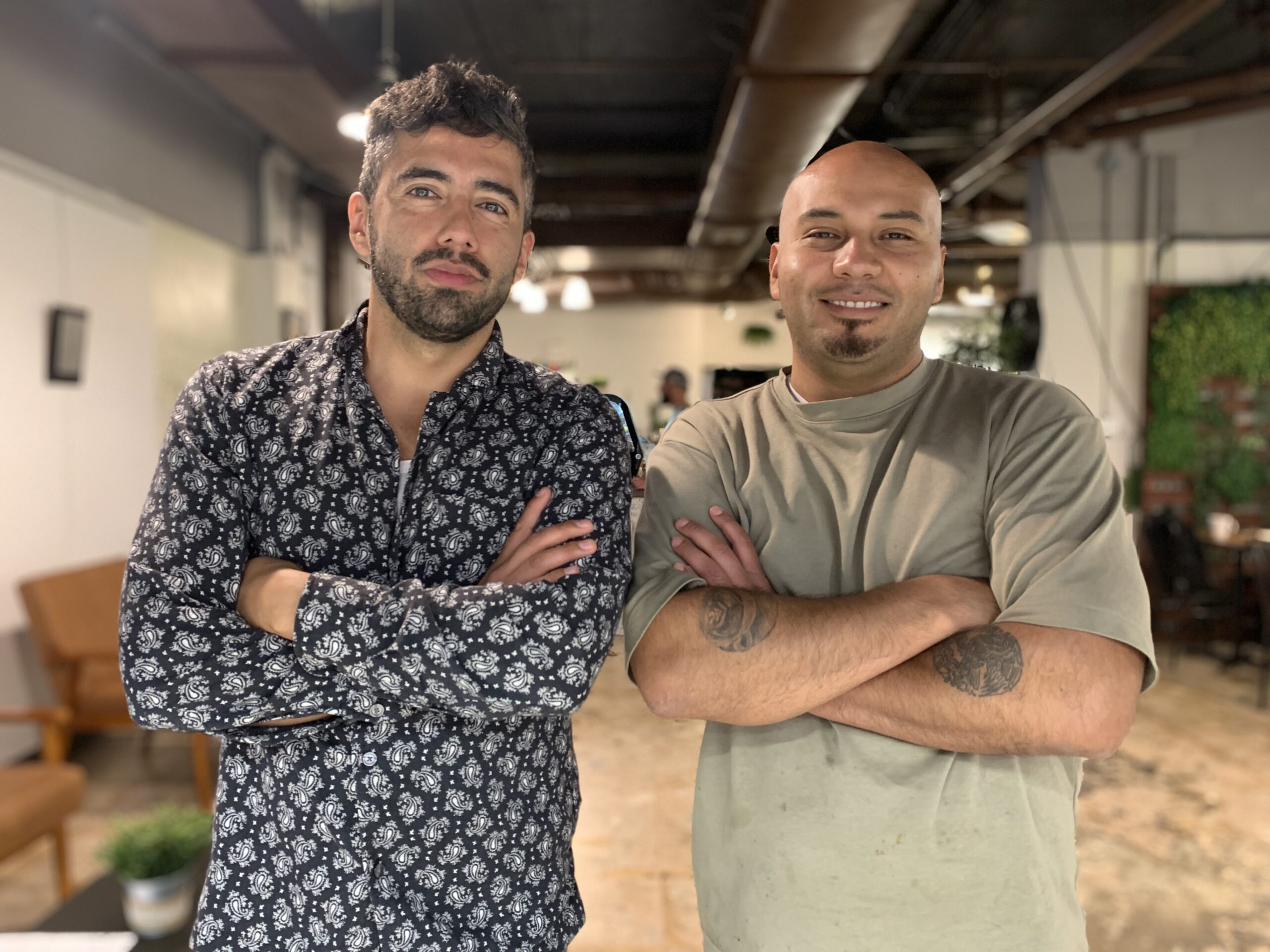
Juan Merchán and Fares Vázquez organized a free public film screening in a Montreal park to encourage people to donate to organizations providing assistance on the ground to those affected by the earthquake.
Merchán has lived in Canada for eight years and is founder of a film club that promotes Latin American cinema in Montreal. Feeling helpless because he is far away from Colombia and unable to help out motivated him to organize the event, he said.
“Through the screening of a Colombian film, we wanted to encourage donations and raise awareness about what happened,” Merchán said.
Vázquez, who is Mexican, also wanted to help people affected by the devastating earthquake.
“Mexico and Colombia have a very close relationship, and my case is no exception. I have many Colombian friends whose families are still there,” Vázquez said.
“We’re simply trying to use whatever resources and abilities we have to support people who are truly going through a difficult time.”
For Merchán, migration has meant developing a protective shell so that his sense of helplessness when events affect his home country do not overwhelm him.
“Coming from a country like Colombia, or from other Latin American countries, means that as migrants there are certain tragedies like these, or political events, that are bound to affect us,” he said.
“It doesn’t mean that it doesn’t hurt me, but I already know how to react. I’ve developed a thick skin.”
The Canadian Red Cross has opened a direct donation line to support Colombian Red Cross teams carrying out rescue efforts.
“The Canadian Red Cross is in close contact with our international partners and stands ready to provide support as requested,” the organization told New Canadian Media.
Donations can be made online or by texting COLOMBIA to 20222 to donate $10.
On Aug. 26, the Canadian government announced yesterday that it will provide more than $2 million in funding to support emergency relief efforts in response to the earthquake.
According to United Nations figures, approximately 1.2 million people are in need of humanitarian assistance following the earthquake. To date, 321 deaths and 4,595 injuries have been reported and more than 200,000 people have been displaced. Tens of thousands of homes have been destroyed and hundreds of people remain missing.
On Aug. 19, Colombian President Abelardo de la Espriella declared a state of economic, social and ecological emergency for one month, in order to “address the crisis and prevent the effects of the disaster from spreading.”

Natalia Rivero Gómez is a journalist from Bogotá, Colombia, based in Montreal. She covers human rights, migration, social issues, and culture. In 2025, she received the CAJ Gold Award for Best Labour Reporting.