
Sara Biegel Evans was seven years old when her family left the United States. She grew up in Vancouver, B.C., went to high school there and moved around a bit before building a life in Canada.
But every election cycle, she still requests an absentee ballot for Massachusetts, a state where, as she puts it, “my vote very much does not matter.”
She votes anyway. “It’s moved beyond civic duty,” she said. “Now it’s an ethical and moral duty.” She thinks about her future children asking whether she voted, and being horrified to imagine saying no.
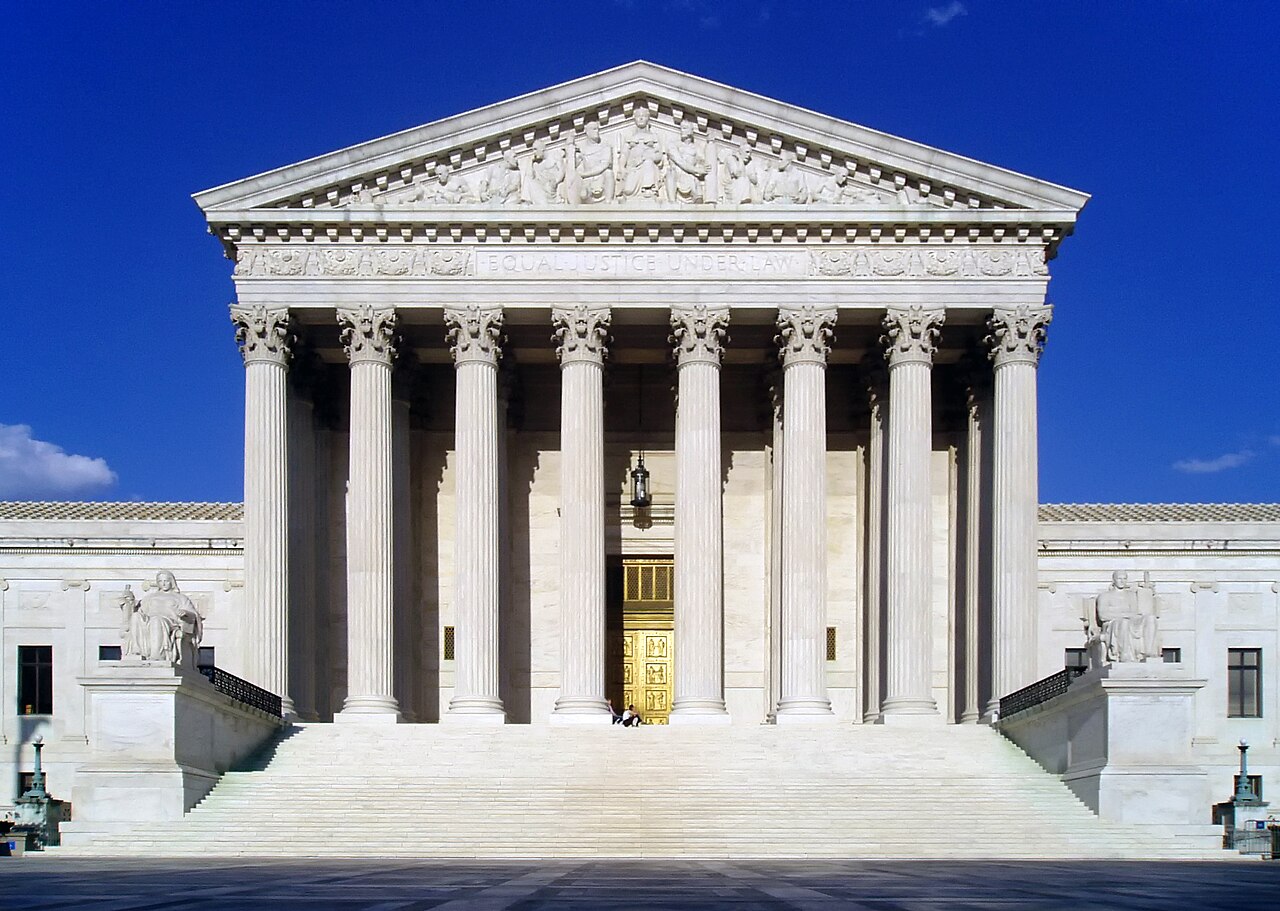
Evans is one of an estimated 600,000 American citizens living in Canada who are eligible to cast a ballot in the Nov. 3 midterms. This week, a US Supreme Court ruling raised a pointed question for that population: Will it get harder for them to vote? For now the answer is no, not because of anything in this specific ruling, but because a separate court order is still keeping the whole system frozen.
On Aug. 24, the U.S. court gave preliminary approval to an executive order from President Donald Trump directing the Department of Homeland Security to compile a list of eligible voters, and instructing the US Postal Service to deliver mail ballots only to people on the list. The court didn’t rule on whether the order is constitutional, only that the Democratic-led states challenging the directive lacked legal standing to do so at this time.
Justice Ketanji Brown Jackson dissented, warning the decision “needlessly injects chaos and uncertainty” into the midterms. A broader injunction still blocks the US Postal Service from implementing the new procedures in time for the election so nothing about how ballots move has actually changed yet, even though North Carolina and other states begin mailing ballots to overseas and military voters in early September.
June Sellers, a retired educator and former associate superintendent of public schools in Nova Scotia, said the ruling landed close to home. She and her wife, dual citizens of the US and Canada, maintain a residence in Maine and requested their mail-in ballots weeks ago.
“We’re worried,” Sellers said. “This is a legal and legitimate way of voting. The state of Maine has processes in place to ensure the integrity of their vote.
“We care about what happens in the United States. We’re US citizens, and also Canadian citizens, and it concerns me very much.”
Most of the 600,000 eligible voters like Evans and Sellers, don’t even realize they’re eligible to vote at all, according to organizers.
“No one asked them,” said Wes Edwards, a volunteer organizer with Building Bridges for America Action Fund, a nonprofit based in Bellingham, Wash.
Edwards said the group is focusing its outreach on Americans with ties to North Carolina and Georgia, two states where overseas votes have swung close races before. He pointed to North Carolina’s 2022 Chief Justice race, decided by roughly 400 votes, as the kind of margin overseas voters could tip.
Kevin Leja, a team leader with Indivisible Bellingham, described a similar effort: For the 2024 election, his organization mailed postcards to more than 900 Americans it had identified as living in B.C.
Both organizers work from the US side of the border, reaching into Canada rather than organizing from within it, a detail that says something about how thin the on-the-ground infrastructure still is, relative to the size of the population they’re trying to reach.
Neither Building Bridges nor Indivisible describes itself as partisan, though both organizers acknowledge they are left-leaning. Edwards called his group “progressive in essence” while insisting it isn’t tied to any campaign or party.
Leja was more direct: A self-described progressive, he said flatly that unseating Trump is part of what motivates the work.
Republicans have a smaller organized presence in Canada. Georganne Burke, who leads Republicans Overseas Canada, has said in the past that Republicans are outnumbered roughly 3:1 north of the border and less funded than their Democratic-aligned counterparts.
Nationally, Republican energy in this election cycle has focused less on mobilizing overseas voters and more on tightening who counts as one of them.
That’s the other half of this story. The federal SAVE Act (Safeguard American Voter Eligibility Act), which would require voters to show documentary proof of citizenship — a passport, birth certificate, or naturalization certificate — in person, in order to register, passed the House in 2025 and remains stalled in the Senate. Supporters call it a commonsense safeguard against non-citizen voting, which is already illegal and, according to research cited by critics of the bill, exceedingly rare. Opponents warn it would disproportionately burden Americans who don’t routinely carry those documents, including many living abroad.
Audrey Macklin, a citizenship and human rights law scholar at the University of Toronto, said this kind of divided political attention isn’t unusual. Diaspora communities have always maintained a stake in the politics of the countries they’ve left, she said, whether or not they still hold citizenship there.
What’s changed, in the American case, is the intensity of the moment: A documentation fight in Washington that could make voting harder just as advocacy groups try to make it easier, playing out against Americans in Canada who, as Macklin put it, often maintain meaningful connections to more than one country, and those connections don’t stop just because someone crosses a border.
Chris Cannon, who writes the Communication Breakdown newsletter and teaches journalism at the University of British Columbia, said leaving the US doesn’t mean leaving it behind.
“You can leave a country and still love a country,” he said. “Living in Canada doesn’t make me hate America any more than standing in my living room makes me hate my kitchen.”
He said the legal uncertainty swirling around this year’s vote will likely cut both ways among expats, pushing some to engage more urgently, while prompting others to disengage entirely, worn out by the chaos.

Shilpashree Jagannathan is a Hamilton-based freelance journalist and editor whose work has appeared in CBC News, New Canadian Media, The Margin, Business Insider, TRT World and Mint, and has been republished by The Walrus. She reports on immigration, labour, affordability, housing, elections, climate impacts and social justice, focusing on how policy and power shape the lives of households, workers, newcomers and local communities. Drawing on more than a decade in business journalism in India and a strong background in investigations, research and editorial work, she brings rigour and empathy to stories that trace the gap between policy and lived experience. She has also appeared on podcasts and radio programs to discuss her reporting and its broader public-policy implications.