


For more than a year, Jeffrey Vermeire has waited for Immigration, Refugees and Citizenship Canada to decide whether to issue him a citizenship certificate. He is one of thousands of Americans interested in obtaining Canadian citizenship based on historical ties to the country.
After gathering and submitting his personal and family information, the internal case notes show his application was referred to an internal unit called Program Support. But Vermeire says IRCC has never told him what the unit is reviewing, why his file was sent there or when he can expect a decision.
Vermeire is one of several applicants who told New Canadian Media that files referred to Program Support can remain unresolved for months with little explanation. Records reviewed by NCM show that even applications marked urgent have been routed there, while the department provides no public description of the unit’s mandate, referral criteria or processing timelines.
Canada and the United States have long been connected by families that live, work and move across the border. Canada’s 2021 census counted more than 256,000 immigrants born in the United States, while many Canadian families, including those in this story, have relatives spread across both countries.
Interest among Americans in documenting Canadian citizenship appears to have risen sharply since Bill C-3 took effect in December, allowing more leniency in granting citizenship to those with generational ties to Canada. According to IRCC figures reported by The Canadian Press, nearly 2,500 applications for proof of citizenship came from the United States in January 2026, after the new legislation, compared with 290 applicants from the United Kingdom, the next-largest national group.
Cassandra Fultz, a regulated Canadian immigration consultant and founder of Doherty Fultz Immigration, said her firm has handled clients whose citizenship applications were referred to Program Support.
She described it as a form of “secondary review” for applications that are less straightforward than routine files. Officers handling such cases may spend more time reviewing the file and conducting additional research before reaching a decision.
Fultz said referrals her firm has seen can involve complex applications, unclear documents, questions about eligibility or requests for urgent processing. In some recent citizenship-by-descent cases, applicants were later asked for additional evidence concerning birth certificates, including amended records or copies that did not clearly reproduce the original document.
The cases raise broader questions about transparency in the handling of proof-of-citizenship applications, particularly those submitted during a temporary process created for people affected by Canada’s former first-generation limit. The former first-generation limit generally stopped Canadians born abroad from passing citizenship to children also born abroad. Bill C-3 removed that cutoff for many descendants.
Some applicants say they learned of their referral only after requesting internal records, while others remain unsure whether related family applications are being assessed in the same system.
Vermeire, a 45-year-old data engineer in Pennsylvania, applied for a citizenship certificate through his Canadian-born mother. He grew up with close family ties to Nova Scotia and Ontario and said confirming his citizenship would also help his three children obtain proof of theirs.
NCM’s reporting unfolded after a Reddit request about a related citizenship issue was shared in citizenship forums. Within two days, 15 people contacted NCM about Program Support and unexplained delays in proof-of-citizenship applications.
Records reviewed by NCM show that IRCC referred his application to Program Support on April 3, 2025. Vermeire said he was initially told the additional review would take about three months.
More than a year later, the file remains unresolved.
The records show no outstanding request for documents and offer no clear explanation for the delay. One internal note says “verify PTC,” without defining the term. Vermeire said repeated webform inquiries produced largely templated responses and no meaningful update.
“There’s no way to get any information in or out of it,” he said, describing Program Support as a “bureaucratic black hole.”
Vermeire said a clear timeline would at least have allowed his family to plan.
He is still waiting for an explanation and a decision.
IRCC does not publicly explain Program Support’s role within the department or the criteria used to refer citizenship applications there.

Dan Herman’s records raise another question: what happens when an application marked urgent is referred to Program Support?
Herman, who lives on the U.S. West Coast, submitted proof-of-citizenship applications for himself and his two children in August 2025. Records obtained through an access-to-information (ATIP) request show that IRCC created his application on Aug. 15 and referred it to Program Support five days later.
The notes list the referral reason as “PS-31B” and state that a Program Support referral was required. They also associate the file with an internal inventory called “Urgent Citizenship Applications 2025-26” .
The records do not explain what PS-31B means, what issue required additional review or whether the urgent designation changed the file’s place in the queue.
They also record a notice of delay as being in a queue, but do not show that a notice was sent.
Herman said he later learned by phone that his application had been referred to Program Support and was considered urgent. He said he was not given a timeline or told what was being reviewed.
His case shows the uncertainty created when internal records indicate both urgency and a Program Support referral, but do not explain which designation takes precedence.
Neither Herman’s records nor IRCC’s public material explains whether an urgent designation changes how quickly Program Support reviews a file.
Fultz said PSU referrals generally lengthen processing because the usual service standard no longer applies, although urgent files her firm has handled have sometimes still been processed quickly.
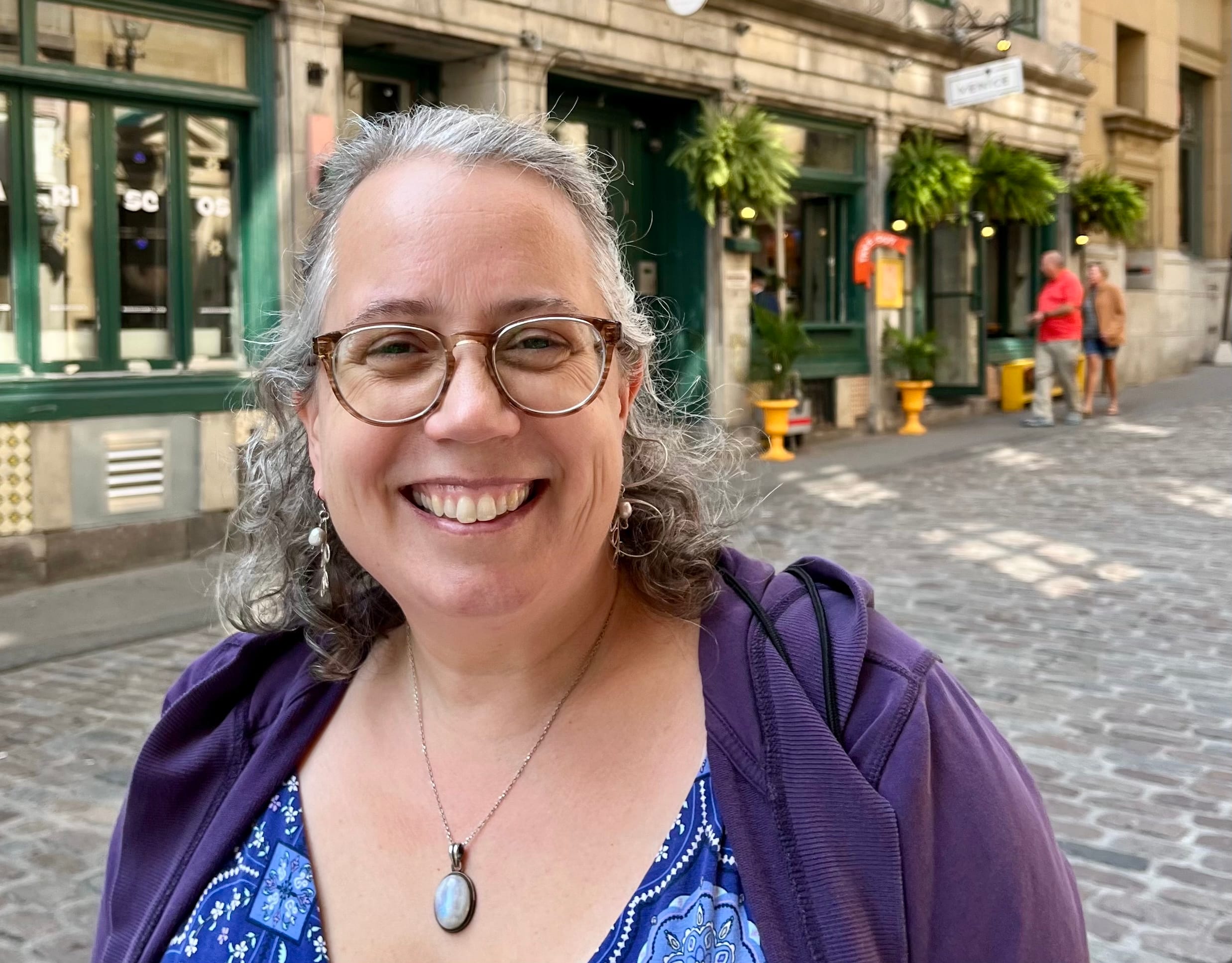
Amanda Witman’s family offers a comparison of how closely related applications can move through IRCC at sharply different speeds.
Witman, who lives in Vermont, submitted applications for herself and one adult son in a package IRCC received on July 15, 2025. Internal notes later showed that both files had been referred to Program Support. IRCC never asked for any additional documents after Witman and her son was referred to Program Support. Their citizenship certificates arrived in March 2026.
Four days after sending the first package, Witman mailed a second containing applications for another son, two daughters, her sister and her sister’s two children. IRCC acknowledged those applications on July 17 and 18. Nearly a year later, none of the six had received certificates.
Witman’s mother submitted a third application in November 2025. IRCC acknowledged it the following month and approved it in January 2026, ahead of the six earlier applications.
The applications relied on the same Canadian family line, although individual circumstances and supporting records were not identical. Witman said the uneven results have left her unable to understand why some relatives were approved while others remain waiting.
Her documents confirm that her application and one son’s were referred to Program Support before approval. She does not have internal records confirming whether the six pending applications were sent to the same unit.
Witman said she learned about Program Support through an online community of citizenship applicants, then requested her records to determine whether her own file had been referred there. IRCC did not separately notify her.
Applicants are not consistently told when this happens, Fultz said. Her firm has received formal referral letters for some clients, while in other cases it learned about the referral only after calling IRCC. She said webform responses have not disclosed the referral in the cases her firm has handled.
For Witman’s family, confirming citizenship is not primarily about an immediate move to Canada. She said it would preserve their ability to travel, care for Canadian relatives in an emergency and maintain a connection to the Newfoundland family her grandfather remained proud of throughout his life.
“If it weren’t for the first-generation limit, we would have been confirmed citizens all along,” she said.
A temporary route while the law remained unchanged
Several of the applications reviewed by NCM were submitted under a temporary interim measure introduced while Parliament considered changes to Canada’s citizenship-by-descent laws.
At the time, the Citizenship Act still generally prevented people born abroad from automatically acquiring citizenship if their Canadian parent had also been born abroad. An Ontario court had ruled key parts of that first-generation limit unconstitutional, but suspended its ruling while the federal government developed replacement legislation.
Under the interim measure, people affected by the limit could submit an application for proof of citizenship and be offered consideration for a discretionary grant under subsection 5(4) of the Citizenship Act. IRCC said priority would be given to urgent cases and to certain children born or adopted abroad whose Canadian parent could demonstrate a substantial connection to Canada.
The arrangement required applicants to enter through a proof-of-citizenship process even though the law in force could prevent that application from being approved in the usual way. Those invited to pursue a discretionary grant could then be asked for additional documents and fees.
Bill C-3 later changed the law governing citizenship by descent. It is not a program for just Americans. Its citizenship-by-descent provisions apply to eligible descendants of Canadians regardless of where they live or what other nationality they hold. Applicants have come from countries including the United Kingdom, France, China, India and Australia.
But applicants who had filed under the interim measure say they received little information about how their existing applications would move from the temporary process into assessment under the new rules.
Witman said applicants often included records explaining family connections, urgency or other circumstances because it was unclear what evidence might support a discretionary grant. Those submissions can therefore look different from ordinary proof-of-citizenship files now assessed under Bill C-3.
It remains unclear how many interim-measure applications were referred to Program Support, how many remain there and whether IRCC is processing them according to their original receipt dates. The department did not answer NCM’s questions on those points.
Waiting without knowing where the files are
For Amy, a mother in Vermont, even confirming where her family’s applications are being processed has been difficult.
Her partner and two daughters submitted proof-of-citizenship applications together in September 2025 under the interim measure. Amy, who prepared the paperwork, said IRCC acknowledged the applications within days and later marked them as in process.
Nine months later, the family has since received no request for additional documents and no meaningful explanation for the delay. Amy later submitted copies of the children’s passports voluntarily, hoping to ensure IRCC had everything it needed.
She also filed two ATIP requests seeking the internal records. She received acknowledgements, but not the records that could show whether the applications had been referred to Program Support.
Amy believes the files may be there because of the prolonged silence and accounts shared by other applicants. IRCC has not confirmed that.
“We’re sitting around waiting, and we don’t know where things are at, and our lives are on hold until they tell us something,” she said.
The family hopes eventually to move to Canada. Amy said the citizenship certificates would be a first step in planning that move and determining which immigration process she would need to pursue as the only family member not claiming citizenship by descent.
The uncertainty is particularly difficult because one of her daughters requires continuing health care that Amy fears may become harder to access in the United States. NCM is identifying Amy only by her first name, at her request, to protect her daughter’s privacy.
Amy said the family is not asking IRCC to approve the applications without scrutiny. They want to know where the files are, whether anything is missing and how long the process may take.
“What we need is information,” she said. “If they told us what was happening, at least we could plan.”
NCM has also reported on immigration applicants left in prolonged uncertainty while waiting for clearer timelines and decisions from IRCC.
IRCC does not publicly explain Program Support’s mandate, referral criteria or processing timelines. The internal records reviewed by NCM use codes such as “PS-31B,” “PS-3(1)g” and “PS-OTH,” but do not define them in plain language.
Applicants said they often learned of a referral only after requesting their Global Case Management System notes. NCM asked IRCC what Program Support is, how many citizenship files are assigned to it, why applications are referred there and whether urgent files are treated differently. The department did not answer those questions by publication time.
For Vermeire, the problem is not only the delay, but the absence of any explanation.
“If I had been told from the get-go, ‘It’ll be 15 months,’ it would have been disappointing,” he said. “But I was told three months.”

Shilpashree Jagannathan
Shilpashree Jagannathan is a journalist from India. She now lives in Toronto and has worked as a business reporter for leading newspapers in India. She has tracked telecom, infrastructure, and real estate news developments and has produced podcast series. She currently focuses on human rights, feminist movements, and other related issues in Canada and India. Her weekends are spent bird watching in one of the Toronto birding hotspots; she loves trails, biking, and a lot of sun.