
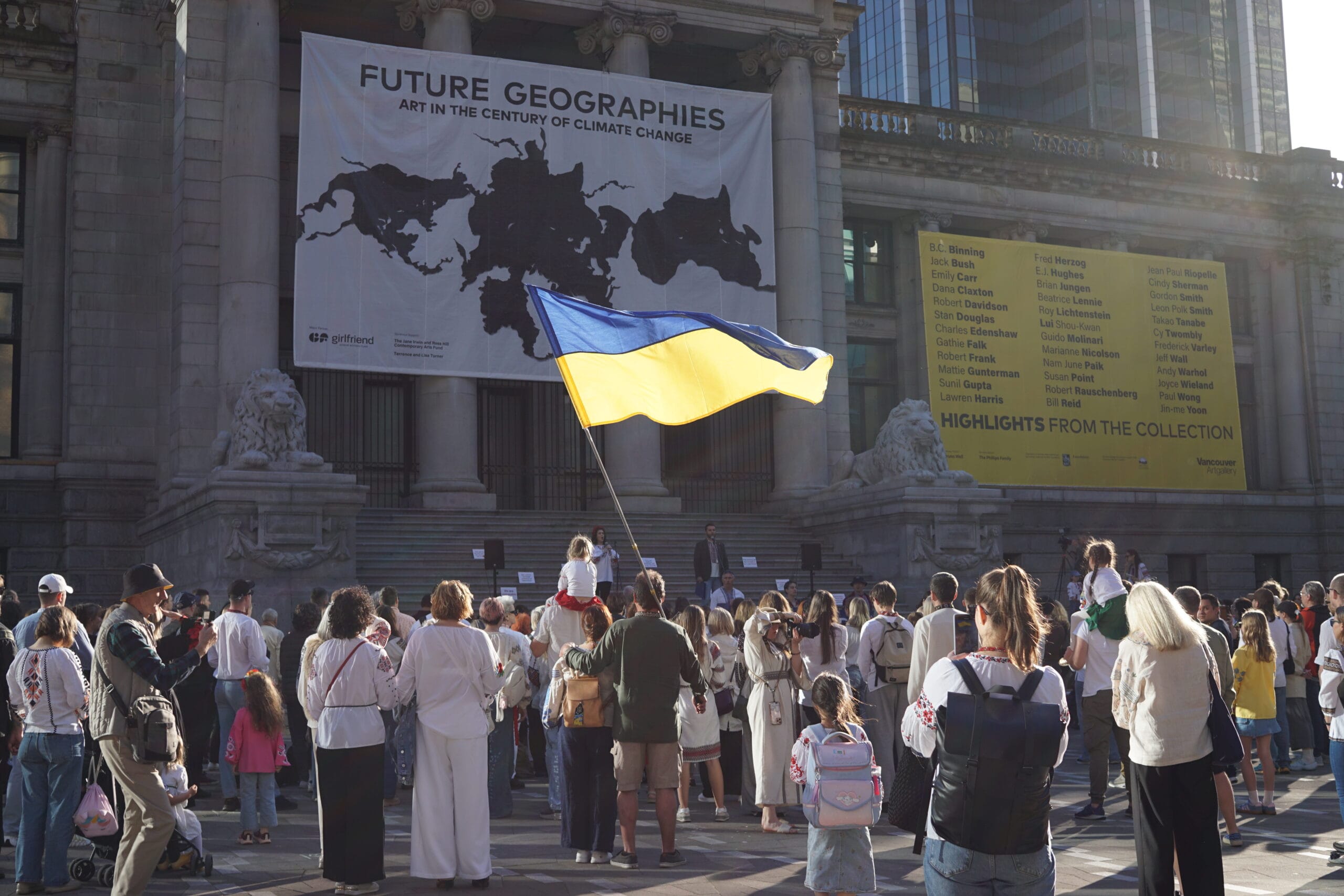
The Ukrainian diaspora in Vancouver dressed up in their traditional clothing to show solidarity for the occupied territories of Ukraine, on May 21.
Around 6:30 p.m., Ukrainian community gathered in front of Vancouver Art Gallery to march down the streets of downtown Vancouver. The gathering marked the 20th anniversary of the International Vyshyvanka Day and its 10th edition in Canada, celebrated by wearing a traditional Ukrainian shirt called ‘Vyshyvanka’ as a symbol of solidarity.
The event was organized by UA Rally (Ukraine Action Rally), which partnered with other Ukrainian advocacy groups, such as RIY Vancouver and Ukrainian Cultural Society.
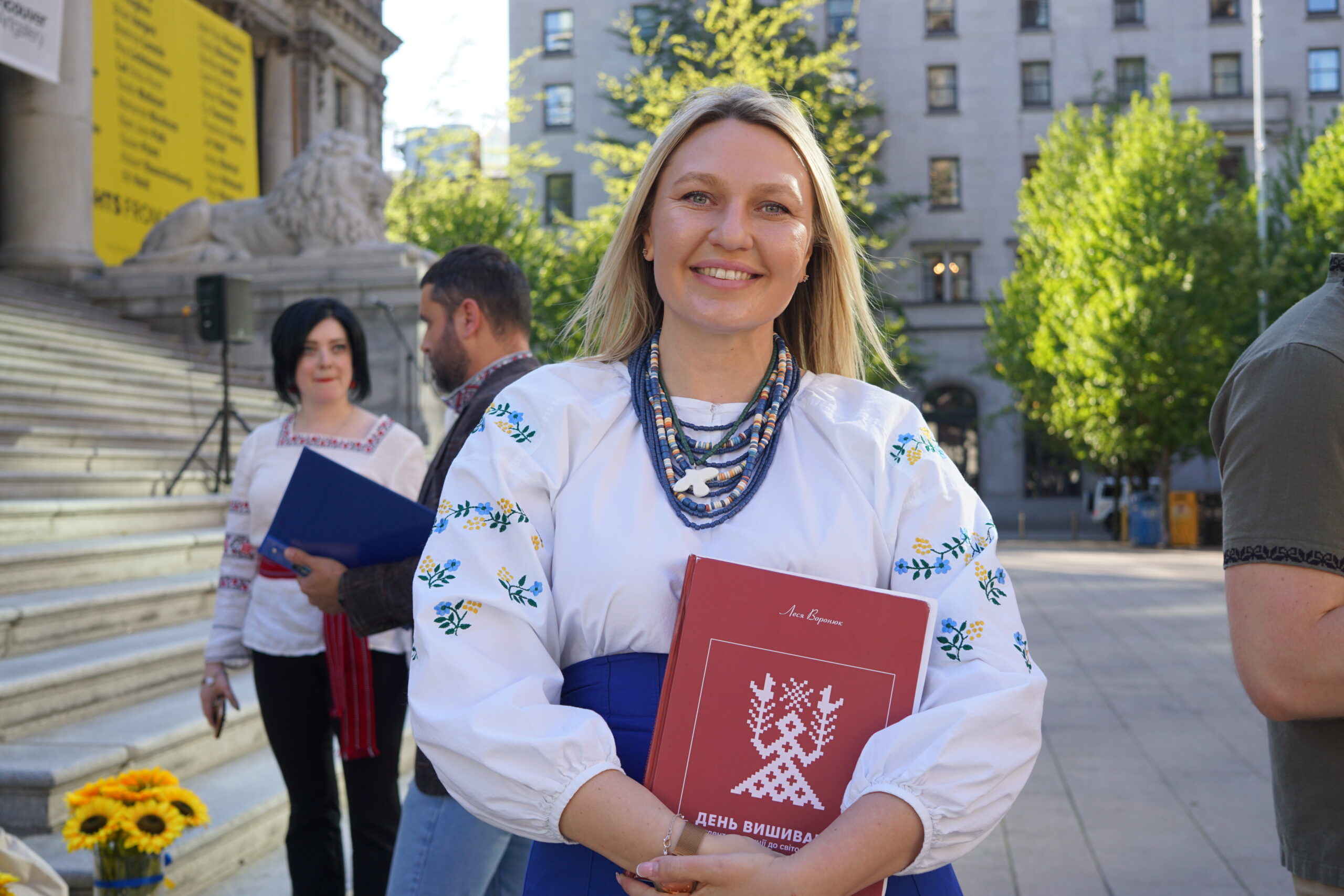
Iryna Mitnovych, the president of the Ukrainian Cultural Society (UCS) who also wore a Vyshyvanka to the event, said the traditional wardrobe is a symbol of Ukrainian identity and independence. She said the Vyshyvanka was banned in Russia-occupied territories, such as Luhansk, Donetsk, Zaporizhzhiza and Kherson.
“Our people who came from occupied territory, they try to hide it in some place. Sometimes they hide [Vyshyvanka] under the ground or in the trees under the roots,” said Mitnovych.
Vyshyvanka, a beacon of resistance
Mitnovych is from Chernivtsi, the birth place of Vyshyvanka Day that stemmed from a group of students at Yuriy Fedkovych Chernivtsi National University wearing Vyshyvankas to class in 2006.
Vyshyvanka, Mitnovych says, became the beacon of Ukrainian resistance since the Russo-Ukrainian War began in 2022. She said Ukrainians want to show that they have the strength to preserve and protect their memory and culture.
“We wanted to be the voices of that people who can’t tell about them and especially about that people who were killed by Russia or lived on this territory which [are] occupied right now,” said Mitnovych.
Battle continues under occupation
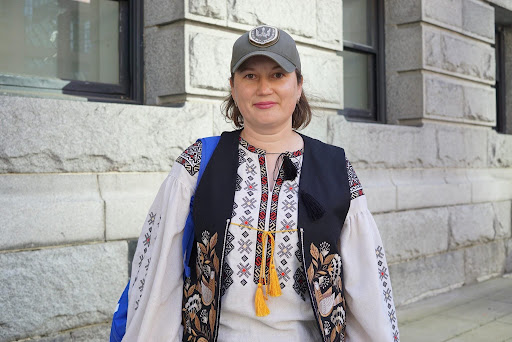
Liliia Ratushna, the co-founder of UA Rally, said the Vyshyvanka walk will help the Ukrainians over the world become stronger no matter where they are.
Ratushna said the 20th anniversary of Vyshyvanka Day symbolized the independence and freedom of Ukraine. Her Vyshyvanka is special from her hometown, with black and red embroidery, and stands for happiness and freedom.
When people see Ukrainians wearing their embroidered shirts and start asking questions, Ratushna said Ukrainians can speak about the situation in occupied territories. “Even on occupied territory, we’re still fighting for Ukrainian independence and freedom,” she said.
Ratushna, whose brother lost his life in battle during the Russo-Ukrainian War, expressed her gratitude to the soldiers who are fighting the war. Ratushna hopes that one day, “the occupied territories will [be] freed and will be again independent part of Ukraine.”
Entire culture under threat
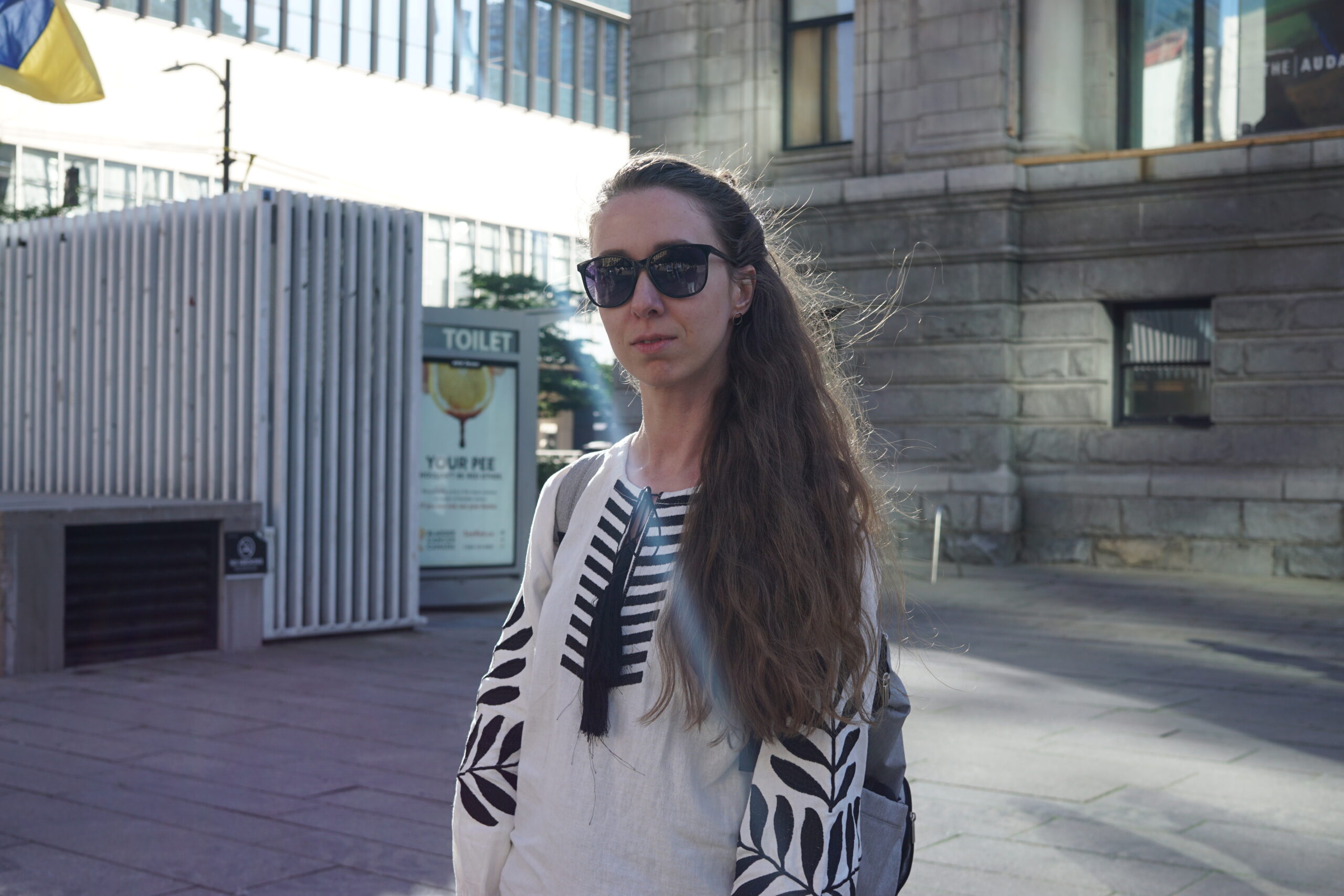
Iryna Kalantay, a Ukrainian-Canadian immigrant who came to Vancouver three years ago, said that in occupied territories of Ukraine, speaking Ukrainian and learning about Ukrainian history are banned on top of wearing Vyshyvanka.
According to Ukrainian World Congress in 2025, the Ukraine’s Ministry of Foreign Affairs (UMFA) said Russia banned the teaching of Ukrainian language in schools located in occupied territories, applying to primary, basic, and secondary education.
“Imperial Russia, which systematically manipulates the language issue to justify its aggression, is pursuing a deliberate policy of russification, assimilation, genocidal extermination of entire nations, suppression of other cultures, and erasure of national identity,” said the UMFA.
On top of the Vyshyvanka ban, Mitnovych said the heritage buildings and books were destroyed in the occupied territories of Ukraine.
In Dec. 2023, Viktoriia Lisohor, the director of the central library of Mariupol, said that all Ukrainian-language books in the city were destroyed by the occupiers, according to Voice of America’s reporting.
As of May 13, 2026, there are 527 cultural sites that have been damaged, including 31 damaged sites in Zaporizhzhia, 47 in Luhansk, and 134 in Donetsk, 36 in Kherson, according to UNESCO. “So it’s very sad everything that’s happening there,” said Kalantay about the occupied territories.
“I want them to know that we are with them and I believe and I hope they have this belief in their heart that Ukraine will be united,” said Kalantay.
Mitnovych also shared her message of solidarity. “Be safe, because Ukraine was, Ukraine is, and Ukraine will [be] with you always and I think we will win and we will come and we will protect our people and our land.”

Jonah Jung
Joonha 'Jonah' Jung is a student journalist from BCIT who is passionate about covering community affairs and cultural issues.