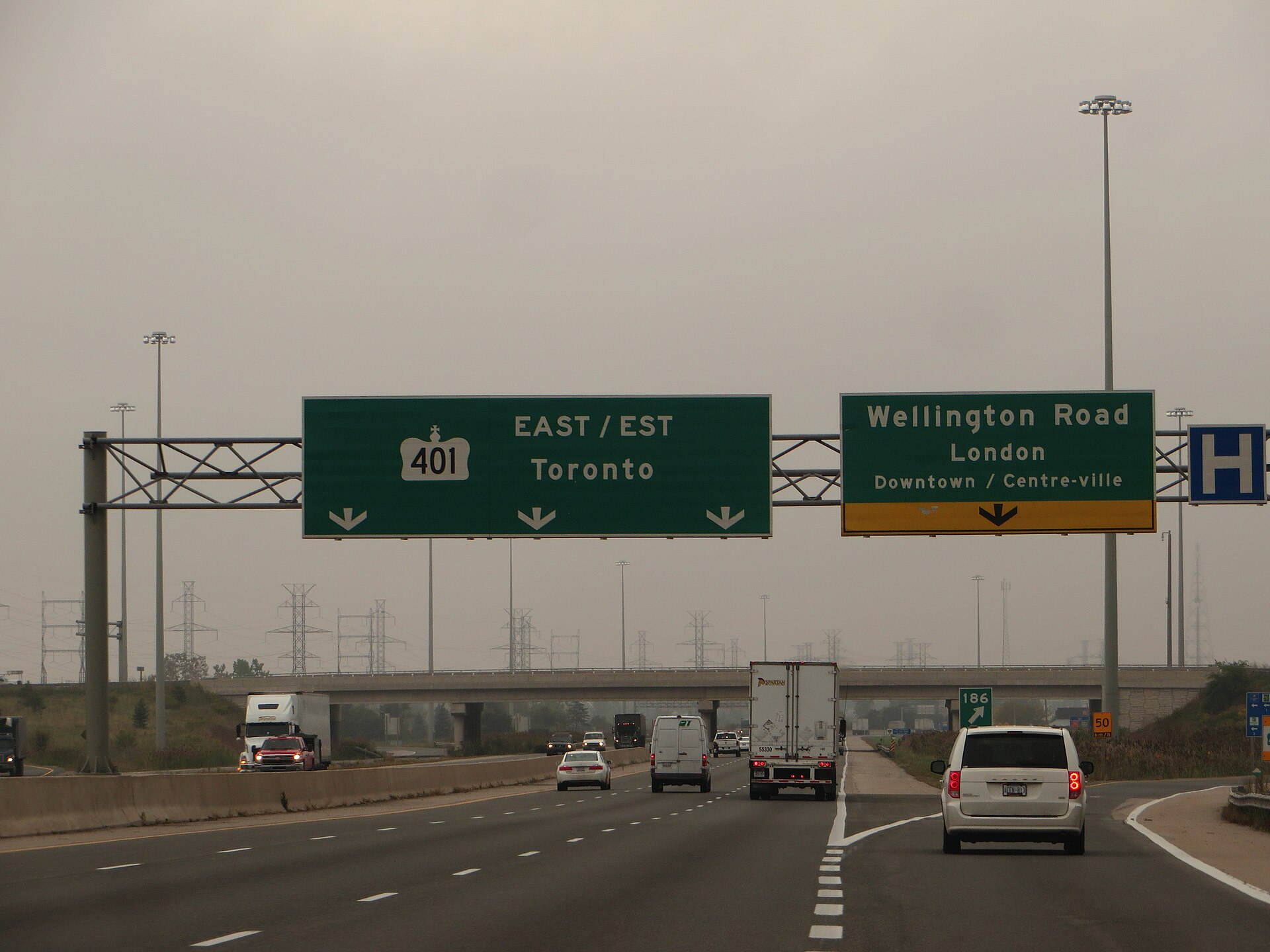

Ontario offered newcomers to the province a minor reprieve beginning July 1, when it allowed drivers to count a maximum of a year of foreign driving experience towards calculating their insurance premiums. The only exceptions are immigrants from the U.S., the U.K., Australia, Japan, South Korea, and several nations in Western Europe.
British Columbia is less discriminatory and credits a maximum of 15 years of foreign driving experience, applies the same surcharge to anyone new to the province, whether they moved from elsewhere in Canada or immigrated from another country, including immigrants.
Ontario and B.C. account for the bulk of Canada’s newcomers every year, together receiving more than half of all immigrants to Canada.
Ontario’s July 1 package capped how much driving experience newcomers from most countries can have credited towards their driving record: 12 months, regardless of whether they actually drove for two years or 20.
My own household is an example. When my partner and I arrived in Canada in 2021, we assumed his driving record would count for something. He’d been driving over two decades, a record close to spotless. The insurer asked how many years of experience each of us had, but never asked for documentation behind the years he reported.
Our premium started at $212 a month, climbed to $272, then to $350 when we switched providers and cars, hoping a fresh start might reflect his actual history. Inflation and vehicle costs explain some of that, but nearly doubling for a driver with a clean record did not make sense.
What I didn’t understand then was how much of this traces back to a structural problem: move to Canada with years of driving experience from another country, and most insurers won’t automatically count it, even when you specifically demand that your entire record be counted.
The catch: provinces rely on “reciprocal arrangements” with foreign nations and the onus on these overseas governments to reach agreements with Toronto or Victoria. Ontario has agreements with a short list of countries: the U.S., the U.K., Australia, Japan, South Korea, and several in Western Europe. It excludes India, China, the Philippines, Nigeria, Pakistan, and most of Latin America, among Ontario’s largest newcomer source countries.
New Canadian Media reached out to the embassies and high commissions of China, Pakistan, Nigeria and India to ask whether they had raised this issue with Canadian officials on behalf of their communities. None responded.
It is legal for insurers to treat a newcomer’s foreign driving record as unproven, since they can’t independently verify a history built abroad.
Ontario’s Transportation Ministry (MTO) said reciprocal agreements are typically initiated by the foreign jurisdictions and go through review to confirm comparable driving standards. Most countries have never formally requested, or made it through, that process.
B.C.’s different approach
Ontario isn’t the only province where this plays out. British Columbia’s version looks generous on paper while working differently in practice. The Insurance Corporation of British Columbia (ICBC), the province’s public insurer, credits up to 15 years of prior experience and hasn’t required separate proof of past insurance since 2019.
ICBC confirmed eligible drivers get credit for prior driving experience while a “new resident Driver Factor” applies separately for their first three years in B.C., decreasing gradually over that period.
This surcharge does not discriminate by country the way Ontario’s system does. It applies the same flat rate to anyone new to the province, whether they are arriving from Alberta, the U.S. or India, except former B.C. residents returning to the province.
The premium gap in real numbers
Mitch Insurance, an Ontario-based auto insurance brokerage, ran sample quotes for three fictional drivers, with identical driving records: a 45-year-old man in Toronto with 22 years of ‘clean’ driving experience, driving a 2024 Mazda CX-5. The only difference was where they learned to drive.
| Driver | Licensing status in Ontario | Annual premium | Insurer |
| Canadian-born | Insured one year with current company | $3,280 | CAA Insurance |
| U.K.-born newcomer | Exchanged U.K. licence for a full G; first time insured in Canada | $6,047 | Economical Insurance |
| India-born newcomer | Completed graduated licensing; newly G2 licensed; first time insured in Canada | $9,821 | Intact Insurance |
The U.K.-born driver paid almost double the Canadian-born driver. The India-born driver paid roughly three times as much, nearly $6,500 more a year, for the same profile. Part of that gap reflects licensing status, not just recognition: the India-born driver was newly G2 licensed since non-reciprocal drivers must complete Ontario’s full graduated system, while the U.K.-born driver exchanged directly for a full G.
The broker who ran the quotes cautioned that these numbers represent the most competitive pricing found and could vary with a client’s actual documentation and underwriting review. They are not, however, official figures from the insurers named.
New Canadian Media put the same three questions to Ontario’s five largest private insurers: Intact, Aviva, Desjardins, Co-operators, and Definity: whether they recognize foreign driving history, what documentation is required, and whether there’s a cap on years credited. None of them responded. The Insurance Bureau of Canada said, “Different insurers account for years licensed and driving experience differently, depending on the country (i.e. similar weather conditions and rules of the road) and how long you have been away.”
A Toronto Metropolitan University research project examining migrant driver behaviour in the Greater Toronto Area (GTA), in partnership with MTO’s Road Safety Research Office, is expected to report findings soon. The study is looking into differences – if any – in driver behaviour between immigrant and non-immigrant drivers with varying road experience.

Shilpashree Jagannathan is a Hamilton-based freelance journalist and editor whose work has appeared in CBC News, New Canadian Media, The Margin, Business Insider, TRT World and Mint, and has been republished by The Walrus. She reports on immigration, labour, affordability, housing, elections, climate impacts and social justice, focusing on how policy and power shape the lives of households, workers, newcomers and local communities. Drawing on more than a decade in business journalism in India and a strong background in investigations, research and editorial work, she brings rigour and empathy to stories that trace the gap between policy and lived experience. She has also appeared on podcasts and radio programs to discuss her reporting and its broader public-policy implications.