
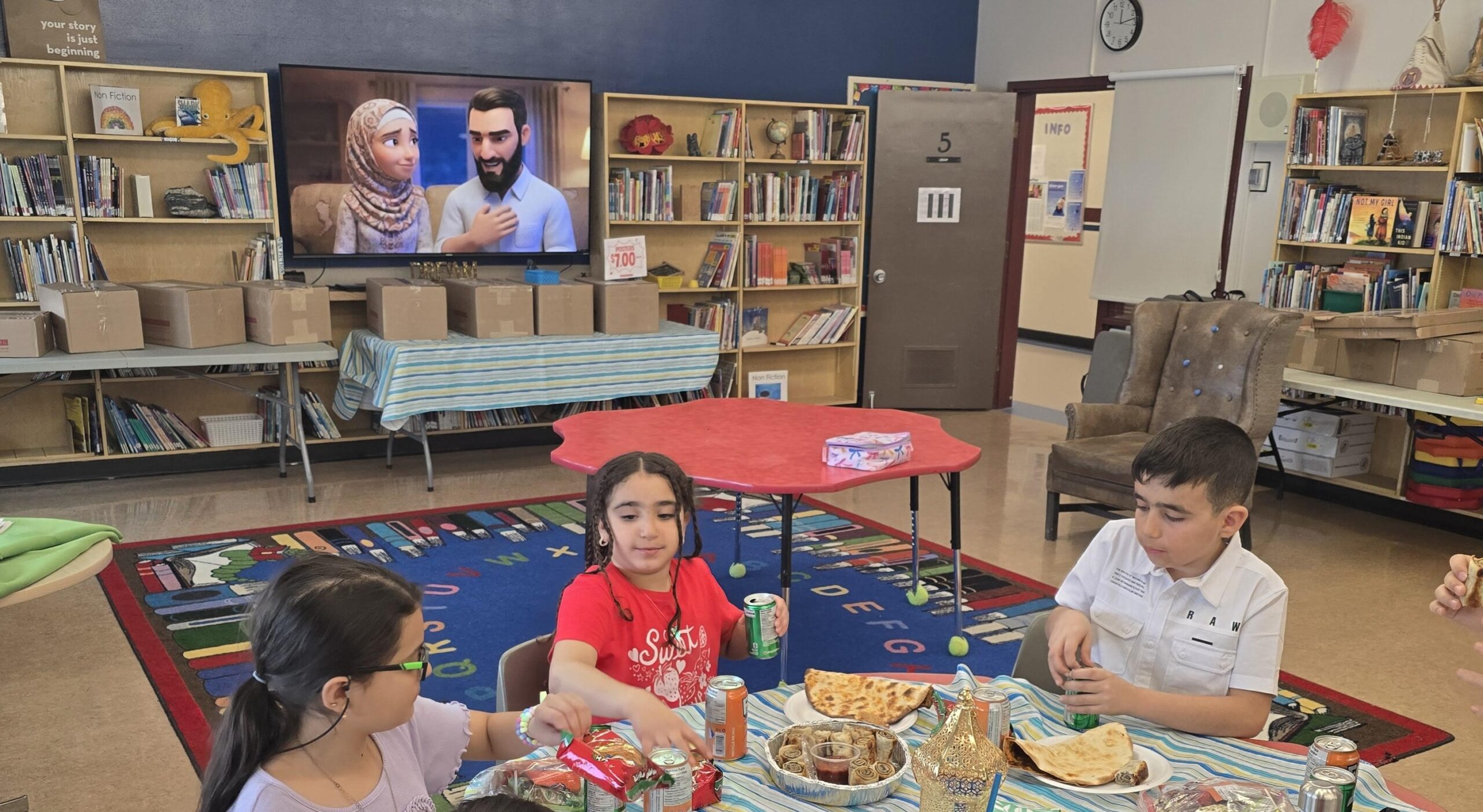

Nehir Emre and Mehmet Ozalp, both 11, sat shyly alongside Jana Ahmed Al Othman, 9, Leen Mohamad, 8, and Lujain Othman, 7, as they told New Canadian Media about the Ramadan Club they are part of.
The month-long club was launched this year to help Muslim students who are fasting feel included and avoid spending lunch periods watching their peers eat, said Fernando Batista, principal of Harrow School, part of the Winnipeg School Division. It has since evolved into a space where Muslim students can gather, connect, and share their experiences and traditions relating to the holy month of Ramadan.
Harrow School also expanded its library collection to include more than 20 books about Islam, Eid, and Arab cultures after Lujain, who is originally from Syria, walked into the principal’s office and asked whether the school had any books about Ramadan. Batista said the request highlighted a need for greater student representation in school resources, prompting the expansion of the collection.
Initiatives like the Ramadan Club and the expanded library collection reflect the kind of inclusive learning environment the province is beginning to foster in small but significant ways through its new Anti-Islamophobia Action Plan.
What was the need for the K-12 Anti-Islamophobia Action Plan?
“Every child deserves to feel safe, supported and included in Manitoba’s schools, regardless of their faith, background or identity,” said Manitoba’s Education and Early Childhood Learning Minister Tracy Schmidt at the launch of kindergarten to Grade 12 Anti-Islamophobia Action Plan on December, 12, 2025.
The plan aims to promote equity and foster a sense of belonging for all students. It was developed by the Anti-Islamophobia Working Group, formed in October 2024 and composed of community leaders, educators, and Department of Education staff.
A report by Manitoba Islamic Association (MIA) about Islamophobia in schools was one of the driving forces to develop the K-12 action plan in Manitoba, says Humaira Jaleel, founder of the Healthy Muslim Families (HMF) and committee member, that helped formulate the plan.
According to an MIA 2022 report, 62 per cent of Manitoba Muslims had experienced Islamophobia, with 43 per cent of those incidents taking place in school settings across the province.
“The community research of HMF on self-censorship also demonstrates how youth feel they need to hide their identity or how they see themselves as not being able to show their full self also contributed to the reasons for the development of the action plan,” she adds.
The rise in Islamophobia extends well beyond Manitoba. Statistics Canada data shows a 94 per cent year-over-year increase in police-reported hate crimes against Muslims. At the same time, reports from the Standing Senate Committee on Human Rights and the Angus Reid Institute point to a three-fold increase in negative public sentiment toward Islam, accompanied by growing discrimination in daily life.

Josh Watt, who serves as the executive director at the Manitoba School Boards Association said the action plan helps schools strive to remain inclusive learning spaces.
Diversity is growing in Canada — So is the need for understanding
The Muslim community is the second-largest religion in the country, while in Manitoba, the religion counts 26,430 people (2 per cent of the population).
“Across Canada and right here in Manitoba, society is changing and conversations are taking place about how we can respect the diversity and inclusion of our staff, students and community members. These discussions highlight the need for school boards to take a proactive, education‑based response,” said Josh Watt, executive director, Manitoba School Boards Association.
He adds that introduction of the action plan is therefore important, providing guidance as schools strive to remain inclusive learning spaces where student attitudes are shaped. “By setting students on the path to understanding each other, we can help them to know and respect one another in our classrooms and beyond.”
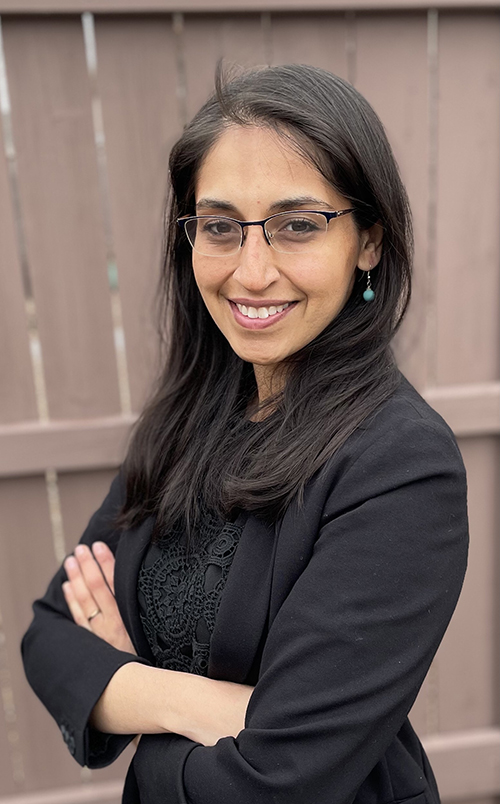
Sadaf Ahmed, Manitoba Advocacy Officer with the National Council of Canadian Muslims (NCCM), said that since the action plan’s introduction, many schools and divisions have already begun taking meaningful steps toward strengthening inclusion, whether through increased awareness around religious observances, teacher training, or broader conversations around respectful school environments. Ahmed adds that Manitoba’s recognition of anti-Palestinian racism within the action plan establishes an important national precedent within Canadian K-12 education.
Jaleel commends the province, saying that Manitoba is a leader in anti-racism initiatives. “Other provinces can take our action plan as a template and build their own,” she adds.
How Are Schools Implementing the Anti-Islamophobia Action Plan?
Manitoba Education and Early Childhood Learning has provided school divisions with the action plan as a supplementary resource..
The Winnipeg School Division (WSD), Manitoba’s largest and oldest school division, has taken several steps to support Muslim students across its 78 schools. These include providing Ramadan guidance to schools since 2017, establishing an Anti-Racism, Equity & Climate Justice Department, and employing four Muslim Intercultural Support Workers and one Muslim Intercultural Support Coordinator to support schools and teachers. The division also recognizes Canadian Islamic History Month, hosts staff Iftar (breaking of the fast) gatherings to promote cultural understanding, and offers halal food options through its Universal Nutrition Program catalogue.
At the school level, implementation varies. Victoria Albert School, for example, hosts Friday prayers throughout the school year and maintains a dedicated prayer room for students.
Pembina Trails School Division, which serves southwest Winnipeg and operates 36 schools, consulted with the NCCM’s Ahmed to review its implementation efforts. Following that meeting, Jannat Firdous, Manager of Education Programs at NCCM, delivered a professional development session for all high school administrators.
The division has also expanded halal food options and accommodations during Ramadan. According to Pembina Trails, its efforts span all four focus areas, including diversifying library collections, recognizing cultural and religious observances, providing anti-racism and diversity training, supporting Muslim Student Associations, and partnering with organizations such as the Manitoba Islamic Association and NCCM to foster more inclusive school communities.
Other school divisions did not respond to media requests before publication deadline.
What more is needed?
The success of the Action Plan depends on clear implementation and accountability measures to ensure consistency across school divisions, says Ahmad.
Jaleel notes that the action plan is a set of recommendations rather than a mandate. Meaningful change, she says, will depend on schools and school divisions committing the necessary resources, including staffing.
Measuring the extent of the plan’s adoption can also be challenging, as decisions about implementation are often made at the classroom and school levels, depending on teachers’ lesson planning and the discretion of principals and vice-principals.
While there is still work to be done, Muslim students at Harrow School, Victoria Albert and others, are finding more spaces where they feel they belong. They celebrate their traditions with friends, share their cultures openly, and see themselves reflected in books and school activities—a quiet affirmation that their stories matter, too.
4 Key Areas of Focus in the Anti-Islamophobia Action Plan
- Recognize and celebrate: Including Muslim history in schools and curriculums. ● Equip and empower: Providing professional learning and resources for educators to address Islamophobia.
- Well-being and belonging: Supporting mental health and fostering safe, inclusive environments for Muslim students and staff.
- Partnerships: Building strong relationships between schools and Muslim communities.

Tahira Noor Khan is a Canada-based journalist who covers human-interest stories, immigration, culture, health, wellness, lifestyle, and social trends. Her work has been published by the Winnipeg Free Press, The Indian Express, Entrepreneur Magazine, The Quint, The Diplomat, and The Wire, among other outlets. When she's not reporting, she enjoys exploring local gems, going for walks, reading, and connecting with friends and community members.