
When the Hindu Samaj of Hamilton and Region began, it did not have a temple of its own.
It began in a basement.
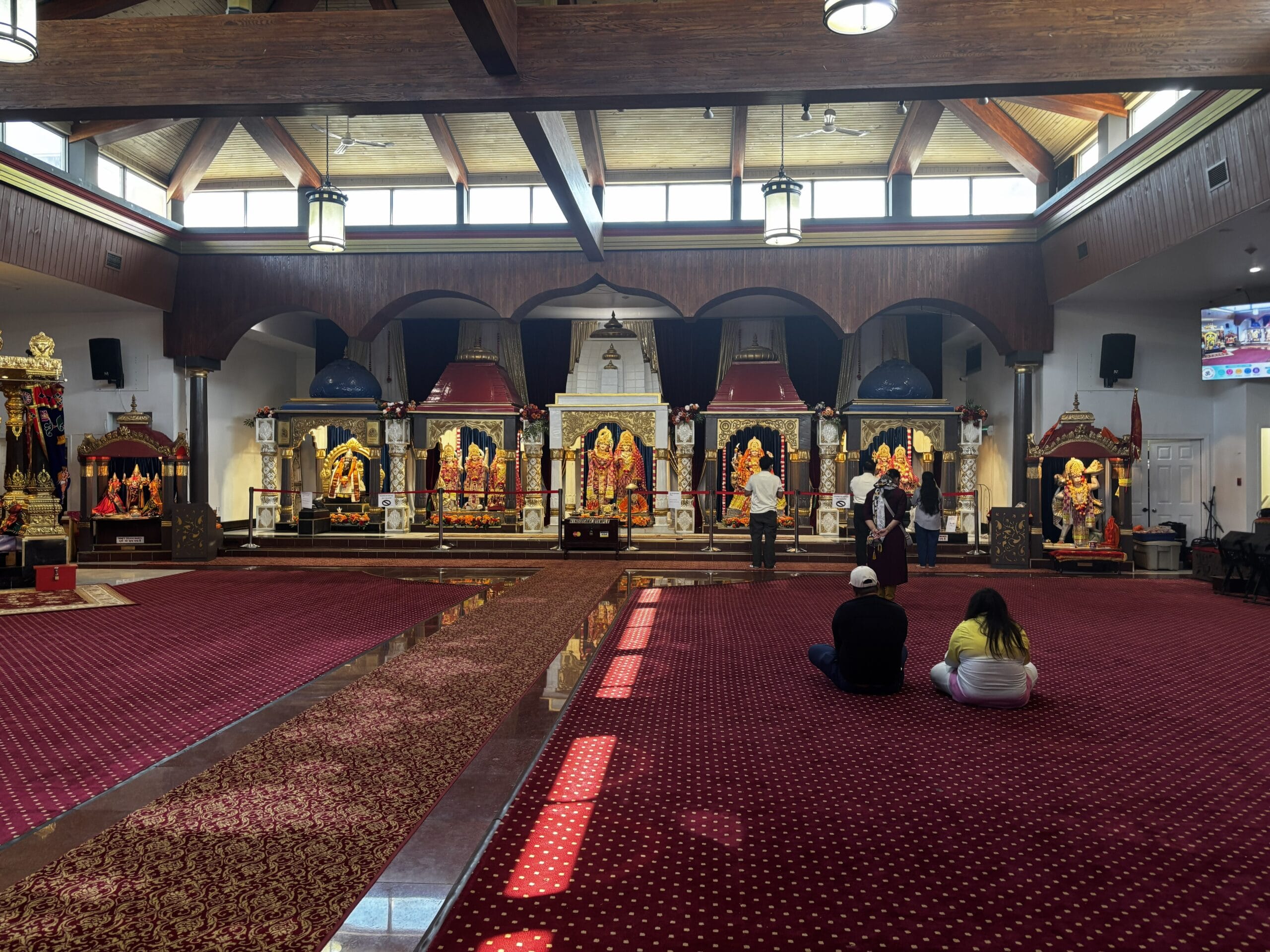
Nearly 50 years later, the temple is preparing to mark its golden jubilee from June 5 to 7. But for devotees, the anniversary is about more than the passage of time. It is also a reminder of how a small immigrant faith community built a spiritual home, lost it in an arson after 9/11, and rebuilt with support from Hamilton’s wider faith and civic communities.
The temple’s history reflects the growth of Hamilton’s Hindu community, which has expanded sharply over the past decade. According to Statistics Canada, Hindus made up 1.8 per cent of Hamilton’s population of 569,353 in 2021, up from 0.8 per cent in 2011.
Temple leaders say that growth can now be seen during major festivals. Saurabh Sharma, the temple’s religious secretary, said more than 5,000 devotees “came to the temple for Shivratri” (a festival celebrated to honour Hindu god Shiva) this February.
“From where it started, from (to) where it is right now, there’s a long journey,” he said.
For early Hindu families in Hamilton, the temple was not only a place of worship. It was also a place to find one another.
 Temple’s origins
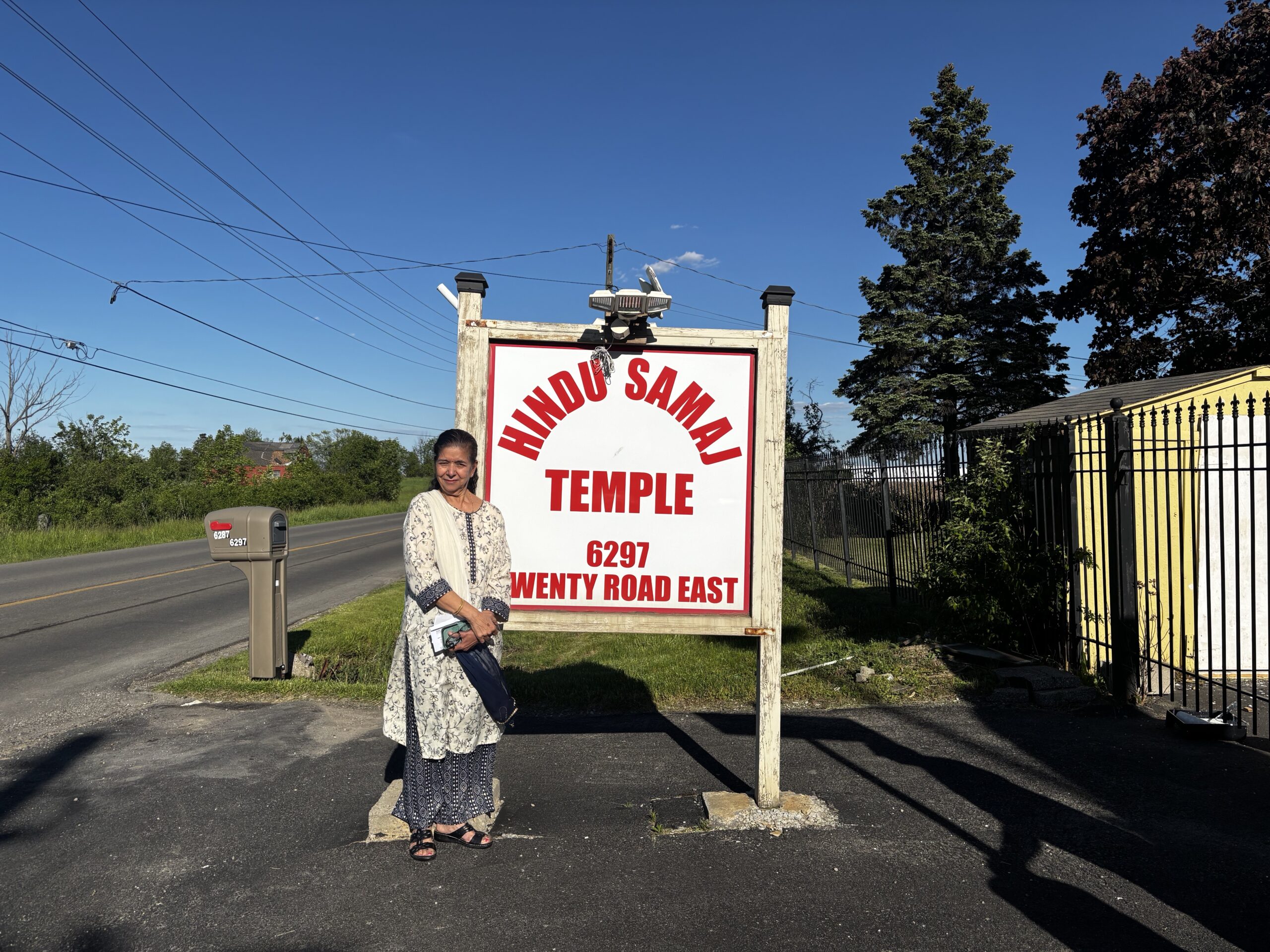
In 1976, the organization was incorporated. In 1984, the community bought the site on Twenty Road East that would become its meeting ground. Like a lot of other temples across Canada, this temple too was a church.
Uma Sharma, the temple’s current president, said three Hindu families first gathered at her uncle’s home for bhajans, a Hindu devotional song, often sung collectively during prayer gatherings, in the 1970s. As more families joined, the group moved to a room at McMaster University, where the community first met once a month and later every week.
“Then slowly, whosoever came, they started coming to their house, four or five families, and then they moved to McMaster.”
Once we got the temple, people started coming here,” Uma Sharma said. “It was kind of a social place too — religious and social.”
That sense of attachment made the destruction of the temple in 2001 especially painful.
A plaque outside the temple records the act of arson that burned it to the ground on Sept. 15, 2001, days after the destruction of the World Trade Centre buildings in New York. The plaque says the attack caused “immeasurable emotional and spiritual trauma” to Hindus in the area and around the world.
Uma Sharma said the temple community was devastated.
“Everybody was upset. People were crying,” she said. “Even the kids were crying.”
Temple leaders also recalled that what remained from the burned temple was immersed in Lake Ontario with a religious ceremony.
Rebuilding the temple
The rebuilding that followed became part of Hamilton’s interfaith history.
Uma Sharma said a church on Stone Church Road gave the Hindu community a place to worship for five years while the temple was rebuilt — an example of the kind of faith communities sharing space that has long shaped Hamilton’s religious landscape. Fundraising also came from within and beyond the Hindu community, including events, door-to-door efforts, support from community leaders and contributions from workers connected to Stelco Steel, she said.
“At that time, actually, the whole (of) Hamilton, all the other communities, they helped us,” Sharma said.
The plaque outside the temple also recalls a poster campaign after the fire that read: “An attack on one is an attack on us all.”
Saurabh Sharma said the temple continues to welcome police recruits and other community groups who come to learn about the temple and Hindu worship.
Today, the Hindu Samaj draws devotees from many Hindu communities and diasporas. Temple leaders said the congregation includes families with roots in India, Sri Lanka, the Caribbean, Pakistan, Bangladesh, Nepal, Malaysia and other parts of the world.
Clara Kumar, a Gujarati Hindu from Karachi in Pakistan, moved to Hamilton from Mississauga six years ago with her family. She said Hindu Samaj was the first temple her family visited after moving to the city. She and her husband now bring their triplet sons to the temple so they can grow up with the rituals, festivals and languages their parents inherited.
“We just want our kids to follow our culture, our religion,” Kumar said. “Everything pretty much, they learn what we learn from our parents, so they learn here.”
Kumar said people are often surprised when she tells them there are Hindus in Pakistan, including Gujarati, Sindhi, Punjabi and other communities. For her family, the temple is a place where her children can remain connected to Gujarati and Hindi, learn pujas and aartis (worship rituals), and take part in festivals.
“They know what our culture is,” she said.
The Hamilton temple is part of a wider network of Hindu temples and cultural centres that have grown across Canada, especially in the Greater Toronto Area. Some of the most visible include Hindu Sabha Temple in Brampton, BAPS Shri Swaminarayan Mandir in Toronto and Hindu Heritage Centre in Mississauga.
In Hamilton, temple leaders say the next challenge is making sure the institution can keep up with the community it serves.
The temple offers food, or prashad, on Sundays and Tuesday evenings, and runs food drives. Saurabh Sharma said leaders would like to eventually offer evening food every day, especially for students and others who may need it.
They also hope to expand the temple and build a larger community centre. But leaders say parking, land-use restrictions and basic access around the site remain challenges as attendance grows.
For the anniversary, however, the focus is on remembrance and continuity.
For Saurabh Sharma, the story of the Hindu Samaj is one of faith, loss, support and rebuilding.
“As the community is growing,” Saurabh Sharma said, “we wanted to make sure that we grow as well.”

Shilpashree Jagannathan is a Hamilton-based freelance journalist and editor whose work has appeared in CBC News, New Canadian Media, The Margin, Business Insider, TRT World and Mint, and has been republished by The Walrus. She reports on immigration, labour, affordability, housing, elections, climate impacts and social justice, focusing on how policy and power shape the lives of households, workers, newcomers and local communities. Drawing on more than a decade in business journalism in India and a strong background in investigations, research and editorial work, she brings rigour and empathy to stories that trace the gap between policy and lived experience. She has also appeared on podcasts and radio programs to discuss her reporting and its broader public-policy implications.