


Diljit Dosanjh, a Punjabi artist, is breathing new life into a deep sense of alienation that affects sections of the large Punjabi diaspora in Canada. It began like a celebration of global Punjabi stardom — Dosanjh has achieved global stardom through a new album, sold-out stadiums and an inimitable bhangra dance style.
The artist kicked up a notch when he appeared for a second time on the Jimmy Fallon American late night The Tonight Show, with a host eager to learn a dance move. Dosanjh was on the show to promote his latest album, Aura, and his North American tour, which opened with a sold-out stadium show in Vancouver on April 23.
But midway through the interview, Dosanjh turned to a much older Canadian story: the Komagata Maru, also remembered by many as the Guru Nanak Jahaz, whose mostly Punjabi passengers were denied entry to Canada in 1914.
For descendants and scholars, the moment with the talk show host was more than celebrity. It placed a painful chapter of Canadian immigration history before a mainstream global audience, linking the exclusion of Punjabi migrants in 1914 to the rise of Punjabi music, language and culture on some of the world’s biggest stages. It also resonated beyond one fan base, reaching the larger Indian and South Asian diaspora watching a familiar story of migration, rejection and belonging enter the spotlight.
Dosanjh was referring to the 1914 voyage of the Komagata Maru, a Japanese steamship also remembered in the community as the Guru Nanak Jahaz. The ship arrived in Vancouver carrying 376 passengers from British India, most of them Punjabi Sikhs, who were seeking entry to Canada at a time when immigration rules were designed to keep Asian migrants out. After nearly two months in Burrard Inlet, most passengers were forced to turn around.
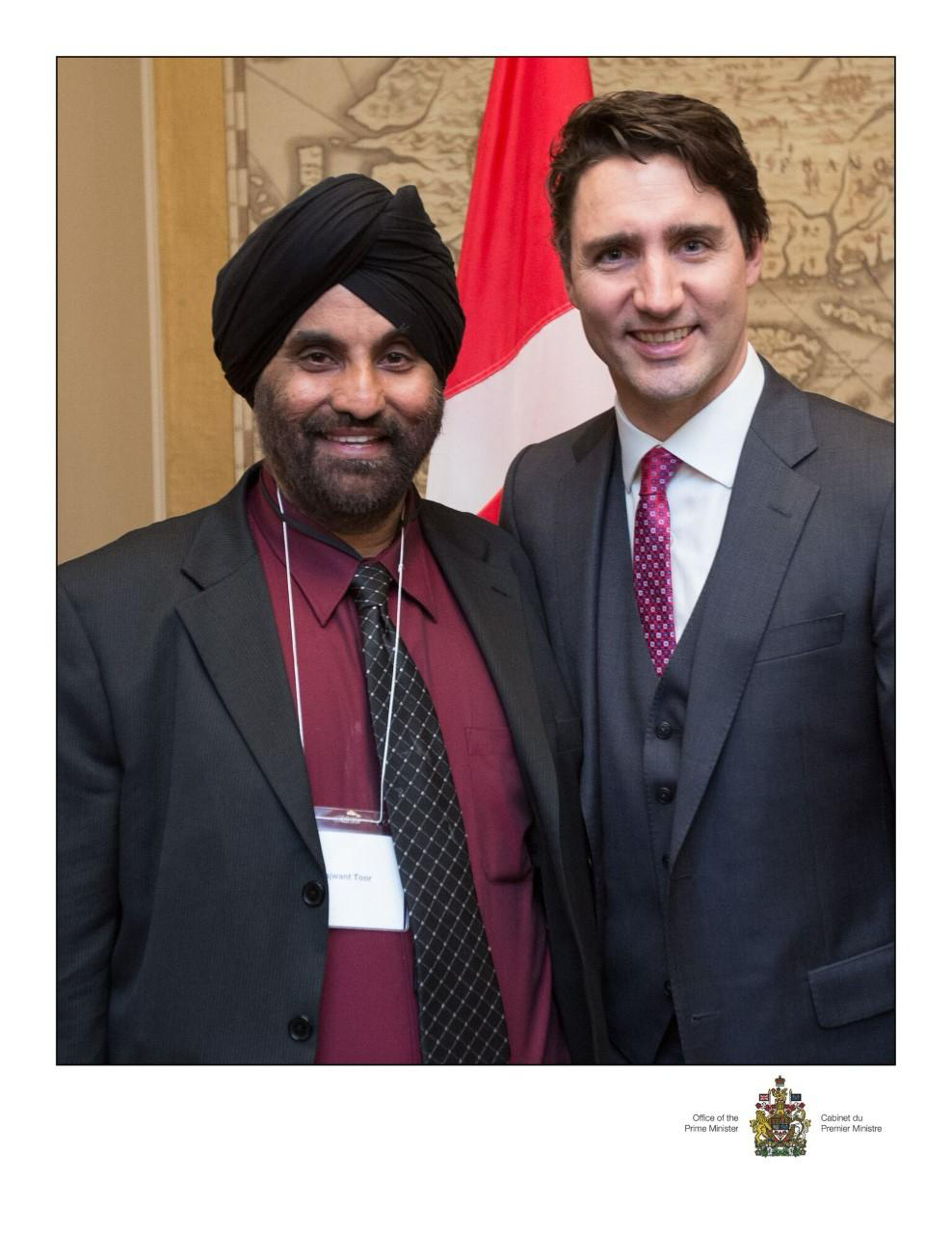
For Raj Singh Toor, whose grandfather Baba Puran Singh Janetpura was among the passengers, Dosanjh’s mention was an act of recognition.
Toor, vice-president and spokesperson for the Descendants of the Komagata Maru Society, said he was happy to hear the singer bring the history to such a large audience.
“When he says something, then thousands, millions people listen,” Toor said. “I want to say thank you to him for recognizing Komagata Maru passengers in his show.”
Toor has spent years pushing governments and cities to formally acknowledge the incident, including apologies, commemorative signs and renamed public spaces. Canada formally apologized in the House of Commons in 2016, more than a century after the ship was forced to leave Vancouver.
But Toor said the larger goal is education, especially for younger Canadians who may not know how hard earlier generations fought to open doors for those who came after them.
“We can’t undo the past,” he said, “but we can move forward” by teaching people what happened.
That history is personal for Toor. His grandfather came seeking a better life, only to be held offshore and denied entry. Toor said the passengers depended on the local South Asian community for food, water and medicine while they waited. For him, the story is not only about what Canada once refused, but about what earlier migrants made possible for later generations.
“Because of their sacrifice, today the South Asian community is living very peacefully, very happily here in Canada,” Toor said. He said his grandfather refused to return to Canada because of the painful memories, but believed those passengers had helped open a path for future generations.

Dr. Charlie Wall-Andrews, a Toronto Metropolitan University professor who developed a course on Dosanjh’s cultural impact, said the moment stood out because of its historic contrast: a Punjabi artist being celebrated on a major American stage while honouring ancestors who were once rejected by the West.
By using the name Guru Nanak Jahaz, she said, Dosanjh “didn’t just mention a tragedy; he reclaimed a piece of Sikh history and turned a late-night entertainment segment into a powerful statement on diaspora resilience.”
The exchange also gave Wall-Andrews’ work an unexpected spotlight. Fallon noted that a Toronto university is teaching a course about Dosanjh. The singer laughed, saying he did not know what the course would teach and noting that he had not gone to college or university himself.
The moment added a note of humility to a larger cultural shift: a Punjabi artist who described himself as “10th pass” (meaning “Passed grade 10 in the Indian vernacular) is now the subject of academic study in Canada.
His second appearance on Fallon in two years also suggests Punjabi music is no longer being treated as a one-time cultural introduction, she said, but as a sustained global force with a growing audience. (Dosanjh first appeared on The Tonight Show in June 2024, when he was introduced as one of the biggest Punjabi artists in the world and performed “G.O.A.T.” and “Born to Shine.”)
The interview did not stay only with history. Moments later, Dosanjh taught Fallon a bhangra move, shifting the mood from painful memory to joyful celebration.
The moment also landed in a country where the Indian and South Asian diaspora has become a major part of Canada’s social and cultural fabric. Global Affairs Canada says more than 1.8 million Canadians are of Indian origin, while Statistics Canada says South Asians were the country’s largest racialized group in the 2021 census, numbering nearly 2.6 million people and making up 7.1 per cent of Canada’s population.
That scale helps explain why Dosanjh’s statement travelled beyond one fan base: for many in the broader Indian and South Asian diaspora, it echoed older stories of migration, exclusion and the long struggle to belong. That visibility is not limited to music: Punjabi Canadians are now part of Canada’s political, business, academic, sporting and cultural elite in ways that would have been unimaginable to the ship passengers turned away in 1914.
The timing is also significant. Vancouver marks May 23 as Guru Nanak Jahaz (Komagata Maru) Remembrance Day, after city council formally apologized in 2021 for the discrimination. The city says it is also refurbishing the memorial with more durable materials and updated, translated historical content.
For Toor, remembrance is not only about apology or recognition, but education. He said he wants governments, schools and universities to do more to teach Canadians about the Komagata Maru/Guru Nanak Jahaz, so future generations understand the sacrifices that shaped the lives of today’s Canadians.
“If they know the history, then the history will not repeat again,” he said.

Shilpashree Jagannathan
Shilpashree Jagannathan is a journalist from India. She now lives in Toronto and has worked as a business reporter for leading newspapers in India. She has tracked telecom, infrastructure, and real estate news developments and has produced podcast series. She currently focuses on human rights, feminist movements, and other related issues in Canada and India. Her weekends are spent bird watching in one of the Toronto birding hotspots; she loves trails, biking, and a lot of sun.