
Most Canadians did not learn about the Battle of Vimy Ridge, one of the country’s defining moments in the First World War, from a military dispatch. Many learned of it from Pierre Berton’s Vimy (1986). Similarly, most Canadians did not learn about the forced internment of Japanese Canadians during the Second World War from a government report. Many learned of it from Joy Kogawa’s Obasan, a novel that kept the injustice alive in public consciousness long enough to force an official apology in 1988.
Canada’s deadliest terrorist attack, though, has not quite had that one novel, that one play, that one film that sears it into public memory. On June 23, 1985, a bomb planted by extremists agitating for Sikh independence destroyed Air India Flight 182 off the Irish coast, killing all 329 people on board, 268 of them Canadian citizens. Four decades later, an Angus Reid survey found that only nine per cent of Canadians said they knew a lot about the attack, while nearly one-third had never heard of it.
It is not that efforts to memorialize the country’s worst mass murder have not been made. Soon after the bombing, Clark Blaise and Bharati Mukherjee wrote The Sorrow and the Terror (1987), calling out what is still being said today: that Canada never grieved the victims of AI 182 as its own.
Two decades later, Anita Rau Badami wrote Can You Hear the Nightbird Call? (2006), which was set among Vancouver’s Indian immigrant community leading up to the attack, while Padma Viswanathan, in her Giller-shortlisted The Ever After of Ashwin Rao (2014), followed a psychologist drawn into the lives of families still carrying the loss. Canada’s national broadcaster CBC has also returned to the issue twice: first with Sturla Gunnarsson’s Air India 182, which opened the Hot Docs documentary festival in 2008, and more recently with Angie Seth’s Two Suitcases: Anatomy of the Air India Bombing, which aired in 2025 to mark its 40th anniversary.
Still, this deadly terror attack sits only on the periphery of Canada’s national consciousness. The problem is not the absence of cultural work but that of a shared national memory. In that vacuum, much of the long and sustained work of holding space for the victims, year after year, has continued to fall to the families of those who perished and to the communities closest to them. The following works offer a closer look at how that burden of remembrance has been carried from within the circle of loss.
Lata Pada – Transforming Grief into Sacred Movement
In June 1985, Bharatanatyam master Lata Pada was already in Mumbai preparing for a dance tour. Her husband Vishnu and teenage daughters, Arti and Brinda, were to fly out later to join her. All three were killed on the ill-fated Air India flight.
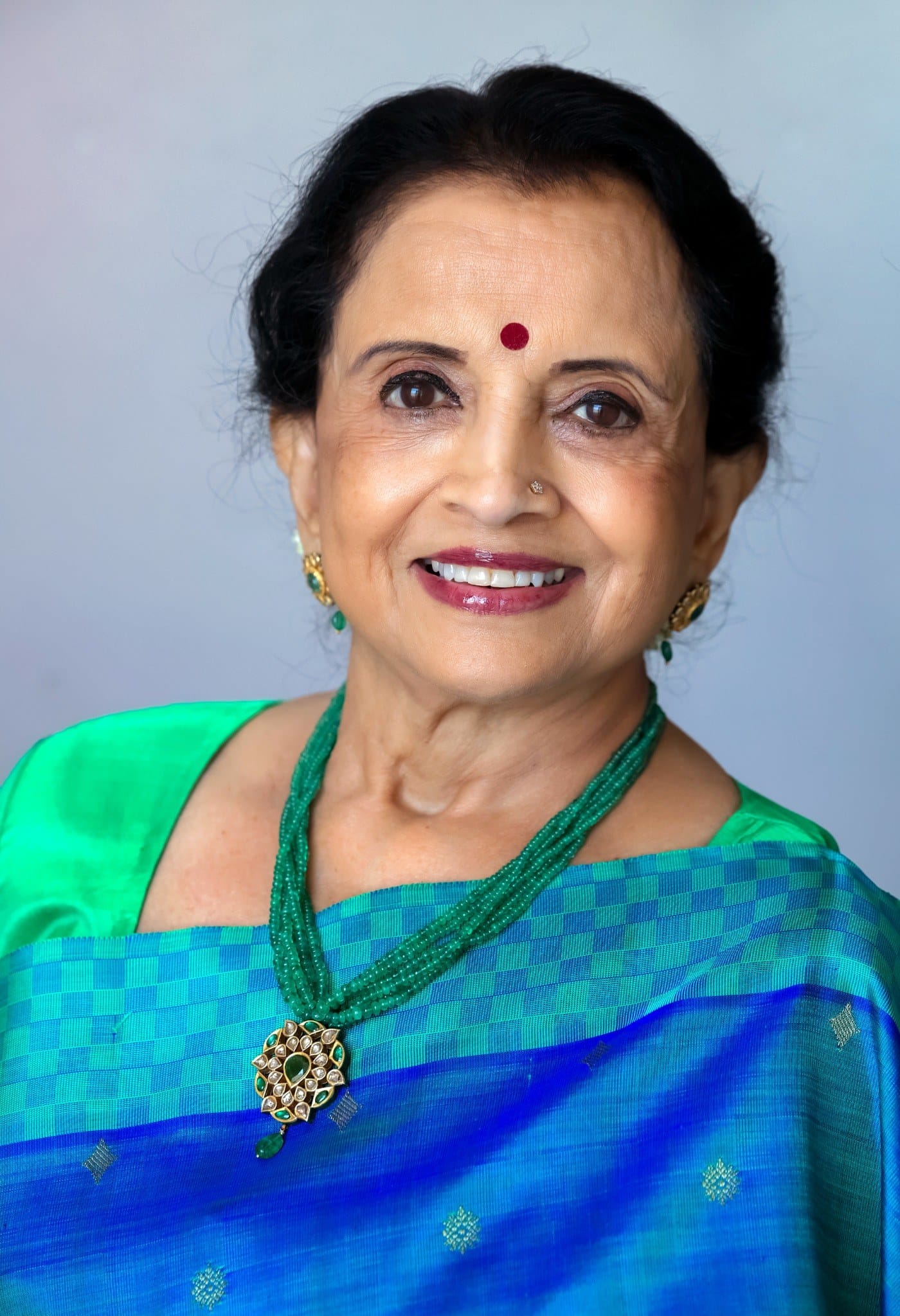
For 15 years, Pada grappled privately with her grief. Then, in 2001, she premiered Revealed by Fire—a seven-part multimedia dance production chronicling her journey through loss. The performance reflects a powerful creative vision, dramatizing sorrow, turmoil, and eventual transformation. Critics struggled to categorize it: therapy, memorial, or art? The answer was all three.
“Whether it’s a photograph, a musical composition, a dance piece, a book, a poem—they are permanent,” Pada explained in an interview to The Globe and Mail in 2011. “They serve to continually remind us.”
Premiering at Toronto’s Harbourfront Centre, Revealed by Fire toured Canada, yet most Canadians remain unaware of its existence. This paradox defines Air India’s artistic legacy: profound works that remain largely unseen.
Renée Sarojini Saklikar – Poetry as Witness
Renée Sarojini Saklikar was 23 when her aunt and uncle perished aboard AI 182. Her groundbreaking 2013 poetry collection, children of air india: un/authorized exhibits and interjections, emerged from decades of grappling with the bombing’s aftermath.
One of the more unusual works in contemporary Canadian literature, Saklikar’s book blends poetry with documentary archives and courtroom testimonies. It won the Canadian Authors Association Prize for Poetry and was shortlisted for the Dorothy Livesay Poetry Prize. But awards fail to capture its true achievement: transforming official records, news headlines, and personal memory into a searing meditation on terror’s enduring shadow.
“A collage of fact and imagination,” critic Sandy Shreve wrote when reviewing the collection. “This book, with Saklikar’s insight, compassion, and poetic skill, delves into and transcends private grief to tell a crucial public story, brimming with implications and questions for all of us.” Saklikar’s poetic archive preserves both public history and private anguish, creating documentary as art and testimony as literature.
Eisha Marjara – Filming the Absence
Montreal-based filmmaker Eisha Marjara was just 15 when she lost her mother and sister in the bombing. Her artistic engagement with this profound loss emerged decades later through films and photography exploring identity, memory, and the persistence of absence.

Marjara’s National Film Board docudrama, Desperately Seeking Helen, follows her search for her mother’s life story. Her accompanying photo series, Remember Me Nought, examines memory’s fragmented and elusive nature. Marjara’s work is not traditional memorialization; instead, it reveals how trauma shapes lives over generations, continually reframing loss and identity.
Rejecting simplistic healing narratives, Marjara offers honest portrayals of grief’s complexity. Her camera seeks acknowledgment, not closure, of what was lost, what remains, and what can never be recovered.
Missing: A Shared Memory
For four decades, the work of preserving the victims’ memory and telling the stories of those who were forever silenced has been carried by bereaved families, artists, writers, filmmakers, scholars, and community members who refused to let the dead be forgotten. What the country still lacks, though, is a shared memory equal to the scale of the crime.
That shared memory has never cohered, in part, because Canada’s response has been scattered, shaped by a handful of well-meaning institutional gestures which remain disjointed from each other. June 23 is the country’s National Day of Remembrance for Victims of Terrorism, though most Canadians let it pass unmarked. Four memorials stand across the country—in Ottawa, Montreal, Toronto and Vancouver—but they are visited mostly by the same cohort of victims’ families.
In 2011 Ottawa launched the $10-million Kanishka Project, named after the bombed aircraft, which has since funded close to 70 studies on counter-terrorism but their findings rarely travel beyond the academy. Important as each of these initiatives has been, they have never added up to a shared memory for the nation—as each reaches only a few.
That shared memory can only be built when it reaches everyone, and the most durable place for that is the classroom. Obasan and Vimy, for example, are known to generations of Canadians in part because they are taught in schools. Indeed, one concrete step before the next anniversary would be for provincial curriculum bodies, school boards and public history institutions to develop teaching resources on the bombing of AI 182, drawing on the literature, films, and performances that already exist.
An excellent place to start would be the archive that Prof. Chandrima Chakraborty has assembled at McMaster University, the fullest record of this memory the country has, anchored by the volume she edited, Remembering Air India: The Art of Public Mourning.
The material is there. But it must find a central place in history books across the country. From there, it can begin to find its place in libraries and podcasts, in galleries and museums, in movie theatres and performance centres. In time, the art that carries this history may coalesce into a shared national memory. Until then, the burden of remembering Canada’s deadliest terrorist attack will keep falling on the people who suffered it most—and their work will keep being perceived as community remembrance, when it must be read as Canadian history.
(Mayuri Mukherjee-Pascar is a Montreal-based political analyst and contributing editor at the Coalition of Hindus of North America)

Mayuri Mukherjee-Pascar
Mayuri Mukherjee-Pascar is an International Relations scholar and public policy analyst whose work focuses on international security and global governance. She has 15 years of experience across newsrooms, think tanks, and academia. She is also Contributing Editor at the Coalition of Hindus of North America (CoHNA), where she writes on diaspora politics, national security, and Hindu civil rights in Canada and the United States. She is currently based in Montreal.