
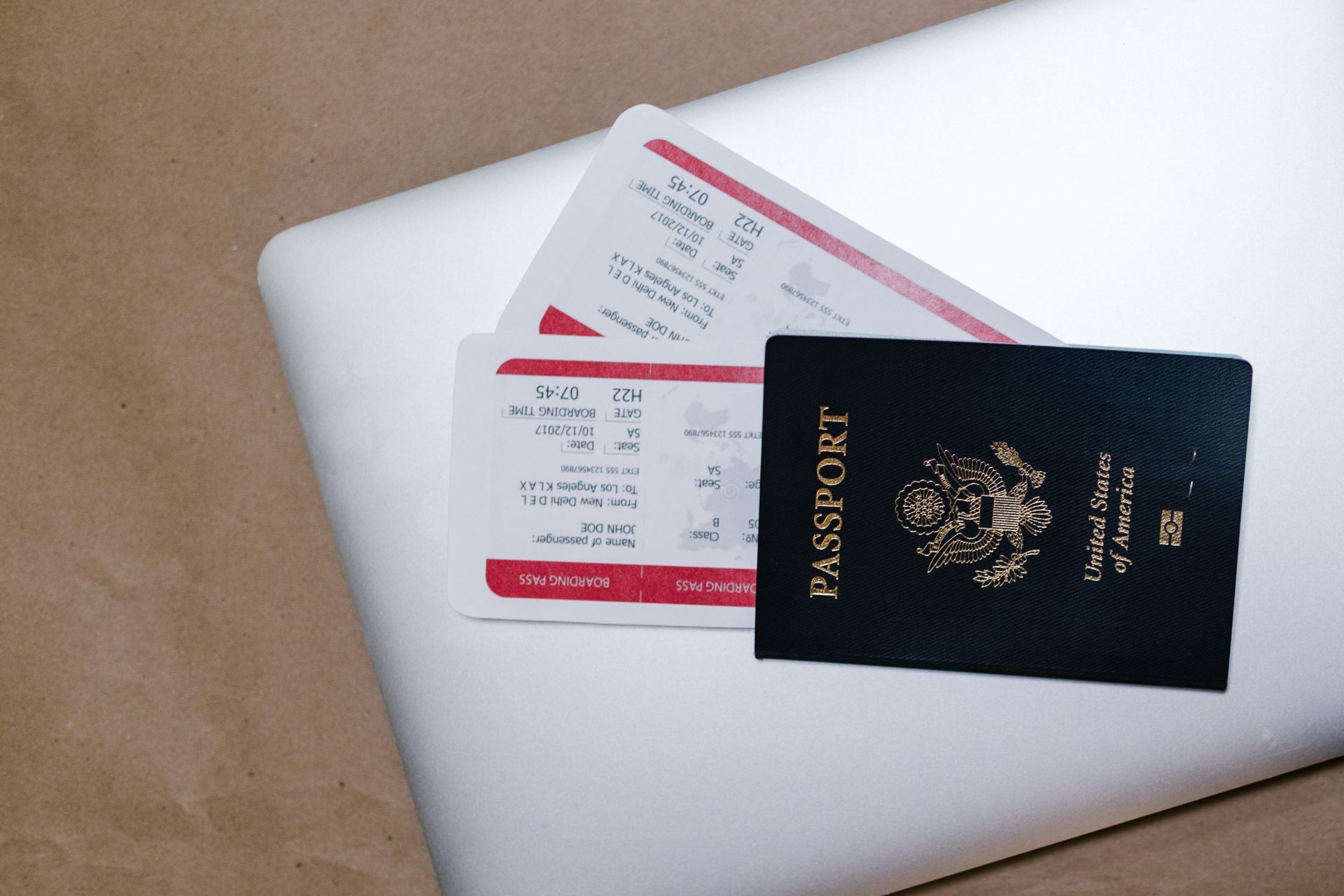
One day Alberta immigration lawyer Yameena Ansari began receiving inquiries from prospective clients who wanted to confirm they were actually communicating with her. Someone else had become her. Fraudsters had stolen her professional identity, presenting themselves as the real lawyer while offering services she had never authorized.
“Fraudsters stole my identity and were posing as me to solicit vulnerable clients,” Ansari said.
She says her case of identity theft did not involve artificial intelligence. But she believes emerging AI tools are making longstanding immigration fraud schemes increasingly convincing. “Today, they [fraudsters] deploy highly polished websites, professional social media campaigns, and even AI-generated marketing to mimic legitimate law firms,” she said.
In written responses to questions from New Canadian Media, Immigration, Refugees and Citizenship Canada (IRCC) confirms applicants and immigration representatives are increasingly using generative AI to prepare application materials, including letters, forms and supporting narratives. It also acknowledges that it has encountered cases in which AI has been used to generate fraudulent immigration applications. The responses offer one of the clearest public acknowledgements to date that artificial intelligence is becoming part of the immigration fraud landscape.
IRCC, however, declined to describe the specific techniques, warning that publicly disclosing operational details could inadvertently help bad-faith actors evade detection. It also did not disclose how many AI-assisted fraudulent applications it has identified or whether such cases are tracked separately. Instead, the department says it is continuously updating its fraud detection measures, risk assessments and internal safeguards as AI-enabled fraud evolves, while continuing to advise applicants on how to detect, prevent and report immigration and citizenship fraud and scams.
The department says immigration officers receive ongoing guidance on identifying irregularities associated with AI-generated documents and other emerging technologies, although it did not say whether the guidance comes from an internal training unit or an external provider. It also confirmed that IRCC itself uses artificial intelligence and advanced analytics to support administrative functions such as triaging applications, generating officer summaries and operating client-service chatbots. Those tools, however, do not make immigration decisions. Final decisions, particularly refusals, remain the responsibility of trained officers following a full human review.
Immigration lawyers have also seen technology used to uncover fraud rather than facilitate it. A Toronto immigration lawyer, Mary Lam, recalled a case from 2019 in which immigration authorities linked multiple applications through a single credit card, allowing investigators to identify dozens of files containing recycled bank statements and employment documents. In such cases, the same financial records or job offers are reused across multiple immigration applications to create the appearance that different applicants satisfy eligibility requirements.
The consequences can fall heavily on applicants who may not know fraudulent documents have been placed in their files. In 2023, New Canadian Media reported on international students who said they entered Canada unwittingly using fake college acceptance letters supplied by an immigration consultant.
As AI becomes more sophisticated, Lam believes similar patterns could be detected much earlier. “AI will be able to detect fraudulent use of documents faster,” she said, “perhaps not allowing 40-plus uses before it is flagged.”
The growing role of AI extends beyond government. The College of Immigration and Citizenship Consultants (CICC) says licensed consultants remain fully accountable for the quality and integrity of their work regardless of the technologies they use. In the College’s view, technological change does not diminish the professional obligations imposed by its Code of Professional Conduct.
Asked whether it has issued AI-specific guidance or whether artificial intelligence is already featuring in complaints or investigations, the College responded: “Licensees are required to fulfill their professional obligations competently and diligently, in line with the Code of Professional Conduct, regardless of the tools they may use in the course of their work.”
The College also points to the profession’s increasingly rigorous licensing standards as part of that accountability framework. In a recent email communication with the New Canadian Media, the College noted that entry into the profession now requires completion of a graduate diploma program, itself requiring an undergraduate degree for admission, followed by a competency-based licensing examination designed to assess not only legal knowledge but also professional judgment and ethical practice.
Not everyone is convinced, however, that existing professional standards alone will be sufficient as AI evolves. The emergence of AI has also exposed a growing divide among immigration lawyers and regulators over how significant the technology’s impact is likely to become and whether Canada’s regulatory framework is adapting quickly enough to keep pace.
While IRCC says AI-assisted fraud is an emerging risk, immigration lawyer Mario Bellissimo argues that the technology is forcing regulators to rethink a more fundamental question: what does unauthorized immigration practice look like when advice is no longer provided by a person?
Historically, unauthorized practice involved identifiable individuals offering immigration advice without a licence. Increasingly, however, applicants may receive guidance through AI-powered platforms, automated systems or hybrid services that combine technology with human operators spread across multiple jurisdictions.
“Unauthorized practice no longer necessarily involves an identifiable individual,” Bellissimo said. “Applicants may obtain guidance through AI-powered tools, automated platforms, overseas service providers, or hybrid models that combine technology and human actors operating across multiple jurisdictions.”
He says those developments complicate traditional ideas of accountability because inaccurate advice, misleading information or fraudulent conduct may be generated, distributed or amplified through digital platforms where responsibility is far less clear.
“Technology undoubtedly offers significant opportunities to improve access to information and services,” he said. “However, if regulatory frameworks fail to keep pace with technological change, we risk creating new vulnerabilities for applicants while making it increasingly difficult to identify who is responsible when inaccurate advice, misleading information or misconduct occurs.”
For Bellissimo, the issue extends beyond artificial intelligence itself. The larger challenge is ensuring that regulatory systems evolve as quickly as the technologies they seek to oversee.
“Effective regulation must not only address the risk we know today; it must be sufficiently adaptable to address the risks we can reasonably anticipate tomorrow,” he said.
Bellissimo said AI should not be viewed in isolation but as part of the broader immigration ecosystem, where technology, cross-border actors and unauthorized practice increasingly intersect.
Bellissimo’s concerns are not merely theoretical. Ansari, the Alberta-based immigration lawyer, says she is already seeing those changes play out in practice.
Fraudulent operations, she says, have become markedly more sophisticated in recent years, replacing crude scams with polished digital campaigns that can be difficult for prospective immigrants to distinguish from legitimate legal services. “A decade ago, bad actors operated out of sketchy backrooms,” Ansari says. “The shift towards digital application portals has enabled overseas networks to manufacture incredibly realistic yet entirely fake documents at an unprecedented scale.”
The technology, she says, is no longer confined to forged paperwork. It is increasingly being used to create convincing online identities capable of deceiving vulnerable applicants. “We encounter every single one of those scenarios on a near-daily basis,” she says, referring to forged documents, fake job offers, false promises of permanent residence, licence impersonation, and unauthorized immigration advice. “If there’s a loophole in an applicant’s knowledge or vulnerability in their dreams, fraudsters will aggressively exploit it.”
Not everyone, however, believes artificial intelligence represents a fundamental shift in the nature of immigration fraud. British Columbia immigration lawyer Amandeep Hayer takes a more sceptical view, arguing that AI’s role is being overstated in discussions about immigration fraud. While acknowledging that AI can generate documents and other digital content, he argues that the technology itself is not what enables fraud.
“I don’t think we’ve gone to the point where AI is able to generate fraud,” Hayer said. “At the end of the day, if somebody’s going to be doing fraud, regardless of AI or not, they’ll find a way to do it.”
For Hayer, artificial intelligence is simply another tool. It may change some of the methods fraudsters use but not the underlying motivations or opportunities that give rise to immigration fraud. Fraud, he argues, is ultimately driven by human intent rather than technological innovation.
What is no longer in dispute is that artificial intelligence has become part of Canada’s immigration landscape, both as a tool for legitimate administration and as an instrument that can be exploited by bad actors. Whether AI ultimately proves to be a revolutionary force in immigration fraud or simply another technology that amplifies existing schemes remains a matter of debate. What experts broadly agree on, however, is that protecting applicants will depend not only on technology, but also informed applicants, accountable representatives and regulators capable of adapting as quickly as the fraudsters they seek to stop.

Aloa Alota
Aloa Alota is a recipient of the 2025 Press Freedom Hero Award from the Gambia Press
Union. He is author (with Demba Ali Jawo) of A Living Mirror: The Life of Deyda
Hydara, which examines journalism, power, and risk through the life of the slain
Gambian journalist - Deyda Hydara. The work has been endorsed by Reporters Without
Borders (RSF) and adopted by the Open Society Initiative for West Africa (OSIWA) as
an advocacy text on freedom of expression in Africa. He holds a PhD in Media Studies
from Western University, London, Ontario.