
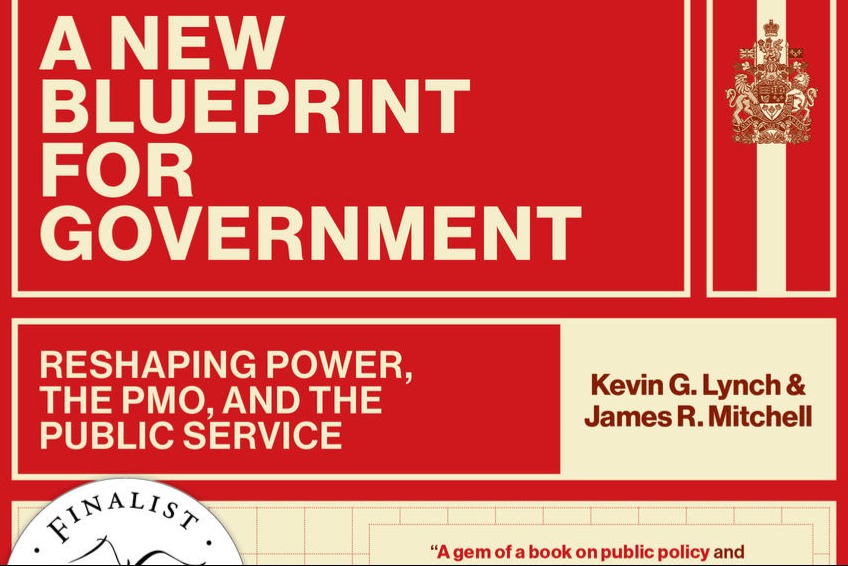

A recently-published book raises important questions about the federal government’s ability to plan and manage the economic and population changes associated with immigration in a coordinated and sustainable way.
The authors of A New Blueprint for Government (2025) acknowledge the historical importance of Canada’s points-based immigration system and the value of skilled immigration to the Canadian economy. However, parts of the discussion presents the “immigration problem” in broad terms, which may unintentionally place permanent skilled immigrants in the same analytical category as more precarious or temporary migrants.
A more robust analysis would have more clearly distinguished critiques of temporary migration management from the long-term economic, demographic, and social contributions associated with permanent, skilled immigration.
One limitation of the book’s discussion of immigration is that the authors tend to approach policy largely through the lens of non-permanent residents, particularly international students, temporary foreign workers, and asylum seekers. While this emphasis is understandable, given that these are more popular topics in the news and hence the cause of policy pressures identified in the book, the broader framing of immigration policy does not address integration of permanent residents.
In A New Blueprint for Government, Kevin G. Lynch and James R. Mitchell propose reforms aimed at restoring accountability, policy capacity, and institutional effectiveness. Drawing from extensive experience in senior public administration roles, the authors argue that Canada’s governance system has become increasingly centralized around the Prime Minister’s Office (PMO), weakening Cabinet, reducing ministerial autonomy, and diminishing the role of the non-partisan public service. The book offers both a diagnosis of Canada’s institutional challenges and a reform-oriented vision for the future of federal governance.
A concentration of decision-making
The central argument of the book is that many of Canada’s current economic, political, and administrative difficulties are linked to the evolution of governance structures within the federal Government. According to Lynch and Mitchell, the concentration of decision-making power in the PMO has weakened accountability, reduced policy innovation, and encouraged short-term political management rather than long-term strategic governance. The authors further argue that Canada must strengthen policy capacity, rebuild institutional trust, improve productivity, and better prepare for increasingly complex global challenges, including economic competition, climate issues, technological changes, demographic pressures, and immigration-related policy demands.
The discussion of the growing influence of political staff and the erosion of Cabinet is particularly persuasive. The authors effectively demonstrate how centralized political control has transformed the Westminster tradition in Canada and limited the autonomy of ministers and public servants. The book also succeeds in connecting governance reform to broader questions of economic performance, federal government capacity, and Canada’s competitiveness in the global economy.
Another important contribution of the book is its sense of urgency. Lynch and Mitchell convincingly argue that Canada faces a rapidly changing global environment characterized by economic uncertainty, geopolitical tensions, productivity decline, and growing policy complexity. The authors stress that effective governance is no longer simply an administrative concern but a strategic necessity for national prosperity and sovereignty. Their emphasis on long-term policy thinking and institutional resilience is particularly relevant in the current Canadian context.
The book sometimes gives greater importance to institutional dysfunction than to the influence of political leadership and policy choices. Although Lynch and Mitchell convincingly demonstrate the growing centralization of power within the PMO and the weakening of Cabinet, Canada previously achieved strong economic performance and global competitiveness under largely the same Westminster framework. This suggests that governance structures alone may not fully explain the country’s more recent economic and political difficulties.
Overall, A New Blueprint for Government is a thoughtful and important contribution to contemporary debates on Canadian governance and public administration. Its greatest strength lies in its accessible diagnosis of the structural pressures affecting federal institutions and its call for renewed long-term governance capacity. The book will be particularly useful for readers interested in governance reform, public policy, federal administration, and the institutional dimensions shaping Canada’s response to contemporary economic and demographic challenges.

Alain Fopa
Alain Fopa holds a PhD in Public Administration and teaches public policy and public management. His professional experience spans the private sector, the UN system, and public administration. His research and professional interests focus on governance, public policy, public management, immigration, and environmental issues, including climate change.