

People applying for proof of Canadian citizenship are now facing a projected wait of about 19 months, as Immigration, Refugees and Citizenship Canada’s public processing-time tool shows about 99,500 people waiting for a decision.
The July 7 update marks a sharp increase for citizenship certificate applications, also known as proof of citizenship. In April, the wait for the same category was listed at 10 months, with 56,300 applications in line, according to a CIC News report tracking IRCC’s processing-time. By May 12, the wait had risen to 12 months and the queue to about 70,400, according to Moving2Canada. The same platform said the queue stood at 40,400 on Dec. 10, 2025, five days before changes to Canada’s Citizenship Act took effect.
A citizenship certificate is not the same as a citizenship grant. A grant is for permanent residents applying to become citizens. A certificate is proof that someone is already Canadian under the law, including people born outside Canada to Canadian parents, people replacing older proof-of-citizenship documents, and people whose citizenship may have been restored or recognized because of recent legal changes.
The certificate can matter for practical reasons. IRCC says people who believe they may have become citizens under Bill C-3 — the law that changed Canada’s citizenship-by-descent rules — must apply for a citizenship certificate to confirm their status. The document can also be used to apply for a Canadian passport.
Bill C-3 changed Canada’s first-generation limit on citizenship by descent and came into force on Dec. 15, 2025. Under the new rules, some individuals whose connection to a Canadian citizen extends beyond one generation are eligible to apply for citizenship by descent.
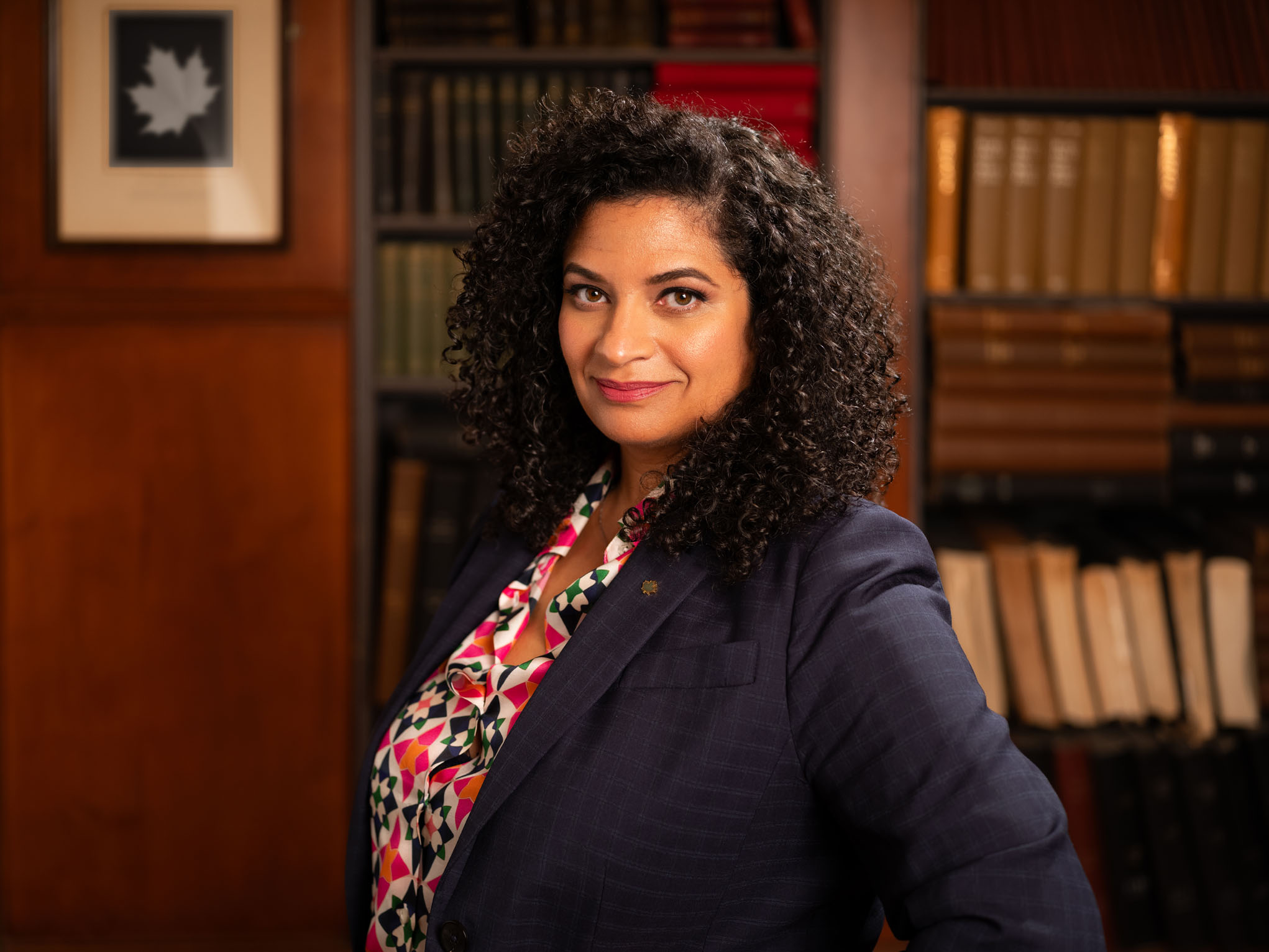
Cassandra Fultz, a Regulated Canadian Immigration Consultant and founder of Toronto-based Doherty Fultz Immigration, said the growing wait appears to be driven by “a bit of everything.”
She said demand was already building during an interim period before Bill C-3 came into full force and continued to grow after the new rules took effect in full. Interest increased again around March, when more information about the changes reached the public, she said.
“In the years prior to Bill C-3, citizenship through descent applications generally took between four and 12 months to process normally,” Fultz said.
Fultz said the backlog was predictable given rising demand and staffing pressures at IRCC. She said she does not expect processing times to improve unless the department commits to significant hiring in the citizenship department.
“However, the sooner someone gets into the queue, the sooner they will come out of it,” she said.
In a response to New Canadian Media, IRCC said it aims to process 80 per cent of complete proof-of-citizenship applications within 12 months, while ensuring decisions are fair, consistent and made according to law. The department said some applications require additional review before a decision can be made.
IRCC in its response reiterated its usual caveat, “forward-looking processing times are estimates, not guarantees, and reflect current application volumes and inventory levels.” The department said proof-of-citizenship applications are processed on a first-in, first-out basis, and processing times can fluctuate depending on the number of applications received, the size of the inventory and the complexity of applications.
Between Jan. 1, 2025, and March 31, 2026, IRCC said it received 113,435 proof-of-citizenship applications and processed 78,565. IRCC said it took steps to prepare for Bill C-3 and continues to monitor application trends and volumes, adjusting operations as needed to manage demand “as efficiently as possible.”
In January 2025, the Public Service Alliance of Canada and the Canada Employment and Immigration Union warned that IRCC’s planned 3,300 job cuts would put Canada’s immigration backlog at risk.

NDP immigration critic Jenny Kwan said IRCC should publish more detailed information, including how many proof-of-citizenship applications are waiting, what counts as non-routine and how many files have been designated that way.
“Publishing a single processing time creates false expectations and leaves applicants unable to plan their lives,” Kwan said in a written response. “It doesn’t work as public policy and it doesn’t work for the people applying.”
She said delays have real consequences.
“People can’t obtain passports, travel, access opportunities, or fully exercise their rights as Canadians,” she said. “Effectively their lives are in limbo.”
Fultz said some older applications from the interim measures period remain in process, but she does not believe those files alone explain the backlog. She said files sent to the Program Support Unit, or similar review streams, have long existed for more complex citizenship and immigration cases, but most applications do not end up there.
NCM previously reported that some proof-of-citizenship applicants learned through internal records that their files had been referred to IRCC’s Program Support Unit, while applicants said IRCC did not explain what was being reviewed or when decisions would be made.
“The only way to know for sure if a file has gone to the PSU is to receive a letter from IRCC to that effect, or submit an Access to Information request,” Fultz said.
That can also take time.
She said applicants cannot submit an access-to-information request until they receive a file number, and the first step — receiving an acknowledgement of receipt — has itself been delayed.
IRCC says applicants can request urgent processing of a citizenship certificate in some cases, including to help avoid harm or hardship, to move a minor child born outside Canada with a Canadian parent to Canada, or to help with a case of statelessness. “Throughout the application process, it’s completely normal to hear absolutely nothing for months and months at a time,” she said. “Processing times fluctuate, and right now applicants should expect a long wait.”

Shilpashree Jagannathan is a Hamilton-based freelance journalist and editor whose work has appeared in CBC News, New Canadian Media, The Margin, Business Insider, TRT World and Mint, and has been republished by The Walrus. She reports on immigration, labour, affordability, housing, elections, climate impacts and social justice, focusing on how policy and power shape the lives of households, workers, newcomers and local communities. Drawing on more than a decade in business journalism in India and a strong background in investigations, research and editorial work, she brings rigour and empathy to stories that trace the gap between policy and lived experience. She has also appeared on podcasts and radio programs to discuss her reporting and its broader public-policy implications.