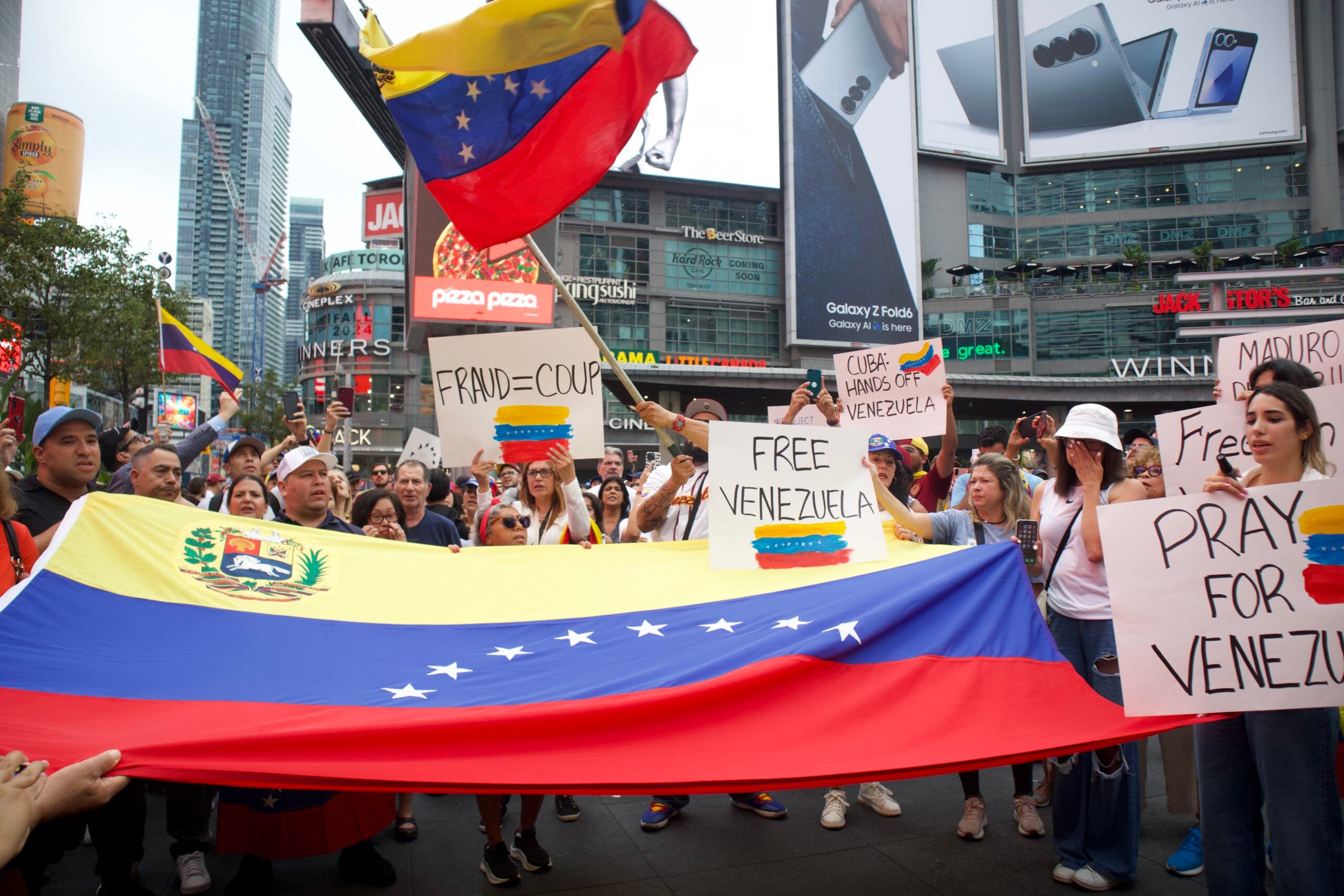

A House of Commons petition is pressing Ottawa to restore diplomatic and consular channels with Venezuela as Venezuelan Canadians describe costly journeys abroad to renew passports.
On June 5, a petition presented at the House of Commons urged the federal government to “re-establish diplomatic and consular relations” with Venezuela to support family connections and better advocate for human rights amid the country’s ongoing crisis.
Initiated by Josue Ramirez, a community advocate, and tabled by Calgary Crowfoot MP Pat Kelly, the petition was shared online to Venezuelan communities across Canada and received more than 500 signatures.
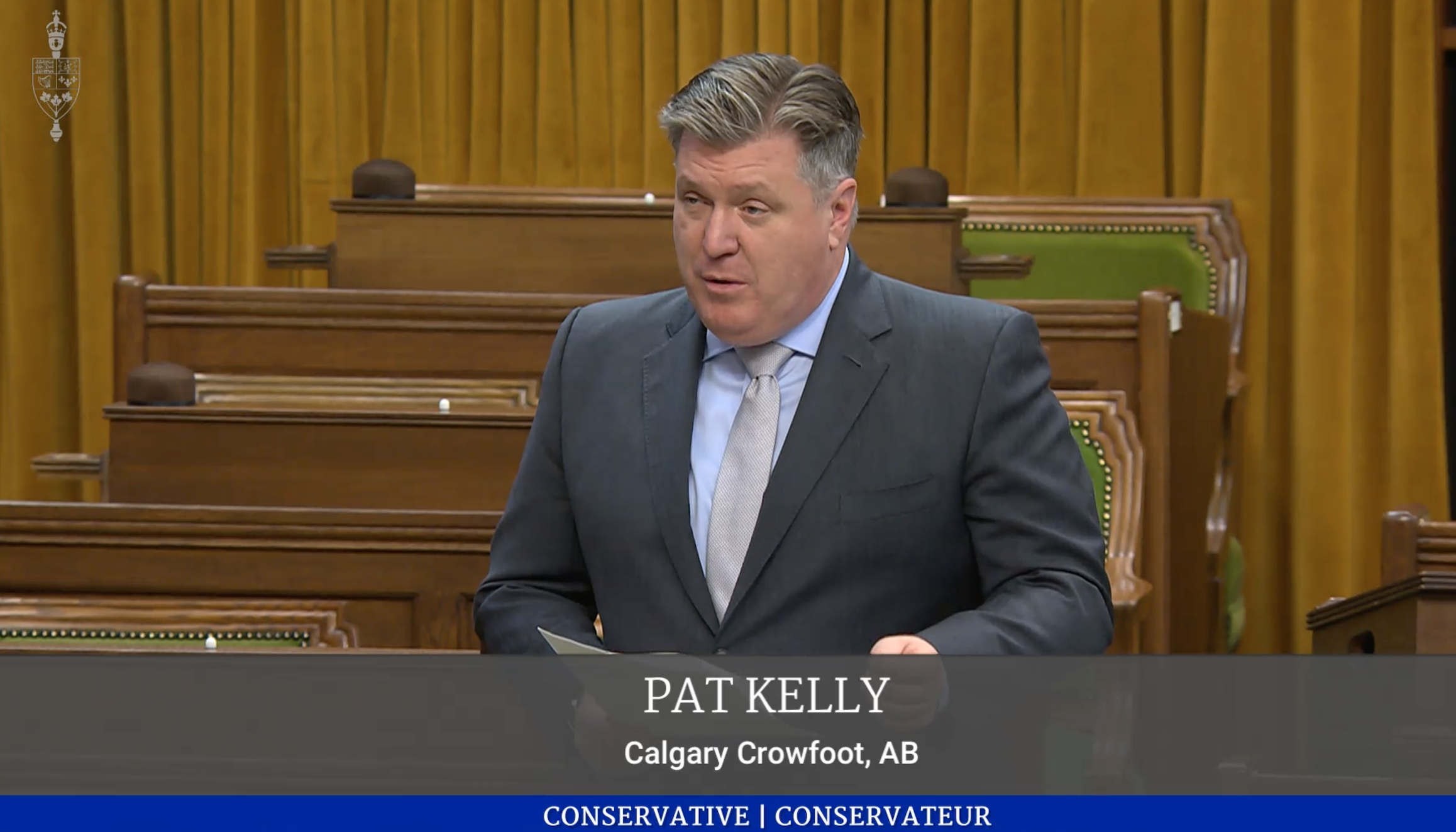
“The lack, the absence, of diplomatic relations makes it difficult for Canadian citizens to access services and to interact with Venezuela and Venezuelans,” Kelly said inside the House of Commons on June 5.
Bilateral relations between the two countries reached a critical point in 2019 when Canada refused to recognize Nicolas Maduro’s government and temporarily suspended operations in the embassy in Caracas due to the inability of Canadian officials to extend diplomatic accreditations and visas.
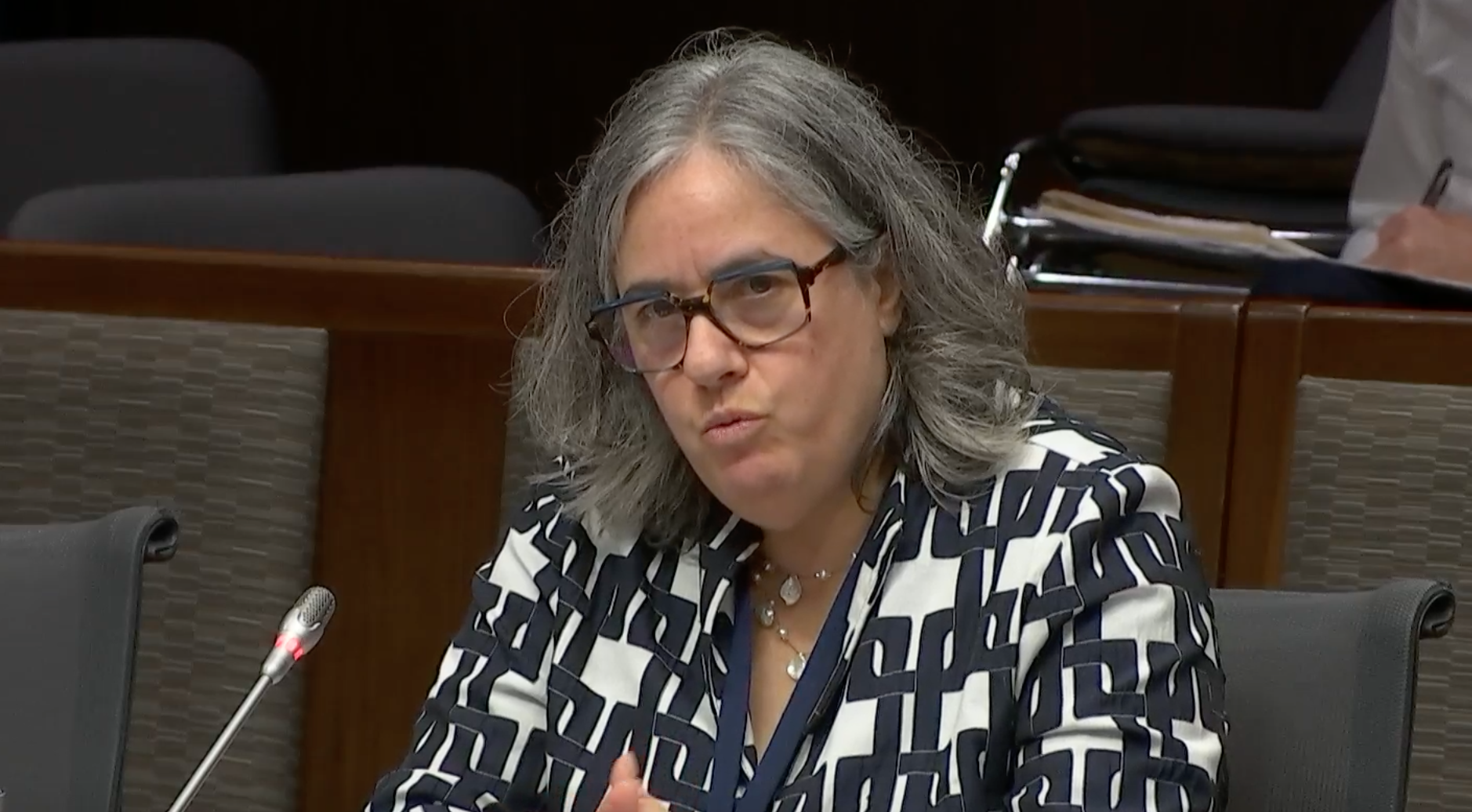
Wendy Drukier, Director General, South America and Hemispheric Affairs at Global Affairs Canada, said at a Senate Committee on Foreign Affairs and International Affairs meeting on June 11 that Canada has instead “downgraded” its ties, maintaining technical and consular services only.
Some feel this diplomatic abstention has greatly affected the Venezuelan community in Canada. “The civil rights – so to call them, through diplomatic or consular relations – are severely limited,” Ramirez told New Canadian Media. He argues that Venezuelans in Canada, from permanent residents to refugee claimants, face restrictions to freely travel outside the country, as they aren’t able to renew their papers from inside the country. “This made [some] people lose their jobs or promotion opportunities because they weren’t able to travel.”
A former diplomat in Venezuela, Ramirez immigrated to Calgary in 2005 and has since advocated for the protection of human rights and the restoration of democracy in his home country. With the help of his community, Ramirez has been submitting petitions to the House Commons since 2016 regarding the deteriorating situation in Venezuela, and he says the responses have overall been positive.
This time, he explains the main issue is the difficulty of obtaining a passport. Despite consulate closures, the embassy of Venezuela in Ottawa offered this service until July 2024 when it closed indefinitely after Maduro self-proclaimed himself president amid accusations of electoral fraud by independent and international observers. The government of Canada has 45 days to reply to the petition.
“It’s a very long and expensive trip for a passport”
Before the embassy in Ottawa closed, Eliecer Jimenez and his family took a short trip to Ottawa to renew their expiring Venezuelan passports. He described it as a short, pleasant trip; however, his daughter, who couldn’t accompany them on that occasion, is now facing a stressful decision to just issue the document.
“She could go to Venezuela to visit her grandparents and renew her passport, but she won’t be able to return only with her Canadian passport,” he told New Canadian Media. Once in the country, border authorities require a dual citizen to have both Canadian and Venezuelan passports to exit. With a few vacation days every year, Jimenez said his daughter has ruled out travelling to Venezuela to avoid “give[ing] away money to the government” for an expedited process or waiting a long time for a passport.
Travelling to Mexico, the Dominican Republic, or Colombia is a popular option to bypass this restriction, but “it’s a very long and expensive trip for a passport,” according to Jimenez.
For expiring Venezuelan passports, the IRCC said in 2019 they would honour an extension for passports that had expired in the last five years prior or were soon to expire for the purpose of travel and stay in Canada. However, this was not a solution for many Venezuelans who had arrived in Canada before this date.
Vicente Perez landed in Canada with his mother at the age of two with only a passport more than two decades ago. In 2019, as a 27-year-old, he decided to travel to Venezuela in order to renew his old passport and Venezuelan ID to apply for citizenship, as he was still a permanent resident and services in the Ottawa embassy were limited. A relatively short process turned into months of waiting as he spent over $1,500 between different applications and rescheduling flights.
“If Canada used to have such a good relationship with Venezuela in the past, why is it so difficult for a Venezuelan to renew their documents?” Perez told New Canadian Media.
Should Canada recognize a non-legitimate government?
Since the American military apprehension of Nicolas Maduro in January, the United States began talks with Delcy Rodriguez, the acting President, and her government, resuming diplomatic operations. Canada is still evaluating whether to follow the same steps.
In order to reestablish a diplomatic presence, “Canada may undertake periodic official diplomatic travel to Venezuela, as has occurred recently,” a Global Affairs Canada spokesperson said in a statement to New Canadian Media.
“They have their criteria, we have ours,” Drukier said at the committee meeting. “In Venezuela, Canada’s primary interest remains the establishment and maintenance of long-term stability. We believe this must come in the form of a peaceful democratic transition led by Venezuelans.”
On March 10 at a Standing Committee on Foreign Affairs and International Development, Drukier denied the presence of diplomats in Caracas, but she confirmed there was “a small number of locally engaged staff on the ground.”
“Reestablishing diplomatic relations is to recognize de facto the authority over there, but with the acknowledgement that it’s a non-legitimate government,” Ramirez said. He said some people in the community criticized him for calling for recognition of the current Venezuelan administration, but he argues that having a direct presence in the country would benefit diaspora members seeking refugee status and protection.
The Venezuelan diaspora in Canada has more than 27,000 people, according to the 2021 Census by Statistics Canada. By 2025, a family-based humanitarian permanent residence pathway program had admitted 2,130 Venezuelans, IRCC documents show. New Canadian Media has previously reported on the Venezuelan diaspora’s engagement with Canadian politics and its response to developments affecting Venezuela.
More than 600 political prisoners have been released and some optimism has cautiously grown since Maduro’s ousting, but “state repression and torture continue in Venezuela, and hundreds remain arbitrarily detained,” Drukier said on March 10. “We didn’t recognize [the regime] when it was led by President Maduro and we don’t recognize it now.”
According to her, Canada continues to raise the topic of a democratic transition with “like-minded” partners, such as the United Kingdom, European Union, and the Organization of American States. Canada has also provided $260 million since 2019 to address the humanitarian crisis in Venezuela and has held talks with opposition leaders in the country.
Senator Peter Harder, on the other hand, believes that both the Venezuelan opposition and the Canadian government remain at the sidelines of negotiations for this process. “We’re fooling ourselves if we think this is off our agenda,” he told Drukier at the committee meeting on June 11. “The cards are all being held by the Americans, not, unfortunately, by Venezuelans.”
If diplomatic relations don’t take off between Canada and Venezuela, Ramirez said he will keep on pressuring the federal government to improve consular relations.
It remains unclear whether restoring a Canadian diplomatic presence in Caracas would lead Venezuela to resume consular and passport services in Ottawa. Global Affairs Canada has not indicated whether the two governments are discussing the reopening of Venezuela’s mission in Canada. Ramirez said he hopes Venezuela would reciprocate if Canada restores its presence, but New Canadian Media could not independently confirm that such an arrangement is under consideration.

Rodrigo Huerta Aguirre
Rodrigo Huerta Aguirre is a Peruvian journalism and political science student at the University of Toronto. He is passionate about reporting on politics, diaspora, and local issues in Toronto. Based in Scarborough, he currently writes for The Underground at UTSC.