
India stands at an important inflection point in medical tourism. The country has long possessed the clinical strengths, cost advantages, and procedural depth needed to compete globally. The larger opportunity may lie not in another isolated burst of promotion, but in a more disciplined national strategy: one that treats medical tourism as an exercise in trust-building, country branding, and long-term economic development.
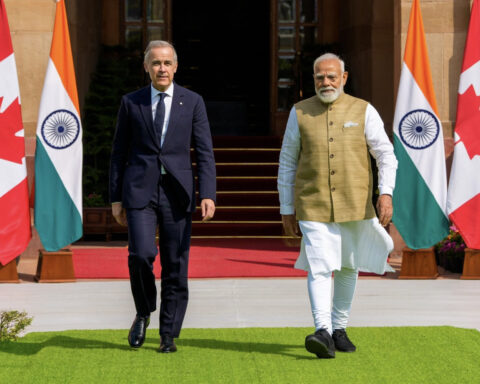
The current opportunity is real. Diplomatic renewal, especially with Canada, has created a more favourable atmosphere in which India can strengthen its appeal to diaspora communities and to international patients more broadly. Yet opportunity of this kind is perishable. If momentum stalls, more established destinations such as Singapore, Thailand, and Turkey will continue to consolidate the advantage they already hold in the minds of global patients.
That advantage should not be underestimated. In medical tourism, the decision is rarely made on clinical merit alone. Patients choose the destination that feels most familiar, most stable, and easiest to navigate when they are in a vulnerable position. By the time they begin comparing surgeons or hospitals, much of the decision has already been shaped by their sense of the country itself.
This is why the government’s role cannot be confined to building infrastructure. The announcement of five medical tourism hubs is a welcome and necessary signal, but it must be understood as part of a broader national development agenda. That kind of policy direction matters because it moves medical tourism beyond promotion and into the category of national development strategy. It acknowledges that international healthcare competitiveness depends on more than individual hospitals; it depends on the ecosystem that surrounds them.
India’s hospitals are increasingly being evaluated inside a larger country brand, not outside it. A patient choosing a hospital in India is also choosing India itself. The country-level story matters as much as hospital-level excellence, because international patients often decide based on destination familiarity before they compare providers. In other words, the hospital cannot carry the burden of perception alone. It must be reinforced by a national narrative that makes India feel credible, coherent, and welcoming before the patient ever lands.
This distinction is critical. Visibility and selection are not the same thing. A campaign may generate awareness, but awareness does not guarantee preference. Paid promotion can create an initial bump, especially when a market is still unfamiliar, but authority is what compounds. Authority is built over years through consistency, reputation, patient experience, and repeated proof. It is slower to earn, but far more durable once established.
Diaspora can be a bridge builder
That is precisely why medical tourism may reward long-term trust-building more than short-term promotion. Medical tourism is not a sector in which attention alone is enough. Patients may notice a destination quickly, but they will only choose it when the destination has earned emotional confidence. That confidence is cumulative. It grows through policy clarity, institutional reliability, strong aftercare, diaspora advocacy, and a country image that reduces anxiety rather than amplifying it.
This creates a dual challenge for policymakers and healthcare stakeholders alike. The first challenge involves continuing to strengthen the physical and regulatory infrastructure that makes medical tourism viable. Faster approvals, clearer pathways, and more coordinated patient support are essential. The second involves shaping the broader environment in which those systems are perceived. If the national story is fragmented, even excellent hospitals will struggle to convert interest into bookings. If the national story is coherent, hospitals gain the benefit of a broader trust architecture.
This is where the diaspora becomes particularly significant. In Canada, the Indian diaspora can act as a bridge between diplomatic goodwill and patient confidence. It can normalize India as a treatment destination, reduce uncertainty, and translate national familiarity into real patient movement. But even diaspora confidence will not convert unless the system is ready to receive patients smoothly. A favourable impression may open the door; bureaucratic friction can still close it.
The larger lesson is that India’s medical tourism future will be determined not only by what happens inside hospitals, but by how the country presents itself as a whole. Countries that succeed in medical tourism understand that international patients are not simply buying a procedure. They are buying a destination, a process, and a sense of reliability. They are choosing whether a country feels sufficiently known to be trusted.
Medical tourism ultimately becomes a long-term competition for patient confidence. In medical tourism, that kind of patient confidence compounds far more slowly than visibility, but it also lasts far longer once established. That means integrating the five medical tourism hubs into a broader strategy of country branding, patient confidence, and institutional consistency. The strongest medical tourism destinations are rarely defined by clinical excellence alone. They are reinforced by national credibility, operational consistency, and a patient experience that feels reliable from beginning to end.
Time matters, perhaps more than policymakers realize. Familiarity compounds. So does inertia. The longer competing destinations remain the default association for medical travel, the harder patient behaviour becomes to shift.
India does not lack the tools to compete. It lacks only the urgency to align them. If it can do so, medical tourism could become not just a profitable sector, but a demonstration of how diplomatic trust, diaspora influence, and national policy can converge into economic strength.
The task now is not simply to be seen. It is to be selected. And that, ultimately, requires far more than promotion. It requires authority, coherence, and policymakers willing to treat medical tourism as part of a broader national strategy.

Alison Prentice
Alison Prentice is CEO of JCH Digital and a former Director of Nursing who writes about healthcare systems, diaspora influence, and the role of trust in international patient decision-making.