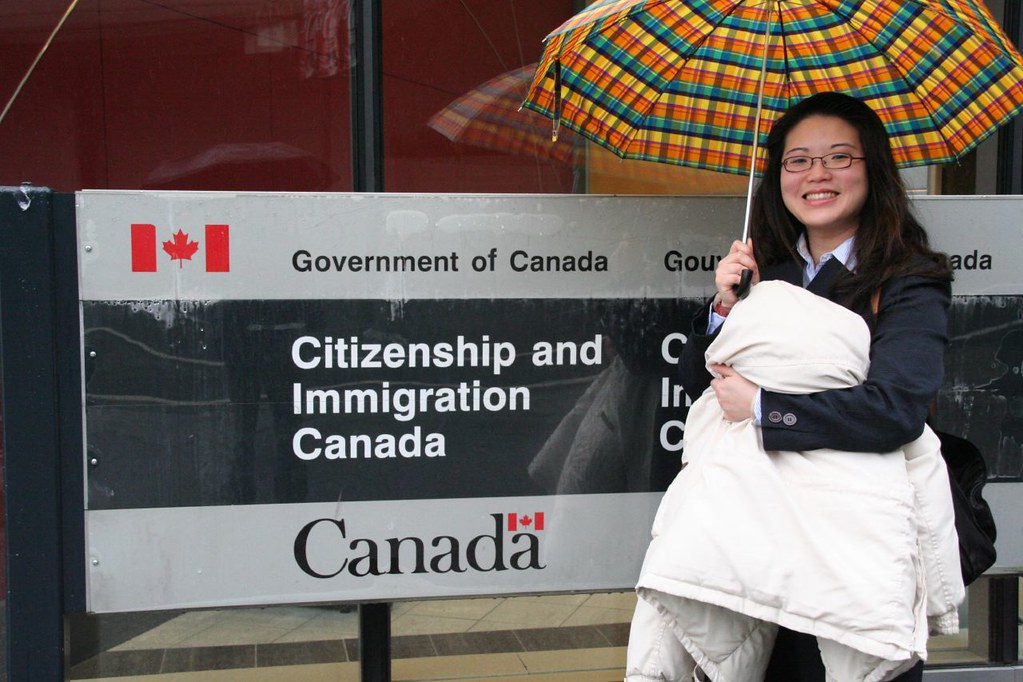

Three long-term watchers of Canada’s immigration system are critical of recent changes to Ottawa’s points system, arguing that placing a premium on short-term job trends compromises Canada’s long-term needs, especially in an uncertain economic environment.
Andrew Griffith, a former senior official in the federal immigration department who has closely followed the debate for more thanover two decades, called the changes announced Feb. 18 by Immigration, Refugees and Citizenship Canada (IRCC) “bad labour market and immigration policy.”
The changes essentially placed a few select professions with Canadian work experience at the head of the queue for permanent residency via Express Entry, a stream of economic migrants introduced designed to get immigrants into jobs faster without long delays.
Ottawa says the new categories are meant to “take back control” and fast-track candidates already working in Canada to fill urgent gaps, including in aviation, research and senior management, and highly skilled foreign military recruits. But critics warn the system is becoming so narrow and volatile that it could shut out long-term talent, strand applicants mid-stream, and solve neither credential bottlenecks — including the licensing logjam facing thousands of internationally trained doctors already in Canada — nor future labour needs.
Prof. Anna Triandafyllidou, Canada Excellence Research Chair in Migration and Integration at Toronto Metropolitan University (TMU), while recognizing the advantages of converting temporary residents to permanent status (“They are not packages to be sent back”), worries that the labour market could turn on a dime, making today’s in-demand professions less appealing down the road. She pointed out that the Express Entry system has become so specific that a candidate over 35 years with a Canadian temporary work permit, good English competency and a Ph.D . would not qualify – without adding French language skills to their resumé. “The (qualifying) points are through the roof,” she exclaimed.
A third expert, Fo Niemi, co-founder and executive director of the Center for Research-Action on Race Relations in Montreal, warned against “sudden or whimsical policy changes” such as the sudden abandonment of a program in Quebec. Such reversals, he said, “can leave many valuable skilled workers in situations of gross inequity and uncertainty, and that can make Canada as a whole seen as a less desirable land of new opportunities for highly skilled professionals around the world.”
Their critique is similar to a commentary by Michael Barutciski, professor at York University’s Glendon School of Public and International Affairs and a senior fellow at the Macdonald-Laurier Institute, which argued, “Following the spread of this new approach, it has become clear over the years that foreign economic candidates have a better chance of gaining permanent resident status by obtaining a job offer or studying in Canada. In other words, by transforming [immigration] into a ‘locally groomed’ or ‘in-house’ process, we have an example of how the road to hell can be paved with good intentions.”
The introduction of these “boutique” classes – a term used by Mr. Griffith – comes amid persistent questions around the mobility of professionals between provinces and the age-old question of foreign credential recognition. While the Feb. 18 announcement included mention of a “new category for foreign medical doctors with Canadian work experience,” Prof. Triandafyllidou’s team is just completing a study of an alternative way of licensing doctors called “Practice Ready Assessments” to meet the dire need for family doctors in Canada.
This novel type of assessment to help license foreign-trained doctors has been around since the early 2000’s, but to date, only 1,000 candidates have gone through this exercise since 2018, a research associate told NCM. Under this practice, a foreign-trained doctor shadows an experienced Canadian colleague for 8 – 12 weeks before being eligible for licensing.
“It is important to illuminate this solution since in the absence of helping foreign medical doctors get a residency spot or a PRA spot, it will be difficult for IRCC to find a large number of foreign medical doctors with Canadian work experience to invite for permanent residence under Express Entry,” said a TMU research associate who is part of the current study.
Just two months ago, the president of the Canadian Medical Association, Dr. Margot Burnell, said in a statement that there are 13,000 internationally trained physicians in Canada who are not practising medicine. “We must do more to recognize the medical talent already here – and to attract, welcome and retain more from around the world,” Dr. Burnell said.
On Feb. 2, the CMA decried the lack of consultations on immigration policy, outlining a series of seven recommendations to remedy a “fragmented, confusing route to practice that is discouraging newcomers to either change careers or move elsewhere.”
Yet, the IRCC announcement specifically mentioned foreign-trained doctors, in addition to researchers, pilots, aircraft mechanics and inspectors, military doctors, nurses and pilots, in addition to nurse practitioners, dentists, pharmacists, psychologists and chiropractors, and trades, such as carpenters, plumbers and machinists. It will continue to award bonus points for “candidates with strong French skills.”
According to a spokesperson for Statistics Canada, the IRCC is currently updating previous analysis looking into the job prospects of Express Entry immigration candidates compared to those arriving via other immigration streams. A 2020 study showed that Express Entry candidates “outperform” other streams, with high employment and economic outcomes. This advantage was also reflected in candidates who were nominated by provinces, according to a study released by Statistics Canada on Feb. 25.

George brings 30 years of writing and newsroom management experience to New Canadian Media. He began his journalism career with The Times of India in Mumbai (formerly Bombay), followed by stints at the Khaleej Times in Dubai and as managing editor of The Peninsula in Qatar. A journalist with high ethical standards, George won the prestigious Nieman scholarship at Harvard University (1994-95), and more recently, pursued a Master’s in Journalism at Carleton University (2004).