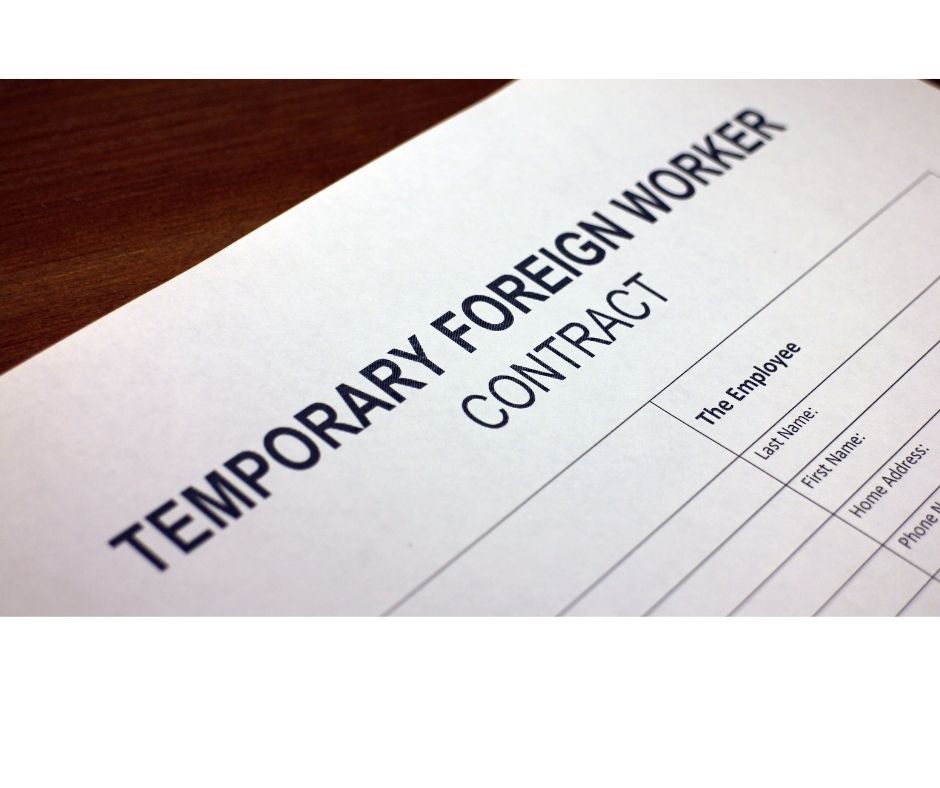

The lobby group that represents small businesses is calling on the government to “grandfather” 1.3 million temporary foreign workers (TFWs) whose permits expire in 2026, arguing that sending them back will cause “significant economic and labour challenges.”
The Canadian Federation of Independent Business (CFIB) is not buying the argument that these TFWs are taking away jobs from Canadian citizens and permanent residents at a time of high unemployment. “Small businesses want to hire Canadians, including young Canadians and under-represented groups, but these jobs may depend on a specific skill they cannot find,” the organization said in a news release Wednesday.
In an interview, CFIB’s director for national affairs Christina Santini, said the hardest hit sectors would be manufacturing, construction and hospitality, adding that the CFIB is also calling for granting permanent residency to “lower-skilled TFWs” who have played by the immigration and tax rules.
The number of temporary residents, including TFWs, remains a mystery with varying estimates, as reported by New Canadian Media recently. The small-business group bases its estimate on published news reports and does not have an independent estimate. The CFIB has 103,000 members across Canada.
Santini said that TFWs fulfill an outsized economic role mainly in small and rural communities where the labour pool is not as well trained and plentiful as in the large cities of Toronto, Vancouver or Montreal. She added that for small businesses, being unable to renew their temporary foreign workers would not just mean the loss of these specialized employees — it would mean slower growth, reduced hours of operation, an inability to fulfill orders or even closing up.
“In some cases, without the specialized TFWs, there are fewer jobs for Canadians,” she said, citing the example of machinists in rural Quebec where their loss would also mean that a factory has to let go of other Canadian labour.
Commenting on the government’s decision to convert 33,000 “TR to PR” (temporary residents to permanent residents) in 2026 and 2027, Santini said this number pales in comparison to the 1.3 million in limbo just this year.
“The economic fallout could be massive,” she said. “Thousands of workers could be forced to leave or left in limbo waiting for an extension or a new permit. Some estimates show more than 300,000 work permits are due to expire by the end of March alone.
Dan Kelly, president of the CFIB said in the news release: “Many employers are now facing the hard reality that they may not be able to keep their foreign workers because of recent federal changes.”

NewCanadianMedia.ca is Canada’s premier web site dedicated to news and views about the one-fifth of Canadians who are immigrants. You’ll find original journalism from an immigrant perspective along with content produced by our partners in Canada’s ethnic media. Our content provides fresh insights into developments in politics and society, enhancing your understanding of our diverse world.