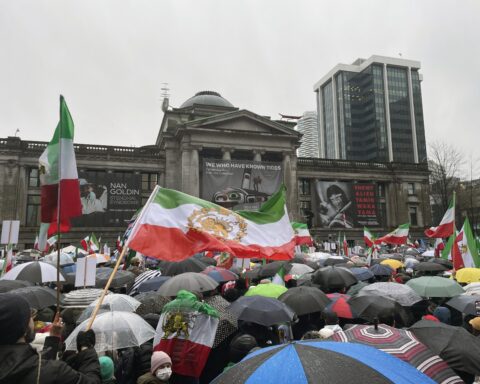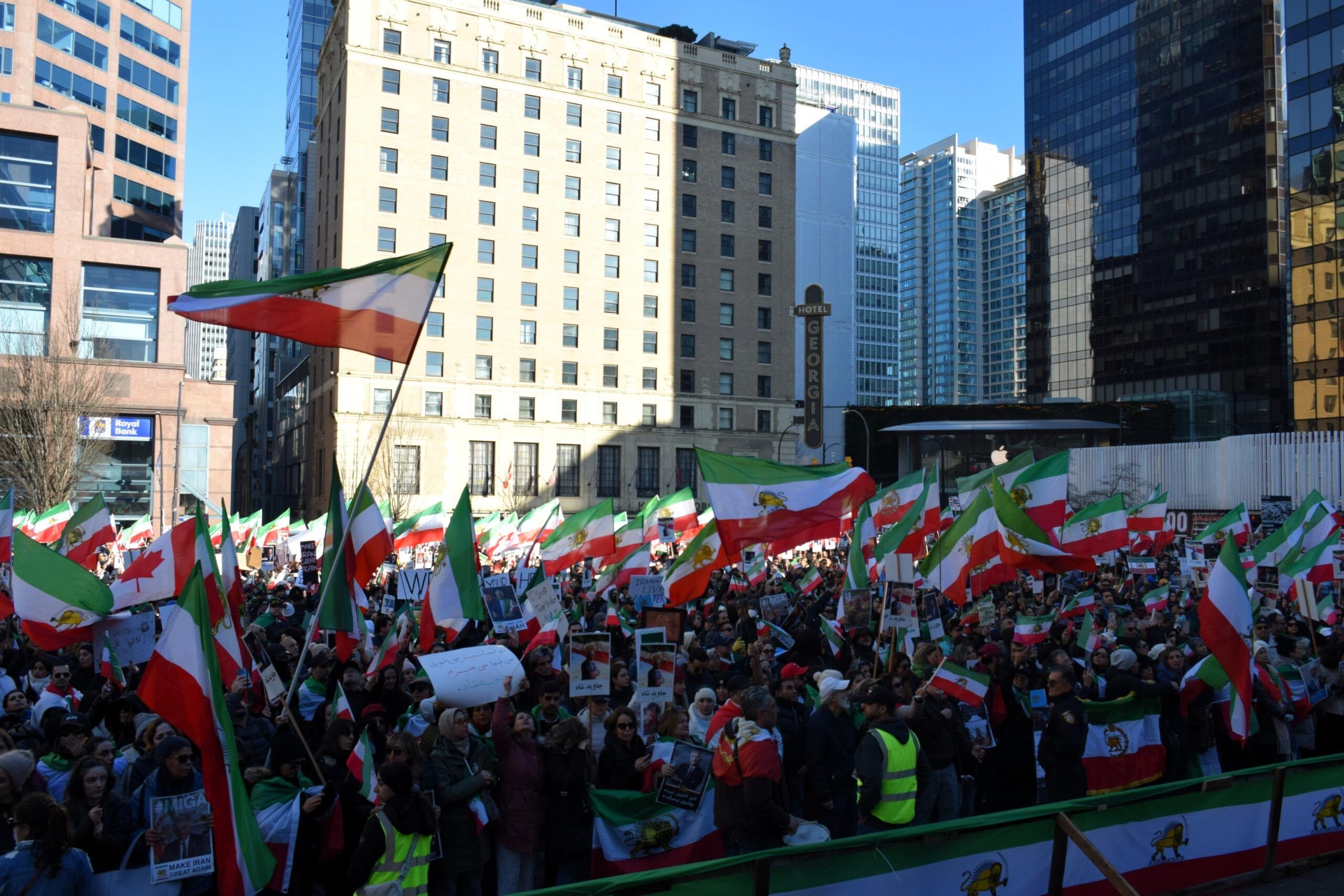
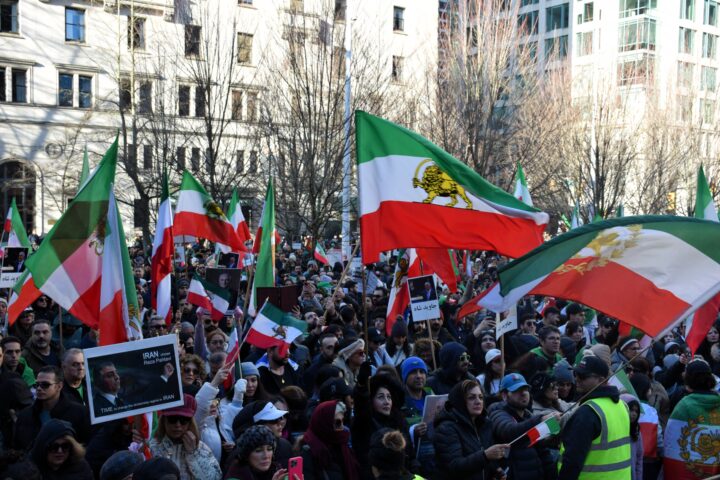
Across the Iranian-Canadian community, reactions to the reported death of Ali Khamenei have been marked by a complex mix of relief, grief, uncertainty and debate about what the future might hold for Iran.
For many in the diaspora, the moment represents the possible end of an era that has shaped Iranian politics since the 1979 revolution.
On Feb. 28, the United States and Israel launched coordinated airstrikes on the regime’s military and other targets in Iran. In the first wave of attacks, Iran’s Supreme Leader Ayatollah Khamenei was reported killed, prompting unrest inside Iran and strong reactions from Iranian people inside the country and in communities abroad.
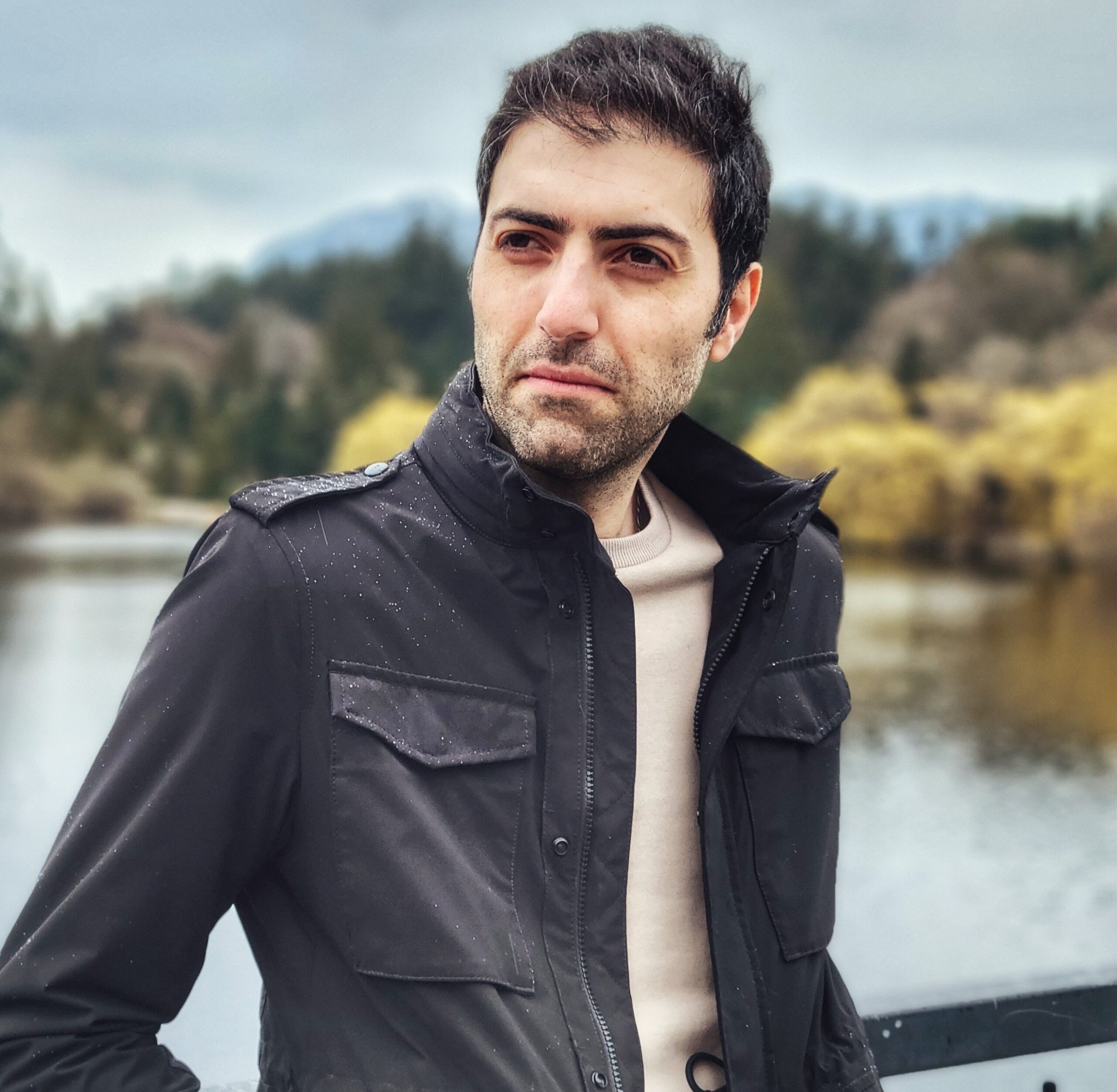
Parsa Alirezaei, a research assistant with Simon Fraser University’s Centre for Comparative Muslim Studies who specializes in Middle Eastern politics and social movements, described his reaction as deeply conflicted.
“The death of a tyrant can bring a moment of joy, but I think the means with which we got there I find to be questionable,” he said.
Alirezaei said many Iranians share a similar tension between relief and anxiety.
“I find war to be an incredibly destructive force, like, hey, we don’t like these guys, but at the same time, we don’t like those guys because of what they’ve done.”
For Alirezaei, the removal of a single leader does not necessarily dismantle the system behind him.
“It’s good that a tyrant is gone, but it’s what they represent, the tyranny itself, which is often systemic. It’s part of a much broader system.”
He added that while senior leaders and military commanders may have been targeted, the institutional structure of the Islamic Republic remains.
“You have a whole system behind them that is not so easily displaced.”
Alirezaei also expressed skepticism that war can deliver the kind of democratic outcome many Iranians hope for.
“I am skeptical of whether a war will get us any sort of democracy or improved conditions.”
He said the destruction that accompanies modern warfare can leave societies struggling for decades.
“Wars seldom bring about positive change. We’re talking about the destruction of civilian infrastructure.”
The researcher warned that geopolitical interests may shape the conflict more than the aspirations of the Iranian people.
“When the major actors do not have your well-being as their end goal, that creates a situation where it’s difficult to say the outcome could be a sort of happy ending.”
Despite his concerns, Alirezaei said his immediate focus has been on the safety of loved ones.
He said communication has become difficult, with many families relying on landline calls from inside Iran.
“I hope everybody’s able to hear back from their families that they’re doing okay, and surviving this apocalypse.”
For Rana, a member of the Iranian-Canadian community in Vancouver whose first name is the only one used by New Canadian Media for her safety, the priority remains the voices of people inside Iran.
“For many in the diaspora, including myself, the priority is whatever Iranians inside the country want,” Rana said.
She noted that communication with people inside Iran has become increasingly difficult.
“The internet is heavily disrupted right now and it is extremely hard to hear from ordinary people inside,” she said.
Still, Rana said messages from friends and relatives before internet access was cut suggested many people hoped the war would end with the fall of the regime.
“Based on what I hear from those who manage to somehow get online, and from my friends before the internet disconnected, they hope this war will end when the regime ends.”
Rana said many inside Iran fear that if the war ends while the government remains in power, there could be retaliation against civilians.
“Their biggest fear is the end of the war while the regime remains there, because they believe the regime will take revenge on its own people after this,” she said.
“So what I hope for is what those people hope for: The end of the war and the end of the regime.”
Others in the Iranian-Canadian community say the moment raises deeper questions about the political transition that could follow the Supreme Leader’s death.
For Poran Poreghbal, a West Vancouver psychotherapist and author of Women, Life, Freedom: Redefinition of an Individual and Collective Identity, the reaction was immediate.
“I’m hoping for the end of this Islamic regime. I’m hoping for a secular government to come up and I’m really hoping that Reza Pahlavi would take the lead for the transition as he has promised.”
Following Khamenei’s death, the Islamic Republic’s clerical body known as the Assembly of Experts convened to select a successor. On March 8, the assembly announced that Mojtaba Khamenei, the late leader’s son and a mid-ranking cleric with close ties to the Islamic Revolutionary Guard Corps, had been chosen as Iran’s new Supreme Leader.
For Nahid Ghani, an academic researcher in Iranian studies, the news of Khamenei’s death triggered a different but equally intense response.
“I experienced emotions similar to what survivors of Nazi concentration camps may have felt when Nazi leaders were executed,” she said.
She said the moment carried a sense of partial justice.
“Like many other Iranians, I felt that justice had been served, at least to some degree, because so many others responsible remain at large.”
Ghani pointed to recent violence in Iran as a key context for the reaction.
“Khamenei’s elimination came after the January 2026 massacre, when more than 30,000 people were killed in two days.”
She said uncertainty still surrounds many detainees.
“We are still worried about many detainees whose conditions and whereabouts remain unknown.”
Looking ahead, Ghani said her hope is that Iran will be able to move toward a more accountable political system.
“My hope is that the people of Iran, after years of repression and violence, will be able to move toward freedom, security and a government that is accountable to its citizens.”
She believes many Iranians still hold on to hope, even amid economic hardship and security concerns.
“Despite serious economic challenges, such as access to basic necessities and concerns about security, people ultimately remain hopeful.”
At the same time, Ghani warned that global powers could prioritize their own strategic interests rather than the long-term stability of Iran.
“My concern is more about the long-term perspective at both the regional and global levels. There is a risk that major international actors will focus only on short-term interests.”
She said accountability will be critical to preventing future cycles of repression.
“In my view, to prevent the cycle from repeating itself, those responsible should be treated like war criminals.”
Ghani also pointed to the role that opposition figures and movements could play in shaping Iran’s political future.
“Crown Prince Reza Pahlavi is the only figure whom Ali Khamenei publicly referred to, years ago in a speech, as a serious threat to the Islamic Republic.”
Ghani said chants in support of Reza Pahlavi were frequently heard during the “Lion and Sun Revolution.”
“This is due to the public trust Iranians have in the Pahlavis.”
Ghani added that part of that support stems from what she describes as a consistent opposition to the Islamic Republic over decades.
“Part of this public support goes to someone who has a very clean record, who has opposed the regime for 47 years, and who has consistently maintained positions on establishing democracy during this time.”
For her, the aspirations expressed by many Iranians are straightforward.
“Based on his positions, it can be said that hope for welfare and freedom are among his priorities.”

A Vancouver B.C based journalist who writes about the Iranian community in Canada, art, culture and social media trends.