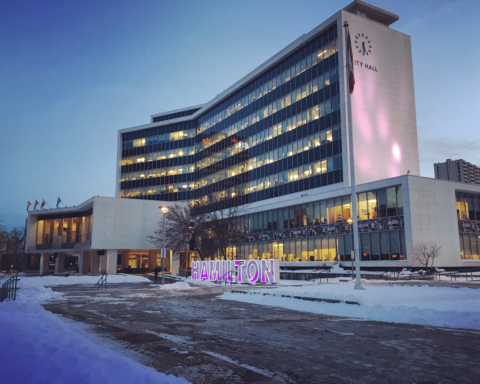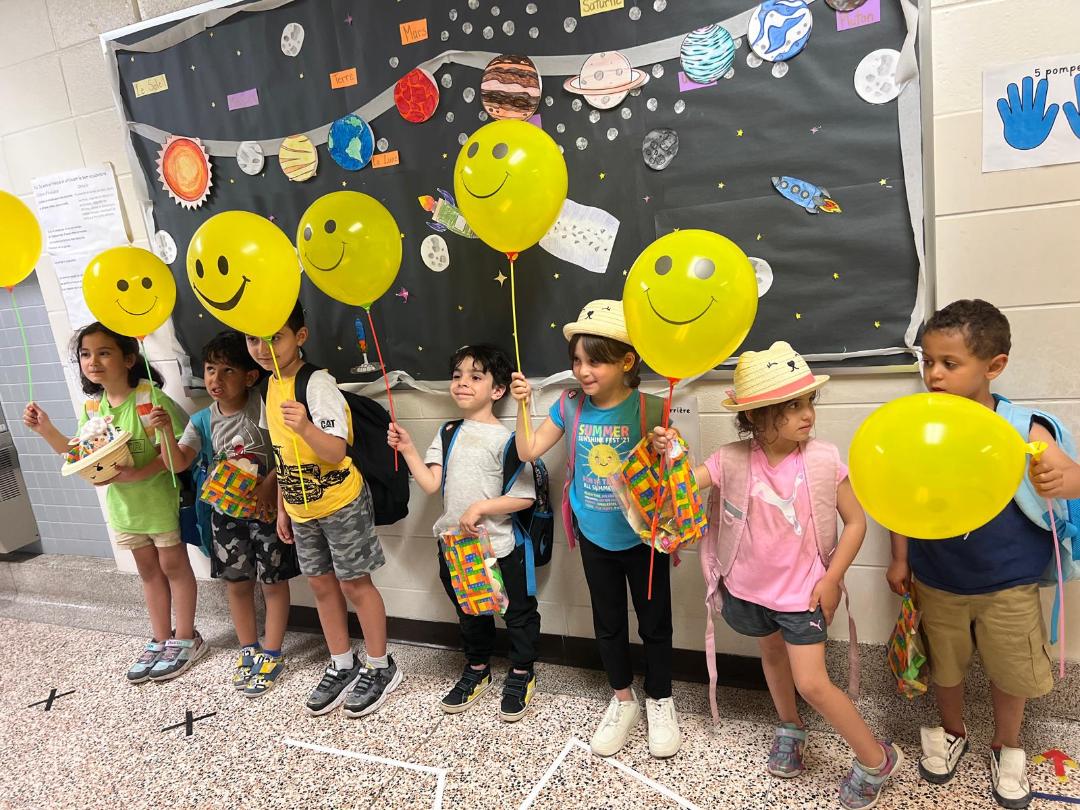

A Hamilton, Ont. church building doubles as a classroom for refugee and newcomer children learning Arabic and rebuilding confidence after disrupted schooling.
Founded by Mayada Abu Shanab, Alamal Learning Centre is part of a growing pattern across Canada, where community-led initiatives are stepping in to support newcomer families in ways formal systems often cannot.
Operating out of church spaces in Hamilton, the program combines Arabic-language instruction with cultural education and guidance on how Canadian schools work, helping children affected by war and displacement rebuild confidence and connection.
The program now operates on Thursday evenings at MacNab Street Presbyterian Church after St. Paul’s Presbyterian Church was no longer able to continue hosting. Rev. Steven Baldry said the need was shared with MacNab, and the church was able to provide suitable space.
“Perhaps for some churches, there is simply more space available,” Baldry said, pointing to declining church programs. “While others see it as a more proactive opportunity to provide practical support to others.”
He added that faith-based spaces can make an important contribution in supporting newcomers, even as many congregations face their own financial pressures.
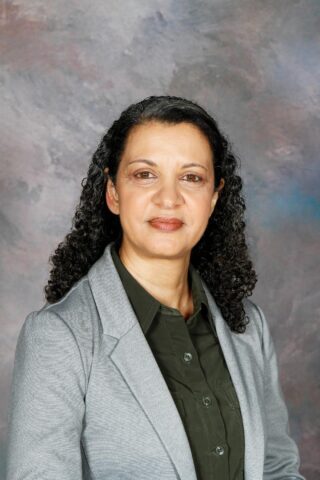
But space alone does not solve the program’s biggest challenge: Funding. Abu Shanab says Alamal operates on tight margins, with rent across its sites costing roughly $25,000 a year.
As costs have risen and many families struggle to pay fees in full, she has condensed the program to fewer locations this school year. Her goal, she says, is to raise about $35,000 annually to cover rent and basic expenses so the program can remain accessible to low-income newcomer families.
According to the 2025 Annual Report to Parliament on Immigration, Canada admitted 76,685 refugees and protected persons as permanent residents in 2024. These figures reflect people arriving through government-assisted, privately sponsored and other humanitarian pathways.
In The Great Canadian Language Mash-Up, an analysis of 2021 census data, Statistics Canada said that Arabic ranked among the most widely spoken non-official languages in the country.
According to the census, roughly 15,500 people in Hamilton identified as Arab, accounting for about 2.8 per cent of the city’s population.
Abu Shanab says the bond between teachers and students is central to the program’s success. Some children confide in her about challenges they are facing at school. She checks in with families if a child misses class and tries to ensure every student feels noticed.
“We are like friends,” she said. “They feel very comfortable.”
Classes often stretch for three hours, but Abu Shanab says students stay engaged through interactive lessons, competitions and what she calls “Star of the Week” recognition during summer programming. During Ramadan celebrations, children share food, practice table manners and take leftovers home rather than waste them — lessons she says are as important as language itself.
In a country that continues to welcome newcomers each year, programs like Alamal operate quietly, without major funding or infrastructure. But for the children who run up the stairs each week, excited for “Arabic school,” the impact is immediate — a place where learning feels possible again.

Shilpashree Jagannathan is a Toronto-based freelance journalist, copywriter, and content strategist whose work has appeared in CBC News, New Canadian Media, Business Insider, TRT World, and Mint, among others. She has reported on immigration, labour, elections, housing, climate impacts, and social justice across Canadian and international contexts. With roots in business journalism in India and a strong investigative and research background, she approaches her reporting with investigative depth and empathy, tracing how policy and power shape lived experience.