Leaders of Canada’s modern Conservative Party have always faced the challenge of uniting diverse groups of party members and potential voters – placating social conservatives, offering pipelines to Western Canadians while simultaneously speaking the language of low taxes and affordability to the vote-rich, multicultural GTA suburbs.
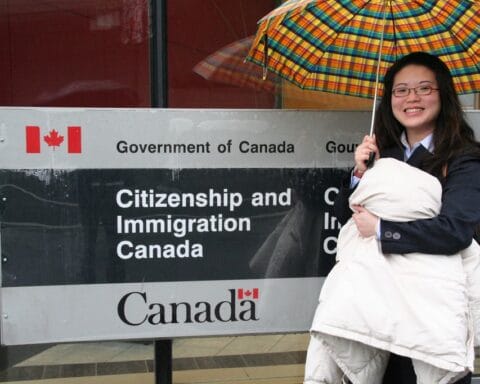
Stephen Harper held power for 10 years by maintaining this balance. His government was particularly skilled at balancing its appeal to largely white, rural Canadians along with immigrant Canadians via the efforts of Jason Kenney as then-Minister of Citizenship, Immigration and Multiculturalism.
But one of Harper’s final missteps was his push to require the removal of face coverings during the citizenship oath and create a ‘barbaric cultural practices’ hotline. These moves were portrayed by critics as overreach in pandering to “old stock Canadians” (sic) and their perceived discomfort with multiculturalism. Justin Trudeau’s concise response was “A Canadian is a Canadian is a Canadian” and the rest is history.
Pierre Poilievre is now faced with the same balancing act, but in the context of a very different national mood. According to Environics Institute’s Focus Canada survey, the number of Conservative voters who say there’s too much immigration has doubled over the last five years from 41 per cent in 2020 to 82 per in 2025.
Almost half (49%) of Conservative voters now feel that immigration has been bad for Canada, compared to only 17% of Liberal voters. And anyone unfortunate enough to read social media comments can see increasingly xenophobic views expressed by Canadians about immigrants, especially those from India.
That is why statements from Poilievre like “We need more people leaving than coming for the next couple years” that he made July 2025 and “[W]e must cap immigration at numbers we can integrate into our jobs, housing, health care and Canadian way of life” made at the party convention are strategically essential messages for him now.
Perhaps learning from Harper’s mistakes, Poilievre is more guarded when discussing multiculturalism. Still, he clearly understands his base, telling delegates, “We want a nation with no more hyphens, no more group labels.”
His task now is to ensure this messaging reaches his base without alienating potential immigrant voters in Toronto’s GTA. And while doing this, he has an advantage over Stephen Harper.
While the national mood in Canada has shifted, so has that among visible minorities in the Greater Toronto Area. They are now more open to the Conservative Party, analysis suggests, especially Chinese and South Asian Canadians.
Despite many being immigrants themselves, they may also welcome immigration caps. And he could continue to bank on the idea that Liberal appeals to multiculturalism alone will not outweigh Conservative messaging around affordability, taxation, and other everyday economic concerns that has been effective in attracting these voters to the party.

Robin Brown is a Toronto-based researcher. He has a long career in market research and insights, and has worked with many Canadian and international businesses and organizations to guide their strategies to engage stakeholders and consumers. He is the co-author of Migration Nation: A Practical Guide to Doing Business in Globalized Canada.