
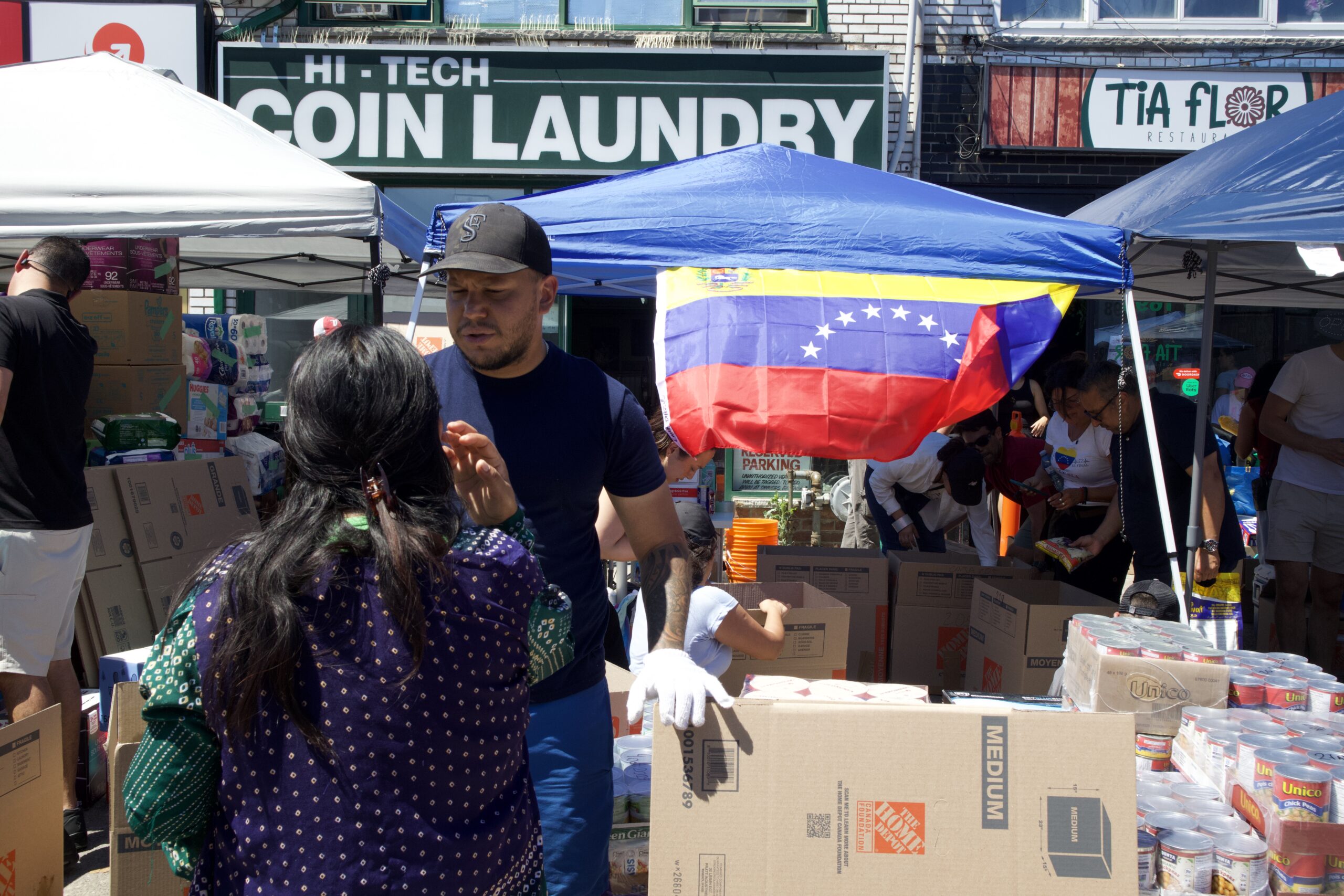

As Canada-based relief organizations join efforts to deliver life-saving assistance, Venezuelan Canadians mobilize across the country to gather and deliver donations in the face of yet another humanitarian crisis.
The mobilization comes as Canada has pledged $9 million in support, including $5 million in humanitarian assistance and up to $4 million to match donations to the Canadian Red Cross and the Humanitarian Coalition.
Relief groups say cash donations are the fastest way to get food, medical supplies, hygiene kits and emergency shelter to communities facing damaged infrastructure and growing health risks looming as temporary shelters have reached their capacity.
“Financial contributions allow our partners to purchase critical supplies closer to the affected communities, respond to changing needs in real time, and ensure every dollar is used as effectively and efficiently as possible,” a spokesperson for Canadian Global Response (CGR), a volunteer-based charity working in Venezuela, told New Canadian Media.
“It’s great to see the support from Venezuelan immigrants and the international community. In these moments, Venezuela needs a helping hand,” Rafael Superlano, a former radio host in Venezuela, told New Canadian Media while organizing supply boxes at a makeshift community-led donation centre in Toronto.
On the evening of June 24, two of the most powerful earthquakes in Venezuela’s history shook its northern coast, causing widespread destruction in major cities including Caracas, the country’s capital and largest urban centre. According to figures released by National Assembly President Jorge Rodriguez on July 8, lives lost stood at 4,490, with 16,740 injured and 17,907 people left without a home.
“The scale of devastation in Venezuela caused by these earthquakes is heartbreaking,” Minister of Foreign Affairs Anita Anand said on June 25 in a public statement. “Canada stands with the people of Venezuela during this difficult time.”
With teams in Caracas distributing food and hygiene kits, Islamic Relief Canada, one of the 12 partners working with the Humanitarian Coalition, welcomes the federal government’s decision. “It reflects Canadians’ generosity and their commitment to helping families access life-saving assistance during this crisis,” the organization said in an email statement to New Canadian Media. “As natural disasters become more frequent, solidarity across borders is more important than ever.”
“We are united by the shared despair, frustration, impotence, pain, and sorrow, but also the love for our country,” Meriely Arias, the Vice President of the Venezuelan Canadian Society of British Columbia (VCSBC), told New Canadian Media. “From our society, we extend a warm embrace to all Venezuelans in Canada and around the world.”
“Speed saves lives,” relief organization says
Hoping to represent about 2,000 Venezuelans living in B.C., the VCSBC and Tambore, a community organization, was preparing a special event in Vancouver ahead of Venezuela’s independence day on July 5. What was supposed to be a day of celebration turned into a chance to “honour the people of Venezuela and raise funds,” which the organization would then channel to the We Love Foundation and CGR, Arias said.
“The Venezuelan people have suffered so much that it seems impossible to find a way forward, but we must continue on and find strength amongst ourselves to forge a path to a bright future,” she added.
Like their neighbours in the west, the Venezuelan Canadian Association of Calgary (VCAC) – a non-profit founded in 2000 to help alleviate a natural disaster in the now newly-rebuilt La Guaira state in Venezuela – transformed a lineup of cultural events for their annual ‘Venezuelan Culture Days’ into a “show of solidarity,” the organization said in a statement. The president of the VCAC, Ernesto Gudino, told New Canadian Media that due to their charity status, the VCAC is unable to handle physical donations. Instead, they have opted to partner with CGR to avoid high shipping costs and fast delivery of supplies.
“Aid gets there late. Aid has to go through customs, and that takes time” Gudino said. “Everybody is focusing on those injured, but [the disaster] is not only about them. We’re supporting the rescuers. They need tools to work.”
As donations come through, CGR said they are nearing their initial goal of $100,000, which has supported the work of more than 100 volunteers and medical professionals in Greater Caracas. Damage to the country’s primary airport and high costs have made international shipping more costly, so the organization values monetary contributions. “In the aftermath of a disaster, speed saves lives.”
Help in any possible way
Mounting wooden pallets, gathering items, and transporting donations from one city to another is both time-consuming and expensive, 26-year-old Andres O’Brien Ramírez told New Canadian Media. That didn’t dissuade him and his friends in the Venezuelan Canadian community from getting together to publicize and organize a three-day long donation campaign that spanned across 21 cities in Ontario.
With a background in project management and alongside the team of ‘3 Venekos,’ O’Brien Ramírez’s Latino-oriented podcast, and other community partners, put out callouts online for donations just a day after the devastating earthquakes.
“We made a video that went really viral. A lot of people wanted to help,” O’Brien Ramírez said, recalling from 250 to 300 volunteers that would either help tape boxes and count supplies at Tia Flor, a Mexican-Venezuelan restaurant in Toronto that served as the main donation hub, or haul them in trucks to a warehouse in Vaughan for storage.
Despite a week-long heat wave, volunteers of all ages showed up for the community at Tia Flor.
“We’re all trying to help in any possible way. We all feel very impotent. I have a lot of family and friends over there,” Diana Rosales said. She and her husband donated gloves and medical masks. As donations on the first day consisted mostly of clothes and non-perishable items, the event organizers encouraged donors to bring medical supplies.
Another Venezuelan immigrant, Jorge Jaimes, told New Canadian Media his cousins in Caracas have also been affected by the natural disasters. “They have had material losses but no human ones, thank God. Everything else can be recovered.”
After a very successful collection campaign, the organizers are now awaiting confirmation of Global Empowerment Mission, a U.S.-based charity sending transporting aid from South Florida to Venezuela, to ship the donations as O’Brien Ramírez’s team has discarded a non-stop route from Toronto due to high costs.
“We’re being 100 per cent transparent in all the steps we take and all that we don’t. We’re opening the doors for any person with any contact or knowledge so they can come to help us too,” O’Brien Ramírez said. “We’re doing all this work from the heart.”
Despite the strained relationship between Canada and Venezuela, O’Brien Ramírez remains hopeful that Canada’s aid relief efforts will grow over time. “I think Canada always waits and sees how other countries react before acting.”

Rodrigo Huerta Aguirre
Rodrigo Huerta Aguirre is a Peruvian journalism and political science student at the University of Toronto. He is passionate about reporting on politics, diaspora, and local issues in Toronto. Based in Scarborough, he currently writes for The Underground at UTSC.