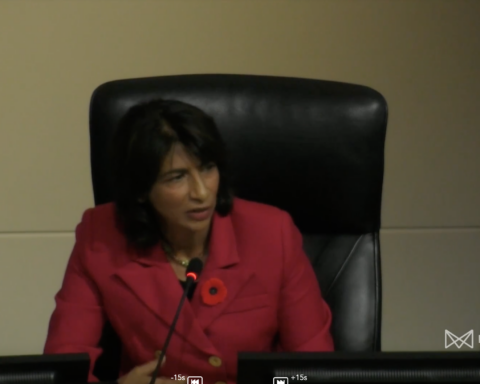
In response to Mississauga’s formal recognition of “anti-Hindu hate,” the South Asian Dalit Adivasi Network (SADAN) wrote to the city’s mayor and city council saying they are blurring the lines between criticism of caste discrimination and religious hatred.
The civil rights organization led by Dalits and Adivasis, says the motion could also sideline historically marginalized communities within South Asian diasporas. They say the resolution prioritizes religious identity without addressing the caste-based hierarchies that still fuel discrimination within Hindu communities in Canada.
In November, 2025, Mississauga council voted unanimously to denounce anti-Hindu hate “in all its forms.” It also instructed city staff to collaborate with Peel Regional Police, interfaith groups and the city’s anti-racism advisory committee on educational and outreach programs.
City officials characterized the resolution as primarily symbolic, clarifying that it doesn’t grant any new enforcement authority.
Mayor Parrish did not reply to an email seeking her response to the SADAN letter.
Mississauga became the second Canadian municipality to adopt such a resolution, following a similar vote in Wainwright, Alberta in 2025.
Mayor Bruce Pugh of Wainwright did not respond to an email requesting his comments on the concerns raised by SADAN.
Vijay Puli, founder and executive director of SADAN said the organization was not consulted before the motion was brought forward and he was not aware it would be voted on until shortly before the council meeting.
SADAN’s letter argues that caste is not merely a cultural issue but a lived system of hierarchy that operates across religion, social life and institutions. Failing to acknowledge caste while formally recognizing anti-Hindu hate, the group says, risks shielding dominant caste groups from scrutiny and discouraging open discussion of caste-based oppression.
The organization also raised concerns about the process used to pass the motion, adding that a revised version was tabled just one day before the vote, limiting opportunities for broader community input.
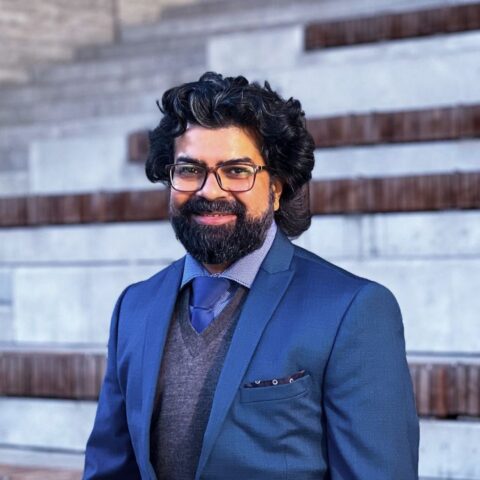
Rishabh Saraswat, who represents the Coalition of Hindus of North America (CoHNA), responded to SADAN’s criticism by questioning the necessity of consulting them regarding a motion addressing anti-Hindu hate. He argued that caste discrimination should be viewed as a distinct matter, separate from religious bias.
SADAN’s primary objection is the motion’s call for involvement from Peel Regional Police. The group says involving law enforcement without first consulting caste-oppressed communities could increase existing fears and deter individuals from openly discussing caste discrimination.
The letter warned that the motion might have a “chilling effect within educational institutions.” It suggested that discussions about caste discrimination, already a sensitive topic, could increasingly be mischaracterized as religious bias.
In October 2023, the Ontario Human Rights Commission became the first human rights body in North America to formally recognize caste as a ground of discrimination, describing caste-based oppression as an internationally recognized human rights violation. In 2023, the British Columbia Human Rights Tribunal ruled on a case involving caste discrimination in the taxi industry.
In its policy position, the Ontario commission stated that discrimination can arise from stereotypes or perceptions that an individual or group practices a religion or comes from a community associated with the caste system, and emphasized that caste discrimination is intersectional — tied to race, ancestry, ethnicity and religion.
Several Ontario jurisdictions, including the Toronto District School Board and the cities of Brampton, Ont. and Burnaby, B.C., have since adopted policies or motions recognizing caste discrimination.
SADAN argues that municipal recognition of anti-Hindu hate without parallel acknowledgment of caste discrimination risks creating confusion for institutions tasked with applying human rights protections.
Supporters of the Mississauga motion are pushing back against the notion that acknowledging anti-Hindu hate diminishes discussions about caste or other social disparities. Saraswat said the resolution aims to shield individuals from discrimination and violence stemming from their religious beliefs. They argue that explicitly naming anti-Hindu hate gives institutions and law enforcement a more defined structure for identifying and addressing such incidents, much like how governments currently recognise anti-Semitism or Islamophobia.
A longer national debate
The Mississauga vote comes after years of effort by Hindu groups in Canada to have Hinduphobia officially acknowledged and defined.
In November 2023, Conservative MP Melissa Lantsman introduced Petition e-4507 in the House of Commons. The petition urged the federal government to recognise Hinduphobia as a form of discrimination. The Canadian Organization for Hindu Heritage Education supported the petition, which collected over 25,000 signatures.
Some of the organizations that backed the petition have also spoken out against caste-related motions in school boards. They argue that connecting caste discrimination to Hinduism unfairly paints Hindus as inherently prejudiced.
SADAN and other anti-caste groups have repeatedly challenged this perspective. They argue that caste discrimination is intertwined with religious and social structures, and that denying its existence further marginalises communities affected by caste oppression.

Shilpashree Jagannathan is a Hamilton-based freelance journalist and editor whose work has appeared in CBC News, New Canadian Media, The Margin, Business Insider, TRT World and Mint, and has been republished by The Walrus. She reports on immigration, labour, affordability, housing, elections, climate impacts and social justice, focusing on how policy and power shape the lives of households, workers, newcomers and local communities. Drawing on more than a decade in business journalism in India and a strong background in investigations, research and editorial work, she brings rigour and empathy to stories that trace the gap between policy and lived experience. She has also appeared on podcasts and radio programs to discuss her reporting and its broader public-policy implications.